| Piú viste |

APOLLO_15_AS_15-85-11447_HR-2.jpgAS 15-85-11447 - Hill 305 and Station 2 Boulder (2)57 visiteGrazie al Dr Gianluigi Barca, che ha rapidamente rintracciato la versione originale e non compressa di questo interessantissimo frame, possiamo ora svolgere qualche nuova considerazione, così come suggeritoci dal nostro Amico "Ufologo". Allora: il boulder che vediamo è, molto probabilmente, un ejecta-boulder - anche se la NASA non si è sbilanciata al riguardo. Il fatto che non sia visibile una depressione al di sotto di esso è, effettivamente, un dato curioso, ma non impossibile da spiegare. Voi sapete che la profondità dei crateri secondari, formati proprio dagli ejecta-boulders, è già di per se stessa inferiore (MOLTO inferiore!) alla profondità dei crateri primari. Questo perchè la velocità di impatto di un ejecta-boulder sulla superficie di un Corpo Celeste è di gran lunga inferiore alla velocità di impatto di un bolide che arriva dallo Spazio; ma non solo: occorre considerare anche dati quali le dimensioni e la massa dell'ejecta-boulder in rapporto alla tessitura, consistenza e resistenza del terreno su cui va ad impattare. E che dire poi del tempo intercorso fra impatto dell'ejecta-boulder ed individuazione di quest'ultimo? Quanto più i crateri (sìano essi primari o secondari) sono antichi, tanto più i loro bordi (rim) tendono a cancellarsi (ad essere ricoperti o a franare), ora in ragione dell'azione di agenti atmosferici e geologici (come accade su Marte e come, forse, in un tempo remoto accadeva sulla Luna stessa), ora a causa di fenomeni di gravity-wasting. E così via.
I fattori considerabili sono tanti, ma già questi sono sufficienti per azzardare un'ipotesi: l'ejecta-boulder che vediamo in questo extra-detail mgnf "sembra" posato al suolo e non "precipitato" al suolo perchè:
1) l'ejecta-boulder ha dimensioni modestissime e la velocità di impatto era presumibilmente bassa;
2) la resistenza del suolo era alta e, comunque, l'urto è stato - sostanzialmente - elastico (e cioè l'ejecta-boulder NON si è frantumato ed il suolo ha "assorbito" l'urto senza cedere);
3) l'evento che ha portato l'ejecta-boulder là dove lo vediamo adesso, è un evento antichissimo (forse qualche milione di anni): un tempo tale per cui quelli che potevano essere i minuscoli "rim" di un mini-cratere secondario (ammesso che cratere e rim esistessero in origine) si sono ridotti in polvere.
E' un'ipotesi, certo, ed è altrettanto certo che sia discutibile. Ma è un'ipotesi razionale e, tutto sommato, credibile.
Alle ipotesi esotiche (che pure ci piacciono, molto spesso), in qualità di Ricercatori Professionisti, noi possiamo e dobbiamo arrivare SOLO da aver escluso/rigettato tutte quelle ipotesi non-esotiche che possono essere impiegate per interpretare una qualsiasi fenomenologia.
Insomma, il mix lo conoscete: razionalità e pragmatismo, ma occhi aperti. Sempre.
Grazie al Dr Barca per il prezioso supporto ed all'Amico Ufologo per lo spunto che ci ha fornito!MareKromium
|
|
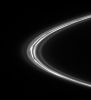
The_Rings-PIA09782.jpgPrometheus' Trail57 visiteCaption NASA:"Seen here is the end result of the process that occurs every time the moon Prometheus closely approaches Saturn's F-Ring. The moon cuts a dark channel in the ring's inner edge that then shears out over successive orbits, giving the inner edge of the ring the grooved appearance seen here.
This process is described in detail, along with a movie of Prometheus creating one of the streamer/channel features, in Soft Collision.
The view is toward the sunlit side of the Rings from about 3° below the Ring-Plane.
The image was taken in visible light with the Cassini spacecraft narrow-angle camera on Oct. 25, 2007. The view was acquired at a distance of approx. 624.000 Km (such as about 388000 miles) from Saturn and at a Sun-Ring-Spacecraft, or phase, angle of 23°.
Image scale is roughly 3 Km (about 2 miles) per pixel".MareKromium
|
|
OPP-SOL123-3.jpgThe Heat-Shield, in the distance - Sol 123 (MULTISPECTRUM; elab. Lunexit)57 visitenessun commentoMareKromium
|
|

as16-107-17420.JPGAS 16-107-17420 - Beautiful Desolation (1)57 visiteCaption NASA:"Charlie Duke begins a pan taken North of the LM with this frame showing part of the U.S. Flag on the left and the Solar Wind Collector (SWC) at center".MareKromium
|
|

as16-107-17446.JPGAS 16-107-17446 - The LR at Station 457 visiteCaption NASA:"144:16:27 MT - "Locator" to the Rover from John's first Station 4 sample site. Charlie Duke is still at the Rover.
Note the spray of dirt propelled toward us by backward motion of Charlie's left heel. Note, also, the large rock at the lower right that John drove over just before stopping the Rover.
The Rover chassis clearance is about 14" (35 cm)".
MareKromium
|
|
SOL381-2N160198208EFFA2JHP0675R0M1.jpgSands and stones, but not a desert... (4 - MULTISPECTRUM; elab. Lunexit)57 visitenessun commentoMareKromium
|
|

OPP-SOL1358-B.gifColor "INFO"?!?... - Sol 1358 (GIF-Movie; credits: Dr Marco Faccin)57 visiteUn GIF-Movie "dedicato" a tutti coloro che credono che le immagini "NASA from Mars" arrivino integralmente sulla Scala dei Grigi (insomma: in b/n, e poi vengono colorate a tavolino): ebbene no, non sembra essere così.
Come notato dal Dr Faccin, facendo un'analisi - davvero - meticolosa ed ai limiti dell'allucinante, i RAW-Frames NASA SEMBRANO CONTENERE, a decorrere dal Sol 994 per il MER Spirit, delle INFO di un qualche tipo.
Ma si tratterà di INFO collegate ai colori visibili nei vari frames?
O forse si tratta di INFO di altro genere e/o di altra Natura?
Quello che vedrete in questo GIF-Movie è un'evidenza del modo in cui queste INFO si manifestano: quadratini colorati.
Si tratta di un vizio della trasmissione ("noise")? O sono tracce di un sub-segnale (o di un retro-segnale)?
O non sono nulla e ci stiamo sbagliando noi?
Voi che dite? Guardate e poi scriveteci...
Nota Lunexit: abbiamo motivo di ritenere, dopo aver effettuato un piccolo studio al riguardo, che i frames MER Spirit ed Opportunity, nonchè i frames MRO, arrivino sulla Terra GIA' a colori, mentre i frames MGS ed Odyssey arrivano in b/n. Curioso, vero?!?MareKromium
|
|

PSP_001374_1805_RED_browse-00~0.jpgLayering in Exhumed Crater at Meridiani Planum Region (context image - MULTISPECTRUM; credits: Lunexit)57 visite...Noi, detto senza falsa modestia, sfidiamo la NASA a fare di meglio...MareKromium
|
|

The_Rings-PIA10081.jpgIcy Rings57 visiteCaption NASA:"This is an artist concept of a close-up view of Saturn's Ring particles. The planet Saturn is seen in the background (yellow and brown).
The particles (blue) are composed mostly of ice, but are not uniform. They clump together to form elongated, curved aggregates, continually forming and dispersing. The space between the clumps is mostly empty. The largest individual particles shown are a few meters (yards) across". MareKromium
|
|
as16-107-17476.JPGAS 16-107-17476 - Station 4 Crater (ejecta crater)57 visitenessun commentoMareKromium
|
|
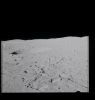
as16-113-18369.JPGAS 16-113-18369 - The "Heat Flow Hole"57 visiteRightward of 18368, showing the Western "Heat Flow Hole".
MareKromium
|
|
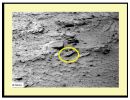
MarteARTE-24.JPGUnusual Alignment57 visitenessun commentoMareKromium
|
|
| 25353 immagini su 2113 pagina(e) |
 |
|
|
|
|
1527 | |
|
|
|
|





