| Piú viste |

ISD_highres_AS13_AS13-62-8895-1.jpgAS 13-62-8895 (1) - Space debris?57 visiteUn nuovo frame relativo alla sfortunata (ma comunque gloriosa) Missione "Apollo 13" ed un nuovo (piccolo) "mistero.
Il frame è stato - ancora una volta - individuato dal bravissimo Dr Gianluigi Barca il quale ci ha suggerito di prestare attenzione al dettaglio che si vede in basso, sulla Dx del frame: di che si tratta?
Il L&PI non si esprime al riguardo e si limita a rilasciare questa caption:"FAINT IMAGE OF MOON CRESCENT". Immagine che ritrae una debole falce di Luna.
Ok, perfetto.
Preso atto della reticenza (o, forse, della mera distrazione) degli Amici del L&PI, proviamo noi a fornire una spiegazione del particolare (una idea sulla sua natura che, speriamo, Vi risulti chiara e credibile).
Guardate il detail-mgnf che segue...MareKromium
|
|

ISD_highres_AS17_AS17-151-23128-2.jpgAS 17-151-23128 (2) - Extra Lunar Object? (extra-detail mgnf)57 visitenessun commentoMareKromium
|
|
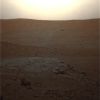
SOL1359-2P247012717EFFAW00P2410L7M1.jpgPanorama - Sol 1359 (yellow-orange filter OFF - possible true-colors; elab. Lunexit)57 visitenessun commentoMareKromium
|
|

Dione-PIA09764.jpgThe "spiderweb like" streaks on Dione57 visiteCaption NASA:"Bright, wispy fractures streak across Dione's trailing side. Following the Voyager flybys of the early 80s, scientists considered the possibility that the streaks were bright material extruded by cryovolcanism. A quarter-century later, Cassini's close passes and sharp vision showed these features to be a system of braided canyons with bright walls.
North on Dione is up.
The image was taken in visible light with the Cassini spacecraft wide-angle camera on Sept. 30, 2007. The view was acquired at a distance of approx. 45.000 Km (such as about 28.000 miles) from Dione and at a Sun-Dione-spacecraft, or phase, angle of 36°.
Image scale is roughly 3 Km (about 2 miles) per pixel".MareKromium
|
|

Comets-Comet_Holmes-UX.jpgComet 17-P-Holmes and its - now - Green Coma57 visiteCaption NASA:"This gorgeous skyscape spans some 10° across the Constellation of Perseus, about the size of a generous binocular field of view.
The deep exposure includes bright stars, emission nebulae, star clusters, and, of course, the famous Comet Holmes.
The brightest star in view, Alpha Persei, is itself surrounded by a loose cluster of stars - the Alpha Per Moving Cluster - at a distance of about 600 LY.
But, at a distance of a mere 14 Light-Minutes (LM), bright Comet 17-P-Holmes still dominates the scene with its fluorescing greenish coma and foreshortened blue tail".MareKromium
|
|

PSP_005682_1035_RED_abrowse-01.jpgBasal Exposure of South Polar Layered Deposits (extra-detail mgnf; possible natural colors - elab. Lunexit)57 visiteSome layers have an irregular wavy appearance that may have been caused by flow of the ice in the past when the now-exposed ice was still buried.
It is currently too cold at the surface in the South Polar Region of Mars for significant flow to be occurring today.
Other layers appear to be converging and some are truncated and may represent the so-called "unconformities" (see here).
Unconformities form when a previous episode of erosion removes all or part of a layer and is later followed by more deposition.MareKromium
|
|

SOL1366-2P247639756EFFAWCCP2414R1M1.jpgPanorama - Sol 1366 (4 - true colors; elab. Lunexit)57 visitenessun commentoMareKromium
|
|
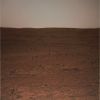
SOL1366-2P247640338EFFAWCCP2414R1M1.jpgPanorama - Sol 1366 (6 - true colors; elab. Lunexit)57 visitenessun commentoMareKromium
|
|
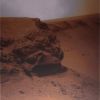
OPP-SOL1329-1P246169340EFF8754P2379R1M1-3.jpgThe True Colors of Victoria - sample n. 3 (Sol 1329)57 visitenessun commentoMareKromium
|
|

Comets-Comet_Holmes-UZ.gifThe Inner Coma of Comet Holmes57 visiteCaption NASA:"What's happening to Comet Holmes?
The rare comet remains visible to the unaided eyes of northern observers as an unusual small puff ball in the constellation of Perseus. A high resolution set of images of the comet's inner coma, taken last week and shown above, reveals significant detail. Close inspection shows numerous faint streamers that are possibly the result of jets emanating from the comet's nucleus. Comet Holmes has remained surprisingly bright over the past week, with luminosity estimates ranging from between visual magnitudes 2 to 3, making it brighter than most stars visible on a dark sky.
The above image of Comet Holmes was made with a small automated 0,38-meter telescope hirable over the web for a small fee".MareKromium
|
|
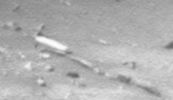
OPP-SOL1349-1P247946805EFF8788P2266L5M1-2.jpgUnusual Surface Feature inside Victoria Crater (extra-detail mgnf) - Sol 134957 visiteIl detail mgnf che ci viene proposto dal bravissimo Dr Gianluigi Barca non risolve i nostri dubbi, anzi...li alimenta! Che cosa stiamo guardando? Una sorta di spezzone di tubo arrivato da chissà dove? Una roccia affusolata la cui forma ed albedo la rendeno simile ad una sorta di "colonna" di marmo?
Oppure è solo un semplice rilievo il quale, ai nostri occhi ed in ragione della particolare inquadratura adottata dal Rover, ci sembra "misterioso" mentre invece misterioso non lo è affatto?
Domande, ancora una volta...
Ed un grande "BRAVO", come sempre, al Dr Barca (per l'occhio, la passione e la - enorme - pazienza che ci dimostra già da un paio d'anni).MareKromium
|
|

Aurora_Borealis.jpgAurora Borealis over Chena Lakes57 visiteCaption NASA:"Sometimes, after your eyes adapt to the dark, a spectacular sky appears. In this case, a picturesque lake lies in front of you, beautiful green aurora flap high above you, brilliant stars shine far in the distance, and, for a brief moment, a bright meteor streaks by. This digitally fused breathtaking panorama was captured late last month across one of the Chena Lakes in North Pole, Alaska, USA, and includes the Pleiades open cluster of stars on the image right. The shot is unusual not only for the many wonders it has captured simultaneously, but because lakes this far north tend to freeze and become non-reflecting before a sky this dark can be photographed".MareKromium
|
|
| 25353 immagini su 2113 pagina(e) |
 |
|
|
|
|
1525 | |
|
|
|
|





