| Piú viste |

SOL052-2R130984134EFF1120P1310R0M1.jpgInteresting Outcrop - Sol 52 (natural colors; credits: Lunexit)57 visitenessun commentoMareKromium
|
|
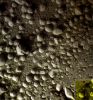
OPP-SOL1755-1MICRO_copia-3.jpgGreenish Smashed-up Berries - Sol 1755 (possible True Colors; credits: Dr G. Barca)57 visitenessun commentoMareKromium
|
|

OPP-SOL1748-2.jpgReddish Pebbles on the Paving - Sol 1748 (possible True Colors; credits: Dr G. Barca)57 visitenessun commentoMareKromium
|
|
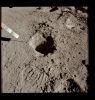
APOLLO_15_-_AS_15-86-11645.jpgAS 15-86-11645 - Gnomon and Hole at Station 6 (possible True Colors; credits: Lunar Explorer Italia)57 visitenessun commentoMareKromium
|
|

APOLLO_12_-_AS_12-52-7739.jpgAS 12-52-7739 - Copernicus (possible True Colors; credits: Lunar Explorer Italia)57 visiteCoord. (center of the frame): approx. 10,0° North Lat. and 20,0° West Long.MareKromium
|
|

ZZ-Z-P-PIA11738.jpgThe Way to the Giant Endeavour Crater - Sol 174257 visiteCaption NASA:"The red-and-white line on this image traces the route that NASA's Mars Exploration Rover Opportunity drove from its Landing inside Eagle Crater on Jan. 4, 2004 (Universal Time; Jan. 3 Pacific Standard Time) through the 1742nd Martian Day, or Sol, of the mission (Dec. 17, 2008). During that period, Opportunity drove 13,62 Km (about 8,5 miles).
Opportunity climbed out of the 800-meter-wide (half-mile-wide) Victoria Crater on Sol 1634 (Aug. 28, 2008). The Rover's next major destination is a much larger crater further South, Endeavour Crater, with a diameter of about 22 Km (approx. 14 miles).
The route and labels on this map are overlain on an image from the Thermal Emission Imaging System camera on NASA's Mars Odyssey Orbiter".MareKromium
|
|

NGC-4945.jpgNGC 4945 in Centaurus57 visite"...Cercare di conquistare una fisica Immortalità è futile, poichè dobbiamo morire tutti: si sa, ed è un fatto inevitabile. Cercare di costruire qualcosa che ci sopravviva, invece, è Opera meritoria..."
Paolo C. FiengaMareKromium
|
|

The_Rings-Shadow-N00127583.jpgEclipsing the Rings (4)57 visitenessun commentoMareKromium
|
|

The_Rings-Shadow-N00127582.jpgEclipsing the Rings (3)57 visitenessun commentoMareKromium
|
|
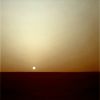
OPP-SOL1759-1P284357875EFF94BBP2629L4M1.jpgLate Sun - Sol 1759 (possible True Colors; credits: Dr Paolo C. Fienga)57 visitenessun commentoMareKromium
|
|

SOL1788-3.JPGRockland! - Sol 1788 (False Colors; credits: Dr G. Barca)57 visitenessun commentoMareKromium
|
|

The_Rings-PIA10556.jpgFantastic View (possible True Colors; credits: Lunar Explorer Italia)57 visiteCaption NASA:"Three of Saturn's satellites are visible in this snapshot from the Cassini Spacecraft. Janus (approx. 179 Km, or about 111 miles across) is in the top left of the image. Pandora (approx. 81 Km, or about 50 miles across) is just outside the F-Ring and Pan (approx. 28 Km, or about 17 miles across) is the small moon that has cut a path inside the Rings below the center of the image.
This view looks toward the unilluminated side of the Rings from about 27° above the Ring-Plane. The image was taken in visible light with the Cassini Spacecraft wide-angle camera on Dec. 7, 2008 using clear filters: CL1 (635 nm) and CL2 (635 nm). It was obtained from a distance of approx. 1 MKM (such as about 641.000 miles) from Pan and at a Sun-Pan-Spacecraft, or Phase, Angle of 33°. Image scale is roughly 62 Km (about 38 miles) per pixel".MareKromium
|
|
| 25353 immagini su 2113 pagina(e) |
 |
|
|
|
|
1520 | |
|
|
|
|





