| Piú viste |

Io-022707_Erupt_on_Io.jpgRestless Tvashtar57 visiteThe first images returned to Earth by New Horizons during its close encounter with Jupiter feature the Galilean moon Io, snapped with the Long Range Reconnaissance Imager (LORRI) at 0840 UTC on February 26, while the moon was 2,5 MMs (about 4 MKM) from the spacecraft.
Io is intensely heated by its tidal interaction with Jupiter and is thus extremely volcanically active. That activity is evident in these images, which reveal an enormous dust plume, more than 150 miles high, erupting from the volcano Tvashtar. The plume appears as an umbrella-shaped feature of the edge of Io's disk in the 11 o'clock position in the right image, which is a long-exposure (20-millisecond) frame designed specifically to look for plumes like this. The bright spots at 2 o'clock are high mountains catching the setting sun; beyond them the night side of Io can be seen, faintly illuminated by light reflected from Jupiter itself.
The left image is a shorter exposure — 3 milliseconds — designed to look at surface features. In this frame, the Tvashtar volcano shows as a dark spot, also at 11 o'clock, surrounded by a large dark ring, where an area larger than Texas has been covered by fallout from the giant eruption.
This is the clearest view yet of a plume from Tvashtar, one of Io's most active volcanoes. Ground-based telescopes and the Galileo Jupiter orbiter first spotted volcanic heat radiation from Tvashtar in November 1999, and the Cassini spacecraft saw a large plume when it flew past Jupiter in December 2000. The Keck telescope in Hawaii picked up renewed heat radiation from Tvashtar in spring 2006, and just two weeks ago the Hubble Space Telescope saw the Tvashtar plume in ultraviolet images designed to support the New Horizons flyby.
The New Horizons images of the plume — which show features as small as 20 Km (12 miles), are 12 times sharper than the HST images and about three times sharper than the Cassini images. "This is the best image of a large volcanic plume on Io since the Voyager flybys in 1979" says John Spencer, deputy leader of the New Horizons Jupiter Encounter Science Team from Southwest Research Institute.
"If the Tvashtar plume remains active, the images we take later in the encounter should be even better".
|
|

The_Rings-PIA08887.jpgHeading to the Darkness57 visiteCaption NASA:"This strikingly crisp view shows Atlas heading into Saturn's shadow at upper left. The moon's basic, elongated shape is easy to detect here. Above Atlas, a bright clump in the F-Ring also heads toward the darkness. This view looks toward the unlit side of the Rings from about 30° above the Ring-Plane.
The image was taken in visible light with the Cassini spacecraft narrow-angle camera on Jan. 19, 2007 at a distance of approx. 1,2 MKM (about 700.000 miles) from Atlas. Image scale is roughly 7 Km (about 4 miles) per pixel".
|
|

OPP-SOL1102-1M226014927EFF798DP2956M1M1.jpgLook at the "Martian Light-Horse"! (4) - Sol 110257 visitenessun commentoMareKromium
|
|

OPP-SOL1102-1M226014794EFF798DP2936M1M1.jpgLook at the "Martian Light-Horse"! (2) - Sol 110257 visite...Quasi definito...MareKromium
|
|

OPP-SOL1102-1M226014636EFF798DP2956M1M1.jpgLook at the "Martian Light-Horse"! (1) - Sol 110257 visite...Inizia la "formazione" del "Cavallo Marziano"...
Un vero peccato che gli Amici di Pasadena non ci forniscano più dati sull'ora della ripresa ed i filtri usati (per non parlare della distanza fra MI ed oggetto ripreso, nonchè le dimensioni effettive del rilievo ripreso)...MareKromium
|
|
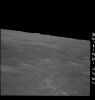
as12-52-7731.jpgAS 12-52-7731 - Lunar Horizon57 visiteView from lunar orbit
|
|

as12-51-7549.jpgAS 12-51-7549 - Approaching the Lunar Terminator57 visitenessun commentoMareKromium
|
|

as12-51-7543.jpgAS 12-51-7543 - Craters and Highlands57 visitenessun commentoMareKromium
|
|
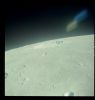
as12-51-7542.jpgAS 12-51-7542 - UFO near Copernicus? No, just a reflection... (1)57 visiteGrazie alla splendida collaborazione e costante cortesia del Lunar & Planetary Institute, ecco per Voi le versioni restaurate di alcuni frames che hanno contribuito a creare, allo stesso tempo, un pò di Storia ed un pò di Leggenda: le "luci misteriose" che si accesero sopra la Luna e che vennero immortalate da questo frame (ed altri similari) erano degli UFO?
Secondo noi, dopo aver visionato queste immagini, si può dire "NO". Non erano UFO.
La configurazione dell'Anomalìa, infatti, unita alla sua posizione, tessitura e colorazione, ci spingono a ritenere che quanto ripreso in questo frame - come in altri che seguono (alcuni anche relativi ad altre - successive - Missioni) - è solo il riflesso di una coppia di led interni all'astronave. Purtroppo, noi non siamo in grado di dirVi quale tipo di led possa aver causato un simile effetto e, da questo punto di vista, anche il Lunar & Planetary Institute non ci può essere di aiuto.
Conclusioni: questo frame, al pari di tanti altri simili, rimane necessariamente un frame ambiguo e controverso, ma l'ipotesi che la coppia di "U" luminose sia, in effetti, una coppia di UFO - oppure un singolo UFO di forma davvero bizzarra - a noi non sembra più tanto agevolmente sostenibile nè sponsorizzabile.
Con buona pace del CUN (che questi Original NASA-Apollo Frames non li ha MAI visti nè esaminati...).MareKromium
|
|

as12-51-7552.jpgAS 12-51-7552 - Alien Spaceship or just a reflection? (1)57 visiteVersione restaurata a cura del Lunar and Planetary Institute del frame proposto nel quadro precedente. Notate il radicale cambio della colorazione di base (il "viola" del frame precedente è il più chiaro indice della "vecchiaia" della pellicola originale) e, tuttavia, la perdita di definizione dei dettagli (oltre all'insorgenza di un effetto di saturazione - sovraesposizione - alquanto antipatico).
Che dire? La "digitalizzazione" preserva, tendenzialmente all'infinito, le immagini ma...le trasforma. Chi può dire, oggi come oggi, se è più "realistica" questa versione o la precedente?
E soprattutto: che cosa si è "perso" nella trasformazione del frame?!?...MareKromium
|
|

as12-51-7548.jpgAS 12-51-7548 - UFO? No, just a reflection...57 visitenessun commentoMareKromium
|
|

Streak-W00026015.jpgA new "Streak" in the Sky of Saturn (original NASA image)57 visiteCaption NASA:"W00026015.jpg was taken on March 06, 2007 and received on Earth March 07, 2007. The camera was pointing toward Saturn-Rings that, at the time, were approx. 808.714 Km away.
The image was taken using the CL1 and VIO filters and has not been validated or calibrated".
Nota: volevamo commentare, ma...è fiato sprecato. Qualunque ipotesi facessimo, dalla più logica e razionale (tipo: "è una luna di Saturno che è venuta "mossa), alla più esotica (tipo: dato che le stelle sullo sfondo sono - quasi - puntiformi, si può dedurre che lo Streak rapprsenta un oggetto luminoso che SI STAVA MUOVENDO MOLTO RAPIDAMENTE rispetto a Cassini), sarebbero comunque ipotesi inutili, in quanto non sostanziabili.
Dunque...decidete Voi che cosa Vi piace immaginare di più!
|
|
| 25353 immagini su 2113 pagina(e) |
 |
|
|
|
|
1518 | |
|
|
|
|





