| Piú viste |
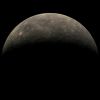
ZW-Mercury-PIA12365.jpgRising Mercury (Natural Colors; credits: NASA and Lunexit)57 visiteAs MESSENGER approached Mercury for the mission's 3rd and final flyby of the Solar System's innermost planet, the WAC acquired images through all 11 of its narrow-band color filters. The 1000, 700, and 430 nanometer filters were combined in red, green, and blue to create this color image, the last close-up color view that will be acquired until MESSENGER goes into orbit around Mercury in March of 2011. Only 6% of Mercury's Surface in this image had not been viewed previously by spacecraft, and most of the measurements made by MESSENGER's other instruments during this flyby were made prior to closest approach. The observations from MESSENGER's third flyby of Mercury nonetheless revealed fresh surprises. Check out the NASA Science Update Telecon held today for details about some of these new surprises.
Date Acquired: September 29, 2009
Instrument: Wide Angle Camera (WAC) of the Mercury Dual Imaging System (MDIS)
WAC Filter: 9, 1, 6 (1000, 700, and 430 nanometers)
Resolution: 5 Km/pixel (about 3 miles/pixel)
Scale: Mercury's diameter is approx. 4880 Km (about 3030 miles) MareKromium
|
|

ESP_013533_2170_RED_abrowse.jpgUnnamed Crater with Gullies (Natural Colors; credits: Lunexit)57 visitenessun commentoMareKromium
|
|

ESP_013533_1560_RED_abrowse.jpgProposed MSL Landing Site inside Eberswalde Crater (Natural Colors; credits: Lunexit)57 visitenessun commentoMareKromium
|
|

ESP_013557_1245_RED_abrowse-07.jpgThe "Argyre Lineae" (EDM n.4 - Natural Colors; credits: Dr G. Barca & Lunexit)57 visitenessun commentoMareKromium
|
|

ESP_013557_1245_RED_abrowse-06.jpgThe "Argyre Lineae" (EDM n.3 - Natural Colors; credits: Dr G. Barca & Lunexit)57 visitenessun commentoMareKromium
|
|

ESP_013557_1245_RED_abrowse-03.jpgThe "Argyre Lineae" (EDM n.2 - Natural Colors; credits: Dr G. Barca & Lunexit)57 visitenessun commentoMareKromium
|
|

ESP_013557_1245_RED_abrowse-02.jpgThe "Argyre Lineae" (EDM n.1 - Natural Colors; credits: Dr G. Barca & Lunexit)57 visite...Probabilmente, anche se nel CTX Frame queste "Linee" apparivano più nette e più profonde, si tratta davvero solo di DD Tracks.
Molto probabilmente.MareKromium
|
|
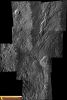
RHEA2-Panoramic-GB.jpgRhea (Image-Mosaic; credits: Dr G. Barca)57 visiteIn attesa che la NASA faccia di meglio (se non altro pubblicamente)...MareKromium
|
|
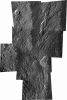
RHEA1-Panoramic-GB.jpgRhea (Image-Mosaic; credits: Dr G. Barca)57 visiteIn attesa che la NASA faccia di meglio (se non altro pubblicamente)...MareKromium
|
|

OPP-SOL2071-MF-LXT.jpgBizarre!... - Sol 2071 (Natural Colors; credits: Dr M. Faccin & Lunexit)57 visitenessun commentoMareKromium
|
|
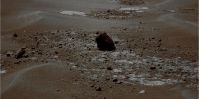
OPP-SOL2057-GB-LXT.jpgApproaching a small - and yet unusually-positioned and oddly-looking - Boulder - Sol 2057 (Natural Colors; credits: Dr G. Barca & Lunexit)57 visitenessun commentoMareKromium
|
|
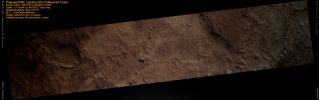
PSP_007124_1765_RED_abrowse~0.jpgProposed MSL Landing Site in Miyamoto Crater (MULTISPECTRUM; credits: Lunexit)57 visiteMiyamoto Crater is located in South-Western Meridiani Planum (and South-West of the Mars Exploration Rover Opportunity Landing Site).
This image shows fairly smooth plains and some areas covered by Windstreaks.
The streaks suggest that wind is an active process here, depositing surface material downwind in this distinctive form. This Landing Site is adjacent to the Hematite-bearing plains unit where the Opportunity Rover sits.
The CRISM instrument has detected Phyllosilicates (Clay Minerals) at this Landing Site, which scientists believe to have formed in the presence of water.
The Mars Science Laboratory rover would investigate the mineral diversity here, which includes Phyllosilicates and Sulfate Minerals.
MareKromium
|
|
| 25353 immagini su 2113 pagina(e) |
 |
|
|
|
|
1502 | |
|
|
|
|





