| Piú viste |
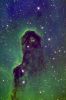
VDB-142.jpgVDB 14257 visite"...And forgive us our debts, as we also have forgiven our debtors..."
- Matthew 6:12
|
|

Supernova Remnant-RCW 86.jpgSupernova Remnant - RCW 8657 visite"...Clauditur oranti, sed panditur aula ferenti..."
(Buchler)
"...La porta è chiusa per chi viene a chiedere, ma aperta a chi porta..."
|
|
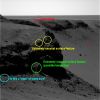
OPP-SOL952-1P212697722EFF76EKP2389L7M1.jpgThe features of Victoria Crater, from Duck Bay (15) - Sol 95257 visitenessun commento
|
|

NGC-3576-1.jpgNGC 3576 - Emission Nebula57 visite"...Vivos voco, mortuos plango, fulgura frango..."
(Indovinello medioevale)
"...Chiamo coloro che vivono, piango i defunti e spezzo i fulmini..."
|
|

OPP-SOL248-b_sol248_L256_Flows.jpgA new interpretation of the "Colors of Mars" (2) - Sol 24857 visitenessun commento
|
|

IC-0342.jpgIC 342 - Spiral Galaxy57 visite"...E quando alfin l'Ora Fatale è giunta,
Forza, ingegno non val, non valgon prieghi;
Contro il Destin non la si vince e spunta,
E tutto sotto lui forza è che pieghi..."
(Casti)
|
|
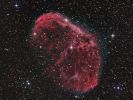
NGC-6888-02.jpgNGC 6888 - Emission Nebula57 visite"...Pascha non sequitur Marcum, nec praecedit Benedictum..."
(proverbio medievale)
"...La Pasqua non segue il giorno di S. Marco (25 Aprile), nè precede quello di S. Benedetto (21 Marzo)..."
(questo detto fissa i termini della Pasqua la quale, per regola generale, non può cadere prima del 22 Marzo - però accadde nel 1818 ed avverrà ancora nel 2285 e nel 2353 A.D. -, nè dopo il 25 Aprile - come però avvenne nel 1886 e nel 1943)
|
|
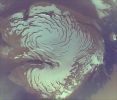
North_Polar_Cap_oct2006.jpgThe "North Polar Cap" of Mars57 visiteDuring the last week of September and the first week or so of October, 2006, the Mars Reconnaissance Orbiter (MRO) scientific instruments were turned on to acquire test information leading up to full science operations to begin the first week of November 2006, following superior conjunction (superior conjunction is where a planet goes behind the sun as viewed from the Earth). Since it is very difficult to communicate with a spacecraft when it is close to the Sun as seen from Earth, this checkout of the instruments was crucial to being ready for the Primary Science Phase (PSP) of the mission.
Throughout the Transition Phase of operations, the Mars Color Imager (MARCI) acquired terminator (transition between nighttime and daytime) to terminator swaths of color images on every dayside orbit, as the spacecraft moved northward in its orbit. The south polar region was deep in winter shadow, but the north polar region was illuminated the entire martian day. During the primary mission, these swaths will be assembled into global maps that portray the state of the martian atmosphere -- its weather -- as seen every day and at every place at about 3 PM local solar time. After the Transition Phase was completed, most of the instruments were turned off, but the Mars Climate Sounder and MARCI have been left on. Their data will be recorded and played back to Earth following the communications blackout associated with conjunction and just prior to the start of the PSP.
Combined with Mars Global Surveryor (MGS) Mars Orbiter Camera (MOC) wide angle image mosaics taken at 2 PM local solar time, the MARCI maps will be used to track motions of clouds.
The image shown above is a composite mosaic of four polar views of Mars, taken at midnight, 6 AM, noon, and 6 PM local martian time. This is possible because during summer the sun is always shining in the polar region. It shows the mostly water ice perennial cap (white area), sitting atop the north polar layered materials (light tan immediately adjacent to the ice), and the dark circumpolar dunes. This view shows the region poleward of about 72 degrees north latitude. The data were acquired at about 900 meters per pixel. Three channels are shown here (425 nm, 550 nm, and 600 nm).
|
|

Craters-Unnamed_Crater_in_Terra_Sirenum_12m-00.jpgCrater in Terra Sirenum (1)57 visiteThe largest number of gullies on Mars occur on the walls of southern hemisphere craters. During southern winter, many of the gullied walls are in shadow. It has been known for many years from Mars Global Surveyor Mars Orbiter Camera images that frost forms on these shadowed slopes and that differences in the amount or nature of the frost deposits highlight the gully floors and deposits. Such differences may occur because the materials are of different particle sizes, or have other differing attributes that affect their thermophysical properties. To investigate this phenomenon, CTX acquired this image of a crater at 39.3°S, 136.5°W, where gullies were known to display frost during winter. To see the gullies, download the image and view it in an image processing program, as they are nearly invisible in the normal contrast image.
|
|

Craters-Becquerel_Crater_mound_6m-00.jpgBeautiful Becquerel Crater (1)57 visiteThe mound of layered rock near the center of Becquerel Crater (2,6° North and 8,2° West) is one of the best examples of sedimentary rocks on Mars. This location has been suggested as a possible target for the 2009 Mars Science Laboratory Rover Mission. An interesting attribute of this mound is that most of the actual rock is light-toned. The darker bands seen in this image are actually dark, wind-blown sediment that has been trapped on the surface by the small escarpments associated with each layer. The source of this dark sediment is the sand dune fields to the north and south of the layered mound.
North is towards the top of the 5 images and the Sun is shining from the left.
|
|

Craters-Becquerel_Crater_mound_6m-03.jpgBeautiful Becquerel Crater (4)57 visitenessun commento
|
|
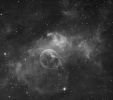
NGC-7635~2.jpgNGC 7635 - The "Bubble Nebula"57 visite"...On the White Stone is written a name that no one knows, except the one who receives it..."
- Revelation 2:17
|
|
| 25353 immagini su 2113 pagina(e) |
 |
|
|
|
|
1501 | |
|
|
|
|





