| Piú viste |

ESP_016228_2650_RED_abrowse-PCF-LXTT-02.jpgNorth Polar Avalanches (CTX Frame and EDM - Absolute Natural Colors; credits for the additoonal process. and color.: Dr Paolo C. Fienga - Lunexit Team)213 visiteMars Local Time: 12:36 (Early Afternoon)
Coord. (centered): 85,0° North Lat. and 151,5° East Long.
Spacecraft altitude: 320,0 Km (such as about 200,0 miles)
Original image scale range: 32,0 cm/pixel (with 1 x 1 binning) so objects ~ 96 cm across are resolved
Map projected scale: 25 cm/pixel
Map projection: POLAR STEREOGRAPHIC
Emission Angle: 1,7°
Phase Angle: 71,6°
Solar Incidence Angle: 70° (meaning that the Sun is about 20° above the Local Horizon)
Solar Longitude: 36,6° (Northern Spring)
Credits: NASA/JPL/University of Arizona
Additional process. and coloring: Dr Paolo C. Fienga - Lunar Explorer ItaliaMareKromium
|
|

Volcanic_Features-Collapse_Pit_Chains-AMEF-PIA15208-PCF-LXTT.jpgCollapse Features on the Eastern Flank of Ascraeus Mons (Absolute Natural Colors; credits for the additional process. and color.: Dr Paolo C. Fienga - Lunexit Team)213 visiteOrbit Number: 44032
Latitude: 11,473° North
Longitude: 258,657° East
Instrument: VIS
Captured: November, 17th, 2011MareKromium
|
|
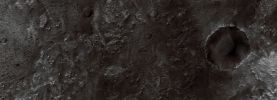
ESP_024513_1980-PCF-LXTT-01.jpgFeatures of the Dark Syrtis Major Region (Absolute Natural Colors; credits for the additional process. and color.: Dr Paolo C. Fienga - Lunexit Team)213 visiteMars Local Time: 14:23 (early afternoon)
Coord. (centered): 18,0° North Lat. and 76,9° East Long.
Spacecraft altitude: 280,9 Km (such as about 175,6 miles)
Original image scale range: 28,1 cm/pixel (with 1 x 1 binning) so objects ~ 84 cm across are resolved
Map projected scale: 25 cm/pixel
Map projection: EQUIRECTANGULAR
Emission Angle: 5,0°
Phase Angle: 41,4°
Solar Incidence Angle: 36° (meaning that the Sun is about 54° above the Local Horizon)
Solar Longitude: 17,5° (Northern Spring)
Credits: NASA/JPL/University of Arizona
Additional process. and coloring: Lunar Explorer ItaliaMareKromium
|
|

ESP_024977_1905_RED-PCF-LXTT-00.jpgPossible Migrating Dunes in Arabia Terra (CTX Frame "A" - Absolute Natural Colors; credits for the additional process. and color.: Dr Paolo C. Fienga - Lunexit Team)213 visiteCoord. (centered): 10,6° North Lat. and 9,1° East Long.MareKromium
|
|

ZZ-Mercury-Natural_Satellite-Caduceus-PIA15542.jpgNOT ALONE!213 visiteCaption NASA:"This discovery image provides the first evidence that Mercury has a small natural satellite or moon. Visible as a small bright spot in an image taken yesterday by the Mercury Dual Imaging System (MDIS) Wide Angle Camera (WAC), the moon is approximately 70 meters (230 feet) in diameter and orbits Mercury at a mean distance of 14.300 Km (such as 8890 miles). A proposal to name the moon "Caduceus", after the staff carried by the Roman god Mercury, has been submitted by the MESSENGER team to the International Astronomical Union, the body responsible for assigning names to celestial objects.
This discovery presents an unprecedented opportunity for a return of samples from the Mercury System, as Project Scientist Nat MacRulf explains. "We have yet to identify a sample from Mercury in any of the meteorite collections we have here on Earth. Such a sample would give us critical insight into the chemical composition of Mercury and the timing of crustal formation on that body, leading to a better understanding of how the planet formed and evolved. If we could obtain a sample of Caduceus, it would enhance the scientific return of the MESSENGER mission beyond our wildest dreams!"
Work on designing a scenario for sample return is already underway. MESSENGER Project Manager Burt Panini held an emergency meeting with the MESSENGER mission operations and navigation teams yesterday evening to determine if the spacecraft could be targeted toward the diminutive moon. After an intensive discussion, a unanimous decision was taken to abandon the orbit-correction maneuvers that had been planned for later this month to place the spacecraft in an eight-hour orbit. Instead, the new plan is to use the remaining propellant to crash MESSENGER into Caduceus. "Our detailed analysis tells us that if we act now, and with the right trajectory, MESSENGER will impart just enough momentum to the moon to break it free of Mercury's Gravity well and set it on an Earth-crossing trajectory suitable for recovery as a Mercury meteorite", said Panini.
This action will form the basis of a new request to NASA by the MESSENGER team for an extended extended mission, tentatively called "MESSENGER Infinitesimally Nudging Caduceus", or MIN-C for short. Once MIN-C is approved by NASA, the Spacecraft will be targeted for a collision trajectory. If Caduceus is successfully released from the pull of Mercury and placed on a course to reach Earth, we can expect the moon to arrive at Earth by 2014. "The risk to the public is reassuringly small", offers MESSENGER mission design lead Adam McJames. "We have designed a trajectory that will bring the moon to Earth at a remote location on the Wilkes Land ice sheet in Antarctica. This trajectory will avoid all population centers and will put the moon's impact site within reach for retrieval by the scientific staff at the U.S.-operated McMurdo Station".
If successful, MESSENGER's extended extended MIN-C mission will mark the first instance of the documented arrival to Earth of material from the Mercury system. Moreover, it will serve as the basis for a new Discovery-class mission proposal currently in development by the Applied Psychics Laboratory for a Mercury lander mission for in situ X-ray analysis of surface composition. That mission is to be named the Hermean On-surface Analysis with X-rays.
Date acquired: March 31, 2012
Image Mission Elapsed Time (MET): 131766564
Image ID: 6418
Instrument: Wide Angle Camera (WAC) of the Mercury Dual Imaging System (MDIS)
Center Latitude: 38,15° North
Center Longitude: 66,18° East
Resolution: 410 meters/pixel (0,25 miles/pixel) in the lower left corner of the image
Scale: the large crater in the center of the image (Copland) is about 210 Km (such as approx. 130 miles) in diameter.
Spacecraft Altitude: 16.200 Km (10.070 miles)
Incidence Angle: 69,1°
Emission Angle: 80,8°
Phase Angle: 138,2°MareKromium
|
|
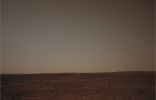
SOL006-2N126909072ESF0205P1513L0M1.jpgHorizon - Sol 6 (Absolute Natural Colors; credits for the additional process. and color.: Dr Paolo C. Fienga - Lunexit Team) 213 visitenessun commentoMareKromium
|
|
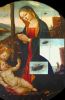
UFO_S__Giovanni.jpgA UFO "watches over" San Giovanni?213 visiteLa meccanica quantistica e' confusa e la coscienza e' confusa, quindi forse sono uguali.
Scott AaronsonMareKromium
|
|

APOLLO 12 AS 12-46-6842.jpgAS 12-46-6842 - Shadows and "Star-like" Lights over Surveyor Crater (5)212 visiteE allora, se non si tratta di difetti, di che cosa stiamo parlando? Onestamente solo gli astronauti potrebbero (ma non vogliono o non possono) dircelo. A volte pensiamo che gli astronauti non abbiano neppure badato a quello che gli passava davanti e che le riprese di oggetti "anomali" siano, in realtà, un fatto "casuale". Già, ma si tratta di un'eventualità - quest'ultima - anche meno credibile della possibilità di aver fotografato delle "Alien Spaceships"...
|
|

APOLLO 15 AS 15-87-11849-1.jpgAS 15-87-11849 - Mount Hadley in colors (2)212 visiteIn questo frame, sempre del Monte Hadley, si riesce ad intravedere, in posizione centrale rispetto ai lati della fotografia, approssimativamente a mezza altezza e ad una distanza apparente di circa 35/40 metri dall'astronauta che riprende, il macigno color grigio e azzurro del quale Vi avevamo accennato in precedenza. Nella versione HR di questo stesso frame si riescono a vedere più dettagli del paesaggio, ma la roccia "anomala" è comunque troppo lontana per riuscire a capire bene di che cosa si tratti.
|
|

M-001-6.jpgM 1 - The "Crab Nebula"212 visite"...Nel mezzo cielo del mattino, fra il passare di una nuvola ed una nuova nuvola, si accese una grande luce bianca, come un Nuovo Sole. L'intera Natura rimase sorpresa, ed intimorita, da questo presagio..."
(Cronache Cinesi dell'A.D. 1054, relative all'apparizione della Supernova che avrebbe poi generato la Nebulosa del Granchio)
|
|

APOLLO 15 AS 15-97-13145.jpgAS 15-97-13145 - Big crater, small crater...212 visiteUn cratere "maggiore" con al suo fianco (anzi: sul suo bordo) un cratere minore. Si tratta di un fenomeno assolutamente naturale che abbiamo avuto occasione di riscontrare anche su Marte e su alcune delle lune dei Giganti Gassosi.
Strano...ma vero!
|
|

APOLLO 17 AS 17 134-20388.jpgAS 17-134-20388 - A VERY clean "landing pad"212 visiteDettaglio di una delle "zampe" del Lunar Module che, a giudicare da questa ripresa, sembra essere decisamente "affondata" nella soffice polvere Lunare (anche se non ci sentiremmo di scartare l'eventualità che il landing "pad" si sia posizionato - per caso, naturalmente - nel bel mezzo di un cratere di piccole dimensioni). Un'altra curiosità, poi, attiene la (ormai consueta) mancanza di "polvere da riporto" sulle gambe del LM e sul landing pad stesso. Guardate l'immagine con attenzione e verificate Voi stessi: la parte di LM che si vede, è pulitissima!
|
|
| 25353 immagini su 2113 pagina(e) |
 |
|
|
|
|
149 | |
|
|
|
|





