| |
| Piú viste |
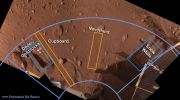
PHOE-SOL060-PIA11004.jpgPhoenix's Workspace - Sol 60 (True Colors; credits: NASA)57 visiteCaption NASA:"This image taken by NASA's PHoenix Mars Lander's Surface Stereo Imager shows the current trenches, labeled Dodo-Goldilocks and Snow White, and the areas identified for future digging, labeled Cupboard and Neverland".MareKromium
|
|
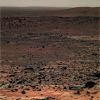
SOL1169-1.jpgMartian Landscape - Sol 1169 (natural colors; credits: Dr G. Barca)57 visitenessun commentoMareKromium
|
|
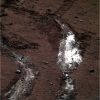
SOL1187-1.jpgRover Tracks, Colourful Dust and White Sulphates - Sol 1187 (True Colors; credits: Dr G. Barca)57 visitenessun commentoMareKromium
|
|
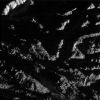
Enceladus-N00118361.jpgThe Unbelievable Surface of Enceladus, from ONLY 545 Km!57 visiteCaption NASA:"Caption NASA:"N00118365.jpg was taken on August 11, 2008 and received on Earth August 12, 2008. The camera was pointing toward ENCELADUS that, at the time, was approximately 545 Km away.
The image was taken using the CL1 and CL2 filters and it has not been validated or calibrated".
Note Lunexit: tutta la Regione ripresa pare essere - letteralmente - un "groviglio" di crepacci e di canali che si intersecano e che evidenziano, sulle loro estremità, l'esistenza di rilievi davvero singolari (alcuni a forma sferoidale, ed altri, molto irregolari, che ci ricordano i "rami contorti" di una sorta di foresta pietrificata). Comune a tutti i rilievi visibili è l'abedo: elevatissima (si tratta forse di grandi "blocchi di ghiaccio"? Probabilmente si).
Un numero elevato di boulders è chiaramente distinguibile sull'intera scena e, in particolare, sul versante illuminato del crepaccio situato nell'angolo superiore Sx del frame (un crepaccio che, a nostro parere, lascia altresì intuire - se si osserva con estrema attenzione - la presenza di "chiazzature" le quali possono ricordare i "seeps" Marziani).
Un grandissimo frame, reso ancora più straordinario dal fatto che il panorama ripreso giace a ridosso del Terminatore!MareKromium
|
|

Enceladus-PIA11107.jpgDamascus Sulcus57 visiteCaption NASA:"This image is the 7th skeet-shoot image taken during Cassini's very close flyby of Enceladus on Aug. 11, 2008. Damascus Sulcus is crossing the upper part of the image.
The image was taken with the Cassini Spacecraft narrow-angle camera on Aug. 11, 2008, a distance of approx. 4742 Km (such as about 2947 miles) above the surface of Enceladus.
Image scale is approximately 30 meters (98 feet) per pixel". MareKromium
|
|

The_Rings-PIA10446.jpgIn the Sunlight... (natural colors; credits: NASA)57 visiteCaption NASA:"Saturn's icy Rings shine in scattered sunlight in this view, which looks toward the unilluminated northern side of the Rings from about 15° above the Ring-Plane. The Sun currently illuminates the Rings from the South. Some of the sunlight not reflected from the Rings' southern face is scattered through the countless particles, setting the Rings aglow. The inner F-Ring shepherd moon Prometheus (86 Km, or about 53 miles across at its widest point) appears at lower left.
Images taken using red, green and blue spectral filters were combined to create this natural color view. Bright clumps of material in the narrow F-Ring moved in their orbits between each of the color exposures, creating a chromatic misalignment in several places that provides some sense of the continuous motion within the Ring System.
The images were obtained with the Spacecraft wide-angle camera on July 4, 2008 at a distance of approx. 1,2 MKM (about 770.000 miles) from Saturn. The Phase Angle was 28°.
Image scale is roughly 70 Km per pixel".MareKromium
|
|

Enceladus-PIA11112.jpgThe (possible) True Colors of Enceladus (credits: Lunexit)57 visiteQuesta colorizzazione in possibili Colori Veri è la risposta ad un quesito postoci dal nostro Amico "Alby56", il quale ci domanda - appunto - quali sìano (possano essere) i colori di Encelado.
Come ovvio, una risposta che abbia valore assoluto non possiamo darla, però possiamo provare a ragionarci sopra e vedere che cosa si riesce a stabilire...Dunque:
1) Encelado, a quanto pare, è completamente ricoperto da uno (spesso) strato di ghiaccio d'acqua ed esso - per motivi ancora non noti, ma che potremmo rinvenire, ad esempio, in un "riscaldamento periodico" dell'intero globo causato da "frizionamento mareale" con Saturno, si rinnova, nel tempo, rimuovendo i segni classici che dimostrano l'invecchiamento di un Corpo Celeste (su tutti: i crateri da impatto, i quali vengono - letteralmente - "cancellati", se sono piccoli, oppure "riempiti e parzialmente nascosti", se di medio-grandi dimensioni);
2) il ghiaccio d'acqua, allorchè illuminato dal Sole, risplende di color bianco, con riflessi azzurri;
3) il Sole, visto da Encelado, dovrebbe apparire non molto più grande di una qualsiasi delle altre stelle visibili dalla sua superficie e questo ci spinge a ritenere che la sua capacità di illuminare questo piccolo mondo sia trascurabile;
4) su Encelado, non esistendo un'atmosfera e dunque non sussistendo le condizioni per la diffusione della luce solare (anche se ci è possibile ipotizzare una diffusione minima e meramente stagionale - grazie alle particelle di ghiaccio e di vapore acqueo che restano, per un certo tempo, in sospensione nello spazio circum-Enceladiano), riteniamo che il panorama visibile ad occhi umani risulti, globalmente, piuttosto buio.
Ma attenzione: potrebbe essere ragionevole ipotizzare una dominante bianca (provocata dal Sole e dal ghiaccio) durante il "Giorno" di Encelado - ed a cielo sgombro - oppure, allorchè Saturno splende nel cielo di Encelado in tutta la sua pienezza, si potrebbe ipotizzare, sempre per una visione "umana", un paesaggio illuminato da una colorazione dominante giallo-arancio, la quale - al suolo - potrebbe tradursi in un colorito giallo pallido dei rilievi maggiori, con riflessi bianchi, azzurri e, forse - in alcune zone - anche verdastri.
Conclusioni: da una certa distanza (supponiamo tra i 500 ed i 25000 Km), Encelado - ad occhi umani - dovrebbe apparire, allorchè illuminato congiuntamente dal Sole e da Saturno (come in questo frame), di color giallo pallido, con riflessi bianchi ed azzurri (e quindi, in alcune regioni ed in determinate ore del giorno, non è assurdo ipotizzare la visione/percezione di delicate sfumature di color grigio e rosa).
Oltre i 25000/30000 Km di distanza, infine, Encelado dovrebbe apparire, ad un Osservatore che lo scrutasse "ad occhio nudo", di color bianco brillante, con debolissime (diremmo quasi impercettibili) sfumature di colore giallo e rosa.MareKromium
|
|
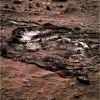
SOL1304-1.jpgRover Tracks and Sulphates - Sol 1304 (Possible True Colors; credits: Dr G. Barca)57 visitenessun commentoMareKromium
|
|
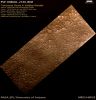
PSP_008681_2550_RED.jpgTransverse Dunes in Vastitas Borealis (natural colors; credits: Lunexit)57 visiteThe Vastitas Borealis Region, or Northern Lowlands, is a large area of low-lying surface that surrounds Mars’ North Pole.
On average, the Region is 4-5 Km lower in elevation than the mean radius of the Planet. How this basin formed is not known, although researchers have postulated that it could have been the result of a very large-scale impact sometime in Mars’ distant past. As of this writing, it is Summer in the Martian Northern Hemisphere, allowing the HiRISE camera to image this Region in full sunlight.
The sinuous landforms are dunes composed of sand that is made of basalt (a volcanic rock) or gypsum (a hydrous sulfate). There is a transition of modified barchanoid (crescent shaped dunes, generally wider than they are long) and transverse chains into star dunes; the winds change a lot in this area. The orientation of the barchanoid and transverse dunes indicate that the winds that formed them blow from the East (right side of image).
In some areas there are a few linear dunes. The light-toned, smaller bedforms are designated Transverse Aeolian Ridges (TARs).
MareKromium
|
|
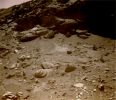
OPP-SOL1613-1N271377429EFF90DCP1935L0M2.jpgFrom inside Victoria - Sol 1613 (trichromatic version; credits: Lunexit)57 visitenessun commentoMareKromium
|
|

PSP_009039_1660_RED.jpgCraters in South-Eastern Syria Planum (natural colors; credits: Lunexit)57 visiteThis image shows two landforms that appear similar, but are the result of two very different geologic processes.
These two depressions are craters. The smaller, rounder crater formed when an asteroid collided with Mars. This impact blasted out the pre-existing rocks, forming this quasi-circular crater.
The larger, more irregular-shaped crater is a Pit Crater. These types of craters form through collapse of the ground surface into large underground voids. In this Region of Mars, these underground voids are likely caused by the movement of magma (molten rock) through the subsurface. As the magma moves underground, it forces the rock apart and forms large “caverns.” These voids are structurally unstable and can lead to collapse of the overlying rock, forming pit craters at the surface.
Impact Craters are distinguished from Pit Craters by the presence of a raised rim. Rock blasted out during the impact falls back to the ground and accumulates near the crater, forming this raised rim. Upward warping of the ground during the impact process also contributes to the raised appearance of the crater rim. Since Pit Craters form through collapse, their rims are at the same level, or perhaps slightly lower, than surrounding ground surface.
The Impact Crater has a bright streak extending South-East (toward the upper right). The bright material is dust, deposited downwind of the crater by prevailing winds. Zooming into the streak, small bedforms, presumably composed of dust or dust aggregates, are visible. Similar features are seen in other dusty regions of Mars.MareKromium
|
|
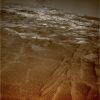
OPP-SOL1619-1N271912662EFF90GBP1997L0M1.jpgFrom inside Victoria - Sol 1619 (trichromatic version; credits: Lunexit)57 visitenessun commentoMareKromium
|
|
| 25353 immagini su 2113 pagina(e) |
 |
|
|
|
|
1488 | |
|
|
|
|
|
|





