| Piú viste |

as16-114-18454.JPGAS 16-114-18454 - Lunar Rover57 visitenessun commentoMareKromium
|
|
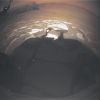
OPP-SOL1388-1F251413689EFF8800P1144R0M1-0.jpgWhat a View! - Sol 1388 (MULTISPECTRUM; credits: Lunexit)57 visitenessun commentoMareKromium
|
|

IC-1396~1.jpgIC 1396 - Emission Nebula (Mid IR)57 visite"...Vir vituperatur ultimo vituperio, quando nihil facit nisi propter se ipsum..."
(Averroè)
"...L'uomo è marcato dall'infamia più grande allorchè non fa nulla che non sia per se stesso..." (trad. libera)MareKromium
|
|

Mars_Orion.jpgMars and Orion over Monument Valley57 visite"...Consuetudine levior est labor..."
(Livio)
"...Con l'abitudine, il (ogni) lavoro appare meno pesante..."MareKromium
|
|

OPP-SOL1167-PIA10210-1.jpgCape St. Vincent (natural - but sligthly darkened - colors; MULTISPECTRUM processing; credits: Lunexit)57 visiteCaption NASA:"The cliff in this image from Opportunity's PanCam is informally named Cape St. Vincent. It is a promontory approx. 12 mt (39 feet) tall on the Northern Rim of Victoria Crater, near the farthest point along the Rover's traverse around the rim. Layers seen in Cape St. Vincent have proven to be among the best examples of meter scale cross-bedding observed on Mars to date. Cross-bedding is a geologic term for rock layers which are inclined relative to the horizontal and which are indicative of ancient sand dune deposits. In order to get a better look at these outcrops, Pancam Super-Resolution (SR) imaging techniques were utilized.
SR is a type of imaging mode which acquires many pictures of the same target to reconstruct a digital image at a higher resolution than is native to the camera.
These SR images have allowed scientists to discern that the rocks at Victoria Crater once represented a large Dunefield, not unlike the Sahara desert on Earth, and that this Dunefield migrated with an ancient wind flowing from the North to the South across the Region. Other Rover chemical and mineral measurements have shown that many of the ancient sand dunes studied in Meridiani Planum were modified by surface and subsurface liquid water long ago.
This is a Mars Exploration Rover Opportunity PanCam image acquired on Sol 1167 (May 7, 2007), and was constructed from a mathematical combination of 16 different blue filter (480 nm) images".MareKromium
|
|
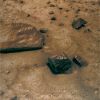
SOL014-06.jpgEarly Martian Misteries... - Sol 14 (Natural Colors + MULTISPECTRUM; credits: Dr Gianluigi Barca - Lunexit Team)57 visitenessun commentoMareKromium
|
|
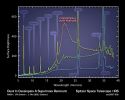
SN-Cassiopeia_A_-PIA10207.jpgCassiopeia "A": Dissecting the Wake of a Supernova Explosion57 visiteThe elements and molecules that flew out of the Cassiopeia A star when it exploded about 300 years ago can be seen clearly for the first time in this plot of data, called a Spectrum, taken by NASA's SST.
The Spectrum, which was created by splitting light into its basic components, reveals the composition of gas and dust that were synthesized in the explosion. It also provides some of the best evidence yet that stellar explosions, called Supernovae, were a significant source of fresh dust in the very young universe.
Prior to these observations, nobody was certain where this early dust — the same dust that ultimately made its way into future stars, planets and people — came from.
One of the most interesting features of the plot is a bump labeled Cassiopeia A Dust Feature. This bump is actually the signature of a collection of dust composed of proto-silicates, Silicon Dioxide and Iron Oxide. The Spectrum reveals that the brightness of the dust feature is correlated to that of Argon gas (yellow vertical line at left), known to have been expelled and synthesized during the star's explosion. The fact that the dust is associated with the expelled gas, or ejecta, tells astronomers that this Supernova manufactured new dust.
Each of the 3 lines of this plot represents a different layer of the Supernova remnant, with the top yellow and red line being the outermost layer.
Similar correlations between gas and dust are also seen in the middle layer (green line). For example, neon gas correlates with dust composed of Carbon and Aluminum Oxide.MareKromium
|
|
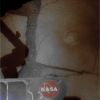
OPP-SOL1395.jpgReddish dust, bluish pebbles... - Sol 1395 (natural colors + MULTISPECTRUM; credits: Dr Gianluigi Barca + Lunexit)57 visitenessun commentoMareKromium
|
|

OPP-SOL003.jpg"Alien Landscape" - Sol 3 (natural colors + MULTISPECTRUM; credits: Dr Gianluigi Barca & Lunexit)57 visitenessun commentoMareKromium
|
|
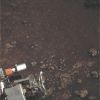
SOL1229-2.jpgThe "Purple-Reddish" color of Gusev's Surface - Sol 1229 (High Tau effect + natural colors + MULTISPECTRUM; credits: Dr Gianluigi Barca & Lunexit)57 visitenessun commentoMareKromium
|
|

025-Mars_Global_with_Nomenclature.jpgMars Map for Beginners57 visiteUna Mappa semplice ed immediata non guasta mai...MareKromium
|
|
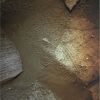
OPP-SOL1394-1P251928949EFF8800P2412R1M1.jpgVictoria's Paving - Sol 1394 (natural colors + MULTISPECTRUM; credits: Lunexit)57 visitenessun commentoMareKromium
|
|
| 25353 immagini su 2113 pagina(e) |
 |
|
|
|
|
1468 | |
|
|
|
|





