| Piú viste |
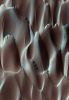
PSP_007193_2640_RED_abrowse-01.jpgDefrosting Northern Dunes (extra-detail mgnf - MULTISPECTRUM; credits: Lunexit)57 visiteThis extra-detail mgnf shows a Region of the dunes that are just beginning to lose their seasonal ice cover. In most of the image the dunes are a muted red color. Where the sun is shining on the steep dune crests the frost is gone and dark dust is free to cascade down the sides. This thin layer of dust, like slope streaks found elsewhere on Mars, flows down around obstacles and may come to rest mid-slope.MareKromium
|
|
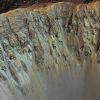
PSP_007151_1445_RED_abrowse-01.jpgColorful Layers in the Walls of an Unnamed Southern Crater (extra-detail mgnf - MULTISPECTRUM; credits: Lunexit)57 visiteThis extra-detail mgnf (enhanced to exaggerate color contrast) shows part of the North-facing walls of the crater, deeply carved by landslides. Rocky layers, mostly purplish in color, can be followed for hundreds of meters, poking through the loose materials that cover the slopes.
Locally, the rocky layers show patches of diverse colors (blue, green, yellow). These colors may be indicative of compositional differences in the rocky layers.MareKromium
|
|

ZO-Mercury21_Messenger-big.jpgCrescent Mercury (in Accentuated Colors; credits: NASA)57 visiteCaption NASA:"The colors of Mercury are subtle but beautiful. At first glance, our Solar System's innermost Planet appears simply black and white, but images that include IR colors normally beyond human vision accentuate a world of detail. One such image, shown above, was acquired by the robotic MESSENGER Spacecraft that swung by Mercury in mid-January 2008.
Here, most generally, the hot world itself acquires a slightly more brown hue. Many craters that appear on top of other craters - and so surely have formed more recently - appear here as bright with bright rays that include a slightly blue tint, indicating that soil upended during the impact was light in color. A few craters, such as some in the huge Caloris Basin impact feature visible on the upper right, appear unexpectedly to be ringed with a dark material, the nature of which is being researched.
MESSENGER continues to glide through the inner Solar System and will pass Mercury again this October and next September, before entering orbit around the desolate world in 2011".MareKromium
|
|

PSP_006673_1600_RED_abrowse.jpgBright Material on the Floor of an Unnamed Crater (natural colors; credits: Lunexit)57 visiteThis image shows part of a crater wall and floor, where the floor is covered by dunes and distinct regions of bright material. The bright material stands higher than the rest of the floor suggesting that it is more resistant to erosion than surrounding materials.
It is possible that more and more bright material will be exposed over time; why the material is bright is unknown.
The material might be evaporites, that form when salt water dries up and leaves behind salt deposits (the evaporites).
Also in this scene is a crater with a ridge running up to its west (left) side. The ridge is lighter and might be evidence that water flowed through it, bleaching the rocks as it went. The water might have cemented the soil, causing it to be more resistant to erosion and high standing as seen today.MareKromium
|
|

OPP-SOL489-1.jpgDeep, deep Rover Track - Sol 489 (True Colors; credits: Dr Gianluigi Barca)57 visitenessun commentoMareKromium
|
|

HD-189733b-1.jpgExtra-Solar Planet HD 189733b57 visiteNASA's Hubble Space Telescope (HST) has made the first detection ever of an organic molecule in the atmosphere of a Jupiter-sized planet orbiting another star. This breakthrough is an important step in eventually identifying signs of life on a planet outside our Solar System.
The molecule found by Hubble is Methane, which under the right circumstances can play a key role in prebiotic chemistry — the chemical reactions considered necessary to form life as we know it.
This discovery proves that Hubble and upcoming space missions, such as NASA's James Webb Space Telescope, can detect organic molecules on planets around other stars by using spectroscopy, which splits light into its components to reveal the "fingerprints" of various chemicals.
"This is a crucial stepping stone to eventually characterizing prebiotic molecules on planets where life could exist," said Mark Swain of NASA's Jet Propulsion Laboratory (JPL), Pasadena, Calif., who led the team that made the discovery. Swain is lead author of a paper appearing in the March 20 (2008) issue of Nature.
The discovery comes after extensive observations made in May 2007 with Hubble's Near Infrared Camera and Multi-Object Spectrometer (NICMOS). It also confirms the existence of water molecules in the planet's atmosphere, a discovery made originally by NASA's Spitzer Space Telescope in 2007. "With this observation there is no question whether there is water or not — water is present", said Swain.
The planet now known to have Methane and water is located 63 Light-Years away in the constellation Vulpecula. Called HD 189733b, the planet is so massive and so hot it is considered an unlikely host for life. HD 189733b, dubbed a "hot Jupiter", is so close to its parent star it takes just over two days to complete an orbit. These objects are the size of Jupiter but orbit closer to their stars than the tiny innermost planet Mercury in our solar system.
HD 189733b's atmosphere swelters at 1700 degrees Fahrenheit, about the same temperature as the melting point of Silver.
Though the star-hugger planet is too hot for life as we know it, "this observation is proof that spectroscopy can eventually be done on a cooler and potentially habitable Earth-sized planet orbiting a dimmer red dwarf–type star," Swain said. The ultimate goal of studies like these is to identify prebiotic molecules in the atmospheres of planets in the "habitable zones" around other stars, where temperatures are right for water to remain liquid rather than freeze or evaporate away.
The observations were made as the planet HD 189733b passed in front of its parent star in what astronomers call a transit. As the light from the star passed briefly through the atmosphere along the edge of the planet, the gases in the atmosphere imprinted their unique signatures on the starlight from the star HD 189733.
The astronomers were surprised to find that the planet has more Methane than predicted by conventional models for "hot Jupiters".
"This indicates we don't really understand exoplanet atmospheres yet," said Swain. "These measurements are an important step to our ultimate goal of determining the conditions, such as temperature, pressure, winds, clouds, etc., and the chemistry on planets where life could exist. Infrared spectroscopy is really the key to these studies because it is best matched to detecting molecules", said Swain.
Swain's co-authors on the paper include Gautam Vasisht of JPL and Giovanna Tinetti of University College, London/European Space Agency.MareKromium
|
|
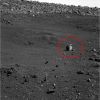
SOL524-2P172890954EFFAC00P2438L7M1-1.jpgExtremely unusual "Boulder" - Sol 524 (context frame; credits: Dr Gianluigi Barca57 visiteIl particolare evinto dal Dr Gianlui Barca in questo frame Spirit è di quelli che lasciano, se non altro - e come minimo -, piuttosto sorpresi: che la Natura si sbizzarrisca, infatti, attraverso la creazione di rilievi le cui forme, tavolta, sono incredibili ed inarrivabili anche per l'Immaginazione del più surreale e fantasioso degli Artisti è un fatto. Ma qui, su Marte (e lo diciamo scherzosamente come ovvio...), sembra proprio che si stia esagerando: andate a guardare l'extra-detail mgnf che segue...
Nota: per quanto attiene qualche nostra nota preliminare sul bizzarro macigno in oggetto (e scritta nel Giugno 2005), Vi rinviamo ai nostri primi (e sommari) commenti che potrete leggere nel quadro intitolato 'A "lonely, big and unusually-shaped" Boulder - Sol 524'.MareKromium
|
|

SOL422-1.jpgSolar Panels, Rover Tracks and "Brown Dust" - Sol 422 (True Colors; credits: Dr Gianluigi Barca)57 visitenessun commentoMareKromium
|
|
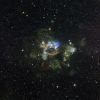
N-44.jpgThe N44 Complex57 visite"...I commune with my heart in the night; I meditate and search my Spirit..."
- Psalm 77:6MareKromium
|
|

Enceladus-PIA10356.jpgWhat's in "Enceladus Plume"?57 visiteCaption NASA:"The lower panel is a Mass Spectrum that shows the chemical constituents sampled in Enceladus' plume by Cassini's Ion and Neutral Mass Spectrometer during its fly-through of the plume on Mar. 12, 2008.
Shown are the amounts, in atomic mass per elementary charge (Daltons [Da]), of Water Vapor, Methane, Carbon Monoxide, Carbon Dioxide, simple organics and complex organics identified in the plume".MareKromium
|
|
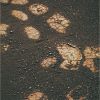
OPP-SOL541-1.jpgMartian Paving - Sol 541 (True Colors + MULTISPECTRUM; credits: Dr G. Barca & Lunexit)57 visitenessun commentoMareKromium
|
|
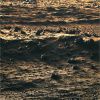
SOL1147-0.jpgLong Shadows in the Evening Hours near Home Plate (1) - Sol 1147 (True Colors + MULTISPECTRUM; credits: Dr Marco Faccin & Lunexit)57 visitenessun commentoMareKromium
|
|
| 25353 immagini su 2113 pagina(e) |
 |
|
|
|
|
1466 | |
|
|
|
|





