| Piú viste |

NGC-4631.jpgNGC 4631 - Irregular Spiral Galaxy57 visite"...Try not: do! Or do not. ..."
(dal film "Star Wars")MareKromium
|
|

ESP_012198_0975_RED_abrowse.jpgSouth Polar Icy Features (Natural Colors; credits: Lunar Explorer Italia)57 visitenessun commentoMareKromium
|
|

SOL1919-2N296733617ESFB1DQP1561L0M1.jpgHorizon... - Sol 1919 (Natural Colors; credits: Lunar Explorer Italia)57 visitenessun commentoMareKromium
|
|

SOL1919-2N296733294ESFB1DQP1561L0M1.jpgHorizon... - Sol 1919 (Natural Colors; credits: Lunar Explorer Italia)57 visitenessun commentoMareKromium
|
|

OPP-SOL404-MF-LXT.jpgThe Beautiful Martian Paving - Sol 404 (Natural Colors; credits: Dr M. Faccin & Lunar Explorer Italia)57 visitenessun commentoMareKromium
|
|
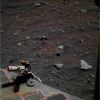
SOL1906-GB-LXT.jpgGray and Purple Surface near Spirit - Sol 1906 (possible True Colors; credits: Dr G. Barca)57 visitenessun commentoMareKromium
|
|
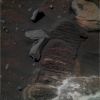
SOL1910-GB2.jpgThe unbelievable True Colors of Gusev's Surface - Sol 1910 (possible True Colors; credits: Dr G. Barca & Lunar Explorer Italia)57 visitenessun commentoMareKromium
|
|

ESP_012873_1075_RED_abrowse.jpgPolar Pit (Natural Colors; credits: Lunar Explorer Italia)57 visiteThis image features the North Wall and Floor of a Polar Pit in the Southern Hemisphere. The Pit Wall is sculpted into a row of gullies. Gullies typically have a triangular start upslope, followed by a channel that transported material, and a triangular debris fan downslope.
Polar Pit Gullies might be related to seasonal changes in frost coverage, but their exact origin is currently unknown. The Gullies appear bright because they probably have seasonal frost on them. The Pit Floor contains a field of dark Sand Dunes.
Wind has transported sand across the Martian Surface, and it was deposited in this Pit and formed dunes.
Some of the sand in the Dunes might have come from the gully debris fans or other erosion of the Pit wall. The bright material within the dunes and along the floor is seasonal frost that is probably composed of CO2 and water ice.MareKromium
|
|

ESP_011946_0985_RED_abrowse.jpgSouth Polar "Cryptic Terrain" (Natural Colors; credits: Lunar Explorer Italia)57 visitenessun commentoMareKromium
|
|
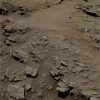
SOL1086-GB-LXT.jpgMartian Corals - Sol 1085 (Natural Colors; credits: Dr G. Barca & Lunar Explorer Italia)57 visitenessun commentoMareKromium
|
|

Daphnis_and_Rings-PIA11656-1.jpgWavy Shadows (ctx frame)57 visiteCaption NASA:"This image of shadows on the Rings and others like it (see also PIA11653 and PIA11655) are only possible around the time of Saturn's equinox which occurs every half-Saturn-year, equivalent to about 15 Earth years. The illumination geometry that accompanies equinox lowers the Sun's angle to the Ring-Plane and causes out-of-plane structures to cast long shadows across the Rings.
This view looks toward the unilluminated side of the Rings from about 49° above the Ring-Plane. The image was taken in visible light with the Cassini Spacecraft narrow-angle camera on April 13, 2009.
The view was obtained at a distance of approx. 1,2 MKM (about 746.000 miles) from Daphnis and at a Sun-Daphnis-Spacecraft, or phase, angle of 56°.
Image scale is roughly 7 Km (about 5 miles) per pixel".MareKromium
|
|
SOL1923-GB-LXT.jpgThe Sky over Gusev - Sol 1923 (Natural Colors; credits: Dr G. Barca & Lunar Explorer Italia)57 visitenessun commentoMareKromium
|
|
| 25353 immagini su 2113 pagina(e) |
 |
|
|
|
|
1450 | |
|
|
|
|





