| Piú viste |
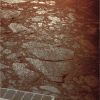
OPP-SOL1308-1P243064411EFF86JZP2365R1M1-3.jpgVictoria's Paving (interpret. n° 4 - possible natural colors; elab. Lunexit) - Sol 130857 visitenessun commentoMareKromium
|
|
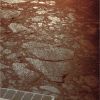
OPP-SOL1308-1P243064411EFF86JZP2365R1M1-2.jpgVictoria's Paving (interpret. n° 3 - possible natural colors; elab. Lunexit) - Sol 130857 visitenessun commentoMareKromium
|
|
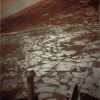
OPP-SOL1313-1N244745088EFF8700P1945R0M1-5.jpgFrom inside Victoria: the Beautiful Martian Paving (1) - Sol 131357 visiteForse la più "verosimile" immagine in Colori Naturali del Paving di Victoria che siamo stati capaci di produrre sino ad ora. Che ne dite?MareKromium
|
|
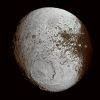
Japetus-PIA08384-2.jpgThe Other Side of Japetus (possible natural colors; elab. Lunexit)57 visitenessun commentoMareKromium
|
|

Japetus-PIA08381.jpgThe "Transition Region of Japetus" (possible natural colors - elab. Lunexit)57 visiteThe Transition Region from Saturn's moon Japetus' dark Leading Hemisphere to its bright Trailing Hemisphere is a complicated patchwork of craters and highlands, with low elevations filled in by dark material.
An explanation of the pattern visible here might be key to a full understanding of the bright/dark dichotomy on Japetus (about 1468 Km across).
The view is centered on the Equator and covers an area 711 Km wide by 417 Km tall (such as about 442 x 259 miles).
The giant Equatorial Ridge visible on the dark Leading Hemisphere is not present anymore in this Region. Instead, large, isolated mountains more than 10 Km tall are spread along the Equator. These mountains show bright western flanks, while the surrounding lowlands are generally dark.
This mosaic is an orthographic projection consisting of 21 image footprints across the surface of Japetus. The view is centered on terrain near 0,1° North Latitude and 199° West Longitude, in the quadrant of Japetus that faces away from Saturn. Image scale is approx. 83 meters (272 feet) per pixel. An orthographic view is most like the view seen by a distant observer looking through a telescope.
The clear spectral filter images in this mosaic were obtained with the Cassini spacecraft narrow- angle camera on Sept. 10, 2007, at distances ranging from 13.857 to 21.846 Km (such as about 8.610 to 13.574 miles) from Japetus.
MareKromium
|
|

Japetus-PIA08378.jpgSo close, and yet so far...57 visiteThis mosaic of Cassini images shows the smallest details ever observed on Saturn's moon Japetus.
Visible here are small craters as well as the base of a large mountain ridge located just South of the mosaic. At several places, bright spots about 20 to 50 meters (66 to 164 feet) across are visible. At these locations, more recent impactors have punched through the overlying blanket of dark material to reveal brighter, cleaner ice beneath.
Since the bright craters are relatively small and very shallow, it is likely that the dark blanket is rather thin in this area; it is assumed that its actual average thickness might be on the order of a foot.
The small crater at the upper left edge of the mosaic has a diameter of about 50 meters (164 feet) and shows a distinct ray pattern from excavated ice. This feature is so bright in comparison to the dark surrounding terrain that it had to be darkened manually so as not to look overexposed in this mosaic.
The mosaic consists of 8 image footprints across the surface of Japetus, presented here in simple cylindrical projection. The view is centered on terrain near 0° North Latitude, 164,9° West Longitude, within the dark Leading Hemisphere of Japetus. Image scale is approx. 10 meters (33 feet) per pixel.
The clear spectral filter images in this mosaic were obtained with the Cassini spacecraft narrow-angle camera on Sept. 10, 2007, at distances ranging from 1.627 to 2.040 Km (such as from about 1.011 to 1.268 miles) from Japetus.MareKromium
|
|

Enceladus-PIA08385.jpgThe sources of Enceladus' Fountains57 visiteCaption NASA:"This map of the South Polar Region of Enceladus shows the correlation between jet sources identified in Cassini imaging data and hot spots on the surface located by the Composite Infrared Spectrometer Instrument.
To identify jet source locations on the surface, imaging scientists carefully measured the locations and orientations of individual jets observed along the moon's limb in Cassini images taken from multiple viewing angles. For each jet measurement, the researchers then computed a curve, or ground track, on the surface of Enceladus along which that jet might lie. The ground tracks from all of the measurements made in the various images produced many intersections on this map. By considering the jet directions at every possible intersection, the researchers isolated 8 clusters of ground track intersections as jet sources.
The 8 identified jet source locations are labeled with yellow roman numerals. Composite Infrared Spectrometer hot spots are red boxes labeled with green capital letters.
The line-of-sight intersections indicating the measurements of each source in individual images are shown as colored diamonds.
White circles indicate the uncertainty in the locations of those sets of intersections.
The map is a polar stereographic projection of Cassini imaging data.
The 4 Tiger Stripe fractures, or sulci, are labeled here.
The South Pole is the dead center on the map.
Key longitudes are also labeled around the perimeter of the map".MareKromium
|
|
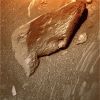
SOL1338-2P245143232EFFAVFUP2514R1M1.jpgSo bright and clean... (2) - Sol 133857 visitenessun commentoMareKromium
|
|
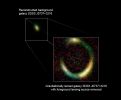
SDSS-DJ0737-3216-B.jpgGalaxy SDSS-J0737+321657 visite"...Ma basterà una Vita Eterna per riuscire a vedere l'Universo intero?..."
P.C. Floegers - "Conversations for Tomorrow"MareKromium
|
|

SDSS-DJ0737-3216-A.jpgGalaxy SDSS-J0737+321657 visite"...You believed in their stories of Fame, Fortune and Glory,
Now you're lost in a haze of alcohol soft middle age
The pie in the sky turned out to be miles too high...
And you hide, hide, hide,
Behind brown and mild eyes..."
Pink Floyd - "Paranoid Eyes"MareKromium
|
|
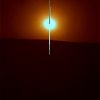
OPP-SOL1319-1N245298186EDN8700P1550L0M1-2.jpgSunset... - Sol 131957 visitenessun commentoMareKromium
|
|

Craters-Hellespontus_Crater-Dunes-MGS-00.jpgFeatures of Hellespontus Crater (Enhanced Absolute Natural Colors; credits for the additional process. and color.: Dr Paolo C. Fienga - Lunexit Team)57 visitenessun commentoMareKromium
|
|
| 25353 immagini su 2113 pagina(e) |
 |
|
|
|
|
1447 | |
|
|
|
|





