| Piú viste |
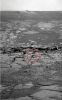
OPP-SOL1530-1P264009775ESF89AHP2292R1M1-1.jpgUnusual Surface Feature (1) - Sol 1530 (context frame; credit: Dr G. Barca)57 visiteDalla cura e dall'occhio del Dr Barca: illusioni ottiche? Fossili? Rocce strane? Forme Vitali Indigene? "Tarocchi" (rectius: maniplazioni grafiche) od "Equilibri Impossibili"? Decidete Voi!
Noi diciamo solo una cosa: chissà... MareKromium
|
|
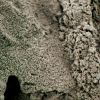
OPP-SOL067-1.jpgWet Sands - Sol 67 (Superdefinition; credits: Dr G. Barca)57 visitenessun commentoMareKromium
|
|

OPP-SOL073.jpgBerries... - Sol 73 (Superdefinition; credits: Dr G. Barca)57 visitenessun commentoMareKromium
|
|

PolarDD.jpgPolar Dust Devil (by José Amaral)57 visitenessun commentoMareKromium
|
|

OPP-SOL084-1.jpgPebbles and Spherules - Sol 84 (Superdefinition + MULTISPECTRUM; credits: Dr G. Barca & Lunexit)57 visitenessun commentoMareKromium
|
|

PHOE-SOL001-M-Photocomposite-01.jpgThe Surface of Vastitas and the Sky above - Sol 1 (Photocomposite; True Colors + MULTISPECTRUM; credits: Dr M. Faccin & Lunexit)57 visiteUna splendida immagine, ad oggi - e LETTERALMENTE! - Unica al Mondo. Un Grazie davvero infinito al Dr Faccin, al Dr Barca (che sta già operando su altri frames Phoenix) ed a tutti coloro che leggono le nostre pagine.MareKromium
|
|
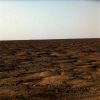
PHOE-SOL001-O-Photocomposite-lg_434-000.jpgVastitas Borealis - Sol 1 (Natural Colors; credits: Dr Marco Faccin)57 visitenessun commentoMareKromium
|
|

PHOE-SOL001-P-lg_431.jpgOne "Leg" and "Landing Pad" of Phoenix - Sol 1 (Natural Colors + MULTISPECTRUM; credits: Dr M. Faccin & Lunexit)57 visitenessun commentoMareKromium
|
|
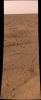
PHOE-SOL001-PIA10690.jpgVastitas Borealis - Sol 1 (Approximate True Colors; credits: NASA/JPL-Caltech/University of Arizona )57 visiteVisto?!?...Le "colorizzazioni" NASA? Prevedibili. Sempre prevedibili.
Prevedibili in maniera quasi sconcertante: dai cieli "rosati" (che abbiamo già visto sopra Gusev Crater e, sebbene più raramente, sopra Meridiani Planum) al terreno pallidamente arancio-giallo. E questa è la prima immagine "colorata"! Chissà le altre...
Caption NASA:"This image, one of the first captured by NASA's Phoenix Mars Lander, shows the vast plains of the northern polar region of Mars. The flat landscape is strewn with tiny pebbles and shows polygonal cracking, a pattern seen widely in Martian high latitudes and also observed in permafrost terrains on Earth. The polygonal cracking is believed to have resulted from seasonal freezing and thawing of surface ice.
Phoenix touched down on the Red Planet at 4:53 p.m. Pacific Time (7:53 p.m. Eastern Time), May 25, 2008, in an arctic region called Vastitas Borealis, at 68° North Latitude and 234° East Longitude.
This is an approximate-color image taken shortly after landing by the spacecraft's Surface Stereo Imager, inferred from two color filters, a violet, 450-nanometer filter and an infrared, 750-nanometer filter".MareKromium
|
|
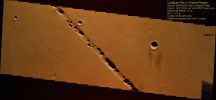
Volcanic_Features-Collapse_Pits-Tharsis_Region-20080526a-PCF-LXTT-00.jpgCollapse Pits in Tharsis Region (Enhanced and Saturated Natural Colors; credits for the additional process. and color.: Dr Paolo C. Fienga - Lunexit Team)57 visiteCaption NASA:"This chain of Collapse Pits occurs within one of the many tectonic graben of the Tharsis Region".MareKromium
|
|

PHOE-SOL002-lg_527.jpgTwilights over Vastitas Borealis... - Sol 2 (MULTISPECTRUM; credits: Lunexit)57 visitenessun commentoMareKromium
|
|

PHOE-SOL000-HIRISE.jpgThe Descent of Phoenix, from MRO - Sol 057 visiteCaption NASA:"NASA's Mars Phoenix Lander can be seen parachuting down to Mars, in this image captured by the High Resolution Imaging Science Experiment (HiRISE) camera on NASA's Mars Reconnaissance Orbiter. This is the first time that a spacecraft has imaged the final descent of another spacecraft onto a planetary body.
From a distance of about 310 Km (193 miles) above the surface of the Red Planet, Mars Reconnaissance Orbiter pointed its HiRISE obliquely toward Phoenix shortly after it opened its parachute while descending through the Martian Atmosphere. The image reveals an apparent 10-meter-wide (30-foot-wide) parachute fully inflated. The bright pixels below the parachute show a dangling Phoenix. The image faintly detects the chords attaching the backshell and parachute. The surroundings look dark, but correspond to the fully illuminated Martian surface, which is much darker than the parachute and backshell.
Phoenix released its parachute at an altitude of about 12,6 Km (7,8 miles) and a velocity of 1.7 times the speed of sound".MareKromium
|
|
| 25353 immagini su 2113 pagina(e) |
 |
|
|
|
|
1443 | |
|
|
|
|





