| Piú viste |
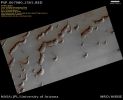
PSP_007080_2565_RED_abrowse.jpgSouth Polar Dunes (Natural Colors; credits: Lunar Explorer Italia)57 visitenessun commentoMareKromium
|
|
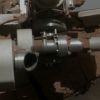
OPP-SOL1941-GB.jpgDetails of "Oppy" - Sol 1941 (possible True Colors; credits: Dr G. Barca)57 visitenessun commentoMareKromium
|
|
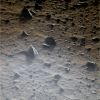
SOL1945-GB.jpgMartian "White Sands" - Sol 1945 (possible True Colors; credits: Dr G. Barca)57 visitenessun commentoMareKromium
|
|
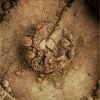
OPP-SOL1918-MI-GB-LXT.jpgDeep inside "The Mark" - Sol 1918 (Superdefinition and Natural Colors; credits: Dr G. Barca & Lunar Explorer Italia)57 visiteEd anche questa elaborazione è "Arte", a tutti gli effetti: Complimentissimi al nostro Dr Barca!MareKromium
|
|

Titan-PIA11542.jpgEnchanted Titan (Natural Colors; credits: Lunar Explorer Italia)57 visiteCaption NASA:"The Cassini Spacecraft looks toward Fensal and Aztlan, two dark areas near the Equator of Titan.
Like other albedo features on Titan, these areas are named after enchanted places or paradises from legends and myths from the World's Cultures. Fensal, the name of the area on the left, is a magnificent mansion in Norse mythology. Aztlan, the name of the dark area on the right of the image, is an Aztec mythical land.
Lit Terrain seen here is mostly on the Leading Hemisphere of Titan. North on Titan is up and rotated 38° to the left.
The image was taken with the Cassini Spacecraft narrow-angle camera on May 25, 2009 using a spectral filter sensitive to wavelengths of Near-InfraRed light centered at 938 nanometers.
The view was acquired at a distance of approx. 1,3 MKM (about 808.000 miles) from Titan and at a Sun-Titan-Spacecraft, or Phase, Angle of 25°.
Image scale is roughly 8 Km (about 5 miles) per pixel".MareKromium
|
|

SOL1944-GB-LXT.jpgRocks... - Sol 1944 (Natural Colors; credits: Dr G. Barca & Lunar Explorer Italia)57 visitenessun commentoMareKromium
|
|

South_Polar_Features-Dunes-2-20090728a.jpgSouth Polar Dunes near Reynolds Crater (Natural Colors; credits: Lunar Explorer Italia)57 visiteCoord.: 77,1° South Lat. and 197,9° East Long.MareKromium
|
|

PSP_005391_1030-01.jpgSigns of Fluids' Erosion (credits: Dr M. Faccin)57 visiteIn questa spettacolare visione del piccolo cratere "perduto" nelle Grandi Pianure prossime al Polo Sud di Marte, il processing in Falsi Colori ottenuto dal nostro Marco Faccin evidenzia in maniera netta e decisiva lo svasamento (quello che noi riteniamo essare un chiaro segnale di erosione da fluidi) che si apre sul versante Est-Sud/Est del rilievo.MareKromium
|
|

ESP_013348_1185_RED_abrowse-00.jpgDunefield in Noachis Terra (ctx frame - Natural Colors; credits: Lunar Explorer Italia)57 visiteThis Dunefield is on the floor of a small crater in Noachis Terra, a Region located in the Southern Hemisphere of Mars.
The slip faces of the Dunes have multiple directions, indicating that there were several wind directions and changes in wind strength when the Dunes formed. The dominant Dune type are Transverse Dunes (oriented perpendicular to the prevailing wind direction), with modified Barchans (crescent-shaped dunes) in the Northern Region of the Field and incipient Linear Dunes in the Southern Region.
The bright material scattered throughout the Dune Troughs are outcrops of underlying bedrock.
The left side (Sx) of the image clearly displays a mass of Dark Dust Devil Tracks.
Dust Devils are wind funnels that suck up dust as they travel over the surface exposing the dark sandy substrate.MareKromium
|
|

Channels-Terra_Sabaea-20090803a.jpgChannels in Terra Sabaea (Natural Colors; credits: Lunexit)57 visitenessun commentoMareKromium
|
|
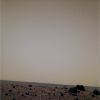
SOL1962-GB-LXT.jpgRocky Skyline - Sol 1962 (Natural Colors; credits: Dr G. Barca)57 visiteUna bellissima interpretazione in Colori Naturali - realizzata dal nostro grande Dr Gianluigi Barca - per una (comunque splendida e suggestiva) immagine della Desolazione Marziana nella Regione di Gusev Crater.MareKromium
|
|
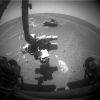
OPP-SOL1959-PIA12160.jpgApproaching Block Island: a "new" Martian Meteorite Fragment - Sol 195957 visiteCaption NASA:"This image of “Block Island” was taken on July 28, 2009, with the front Hazard-Identification Camera on NASA’s Mars Exploration Rover Opportunity.
Scientists will be testing the rock with the Particle X-Ray Spectrometer to get composition measurements and to confirm if indeed it is a meteorite".MareKromium
|
|
| 25353 immagini su 2113 pagina(e) |
 |
|
|
|
|
1442 | |
|
|
|
|





