| Piú viste |

Enceladus-PIA10356.jpgWhat's in "Enceladus Plume"?57 visiteCaption NASA:"The lower panel is a Mass Spectrum that shows the chemical constituents sampled in Enceladus' plume by Cassini's Ion and Neutral Mass Spectrometer during its fly-through of the plume on Mar. 12, 2008.
Shown are the amounts, in atomic mass per elementary charge (Daltons [Da]), of Water Vapor, Methane, Carbon Monoxide, Carbon Dioxide, simple organics and complex organics identified in the plume".MareKromium
|
|
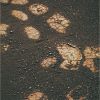
OPP-SOL541-1.jpgMartian Paving - Sol 541 (True Colors + MULTISPECTRUM; credits: Dr G. Barca & Lunexit)57 visitenessun commentoMareKromium
|
|
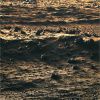
SOL1147-0.jpgLong Shadows in the Evening Hours near Home Plate (1) - Sol 1147 (True Colors + MULTISPECTRUM; credits: Dr Marco Faccin & Lunexit)57 visitenessun commentoMareKromium
|
|

Gravitational_Lensing-01.jpgGravitational Lensing and "Light Distortion"57 visite"...Noi continuiamo a definire, reputare e trattare il Tempo e lo Spazio come ed in quanto Misure Lineari.
Questo, a mio parere, equivale a dire che non solo le nostre "basi" sono fatiscenti, ma altresì che noi non abbiamo la minima idea di che cosa il Tempo e lo Spazio sìano effettivamente...
Comunque sia, dobbiamo aspettare. La Verità, nella Vita come nella Scienza, alla fine si automanifesta e si dimostra da sola, nonostante tutto e tutti..."
Paolo C. Fienga (appunti)MareKromium
|
|
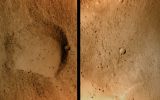
PSP_007547_1895_RED_abrowse-01.jpgRolling Rocks inside Shalbatana Vallis (EDM - False Colors; credits: Dr Paolo C. Fienga - Lunexit Team)57 visiteIn this extra-detail mgnf, the left frame shows boulders moving in two directions, indicating that they had different sources.
The right frame shows a boulder about 4 meters in diameter in the bottom left, having left a track that begins in the upper right. This boulder rolled down the hill, appears to have jumped the crater, bounced a few times, and then rolled to a halt.MareKromium
|
|

HD-189733b.jpgHD-189733b - Exoplanet in Vulpecula57 visite"...Saepe condita luporum fiunt rapinae vulpium..."
(Proverbio Medioevale)
"...Sovente le volpi riescono a sottrarre anche le prede nascoste dai lupi..." (trad. libera)MareKromium
|
|
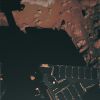
SOL236.jpgEvening Shadow... - Sol 236 (natural colors + MULTISPECTRUM; credits: Dr M. Faccin & Lunexit)57 visitenessun commentoMareKromium
|
|

NGC-2808-1.jpgNGC 2808 - Omega Centauri (Globular Star Cluster)57 visite"...In culpa est animus, qui se non effugit unquam..."
(Orazio)
"...Un animo consapevole non può sfuggire a se stesso..." (trad. libera)
Nota per i Lettori: ho tradotto "in culpa" come se stesse a significare "nella consapevolezza". Non è una svista, ma una semplice interpretazione personale.MareKromium
|
|
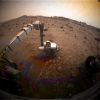
SOL1287-0.jpgRobotic Arm At Work! - Sol 1287 (True Colors; credits: Dr M. Faccin)57 visitenessun commentoMareKromium
|
|
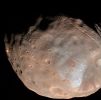
PSP_007769_9015_IRB.jpgPhobos (Natural Colors; credits: NASA)57 visitePhobos, and the second Martian moon, Deimos, are interesting for several reasons. Both objects are small, with average diameters of just 22 and 12 Km, respectively.
At this size, their gravity is insufficient (less than 1/1000th of Earth) to pull them into spherical shapes, in contrast to the larger moons and planets in the Solar System.
Both moons are tidally locked to Mars, meaning, like our own moon relative to Earth, they present the same side to Mars all the time. The small size and composition (determined from spectroscopy) of Phobos and Deimos make them very similar to some asteroids.
Most asteroids are located in a belt between Mars and Jupiter, with others having orbits that cross that of Mars. Therefore, it is possible that Phobos and Deimos are captured asteroids.
Other hypotheses are that they formed with Mars in the early Solar System, or are composed of material blasted off of Mars by impacts.MareKromium
|
|

SOL171-MI.jpgWatch Carefully! - Sol 171 (True Colors + MULTISPECTRUM; credits: Dr M. Faccin & Lunexit)57 visitenessun commentoMareKromium
|
|
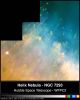
NGC-7293~1.jpgNGC 7293 - Cometary Knots in the Helix Nebula (HST)57 visite"...In scirpo nodum quaeris..."
(Plauto)
"...Cerchi il nodo nel giunco..."
(detto a proposito di coloro che, per motivi non comprensibili ai terzi, cercano - e, spesso, trovano! - le difficoltà anche nelle cose semplici)MareKromium
|
|
| 25353 immagini su 2113 pagina(e) |
 |
|
|
|
|
1439 | |
|
|
|
|





