| Piú viste |

APOLLO 15 AS 15-1541.jpgAS 15-1541 - Archimedes and Aristillus58 visiteThe ejecta blanket and secondary impact craters of the mare-filled crater Archimedes (80 Km in diameter) are visible on the terrain toward the viewer (South) but not on the mare surface to the crater's left and right. Yet at one time ejecta like that to the south must have completely surrounded Archimedes because similar ejecta surrounds craters such as Aristillus (upper right). Thus, the mare lavas, in addition to filling the interior of Archimedes, obviously have covered the eastern and western parts of the ejecta. In turn, ejecta from Archimedes has covered materials of the Imbrium Basin like the rugged hills in the lower left of the picture. These stratigraphic relations prove that time elapsed between formation of the Imbrium basin and its filling by mare-time enough for impacts to create Archimedes, the deeply flooded crater to its right (arrow), and similar "Imbrian-age" craters elsewhere, as was pointed out by Eugene Shoemaker in 1962.
Archimedes has no visible central peak complex. Presumably the complex exists but has been completely inundated by the mare.
|
|

APOLLO 16-4136-B.jpgAS 16-4136 - Cratered Region near Mandel'shtam (2)58 visiteThis enlarged view of part of frame AS 16-4136 shows some of the smooth flows that originate near the crest of the crater rim at the left side of photograph. Arrows point to the lower ends of two flows.
The origin of the flow material is controversial.
It was probably molten material generated by shock-wave compression of lunar rocks and ejected at relatively low velocities during the late stages of the formation of the impact crater; or it may have resulted from the flow of rock debris mixed with a fluidizing agent such as gas or water; or it may have been volcanically generated lava.
|
|

APOLLO 15 AS 15-9254.jpgAS 15-9524 - Bright and Big "Streaks"58 visiteThis elliptical crater is 1 Km long with an unusual, winglike pattern of rays.
This ejecta pattern is similar to those around some small experimental impact craters produced by missiles traveling along low-angle trajectories at White Sands Missile Range, N. Mex.
From the shape of the crater and the distribution of the rays, it is difficult to tell whether the meteoroid was traveling from North to South or South to North.
The higher albedo (brightness) of the North wall and the concentration of high albedo ejecta on the North-West and North-East flanks suggest that it traveled from South to North.
|
|

APOLLO 17 AS 17-2744.jpgAS 17-2744 - Crater's "Rays"58 visiteThis is an oblique view of another crater that probably was formed by a meteoroid following a relatively low-angle trajectory. This crater, 4 Km in diameter, is located in the highlands East of Mare Serenitatis. Compared to the crater described in AS 15-9524, this one is less elliptical and its bilobate ray pattern is much less pronounced. The differences may be attributed to a higher trajectory angle of the impacting body that formed this crater as it struck the surface.
H. J. Moore (1976), in his study of craters formed by impacting missiles at White Sands Missile Range, recognized a characteristic asymmetric profile along the axis of trajectory for craters formed in this manner.
The wall beneath the missile trajectory is typically less steep than the opposite or down-trajectory wall, and its rim crest is lower and more rounded. These observations, when applied to the lunar crater in this photograph, indicate that the impacting body was traveling toward the East when it struck the Moon.
|
|

APOLLO 17 AS 17-3107.jpgAS 17-3107/3105/3103 - Euler Crater (HR)58 visiteParts of 3 frames from the Apollo 17 PanCam were mosaicked to form this HR view of the crater Euler, in South-Western Mare Imbrium (an exceptionally fine example of a young mediumsized crater). 27-Km in diameter, Euler has most of the features that typify young craters in this size range. Its sharp rim shows little evidence of rounding. A solid blanket of ejecta is visible for approximately 1/2 crater diameter outside the rim and the radial pattern of secondary craters, crater clusters, ridges and grooves is visible outward to a full crater diameter.
Terraces formed by slumping of the steep crater walls, probably contemporaneously with the formation of the crater, are clearly evident. The steepness of the walls and the fact that the crater floor is below the level of the surrounding mare surface indicate that relatively little erosion and infilling have occurred. Other features typical of medium-sized craters are the central peak and the level floor surrounding the central peak. The pattern of ejecta around Euler is notably asymmetric because the area was later flooded by mare lavas that inundated parts of the ejecta blanket and other ejecta features.
|
|

APOLLO 15 AS 15-9328.jpgAS 15-9328 - Bessel Crater58 visiteOutcrops of layered rock are strikingly evident in the upper part of the far wall of the crater Bessel (17- Km diameter) in South-Central Mare Serenitatis. The outcrop is most evident where it forms shadows; however, the dark debris that streams downslope from the layered rock is visible even on parts of the crater wall where the Sun has washed out all details of relief. The outcrop is at a uniform distance below the crater rim, indicating that the strata are horizontal. Thus, Bessel furnishes convincing evidence that mare surfaces are underlain by dark layered rock. The dark rock is now known to be basalt that accumulated as successive flows or layers of lava.
Bessel is youthful enough that boulders are abundant on its rim and floor.
An anomalously high number of boulders is visible in and around the 750-m diameter crater (arrow) on the floor.
|
|

Rhea-N00064809.jpgMoments of Rhea (3)58 visitenessun commento
|
|

Rhea-N00064828.jpgMoments of Rhea (5)58 visitenessun commento
|
|
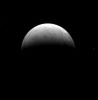
Enceladus-PIA08249.jpgEnceladus58 visiteCaption NASA:"Few large craters are to be found in the wrinkled terrain of Enceladus, where the surface has been reworked by geologic processes presumably resulting from the moon's inner warmth.
Cassini spied the bright crescent of Enceladus on July 23, 2006 at a distance of approx. 628.000 Km (about 391.000 miles).
The image was taken in visible light with the Cassini spacecraft narrow-angle camera at a Sun-Enceladus-spacecraft, or phase, angle of 103°. Image scale is roughly 4 Km (about 2 miles) per pixel".
|
|
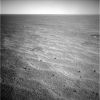
OPP-SOL917-1N209596706EFF755JP1985R0M1.jpgWhat's around Opportunity... (1) - Sol 91758 visiteSono ormai passate alcune settimane da quando avevamo adocchiato, nei pressi di Beagle Crater, due curiosissimi rilievi (2 boulders di notevoli dimensioni, si sarebbe detto) che avevamo battezzato "Menhir".
Per cercare di vederli e quindi studiarli meglio abbiamo atteso, ma... si direbbe invano: i Menhirs sono, semplicemente, spariti.
Abbiamo guardato tutti i frames ed abbiamo tentato di capire che cosa fosse accaduto anche ad altri macigni di notevoli dimensioni che parevano stare nei pressi dei 2 Menhir, ma niente da fare; nulla di nulla.
Che cosa c'è, quindi, intorno ad Opportunity (come recita la rubrica che abbiamo scelto per questi 5 quadri)? Nulla: solo sabbie "arancioni" (e, se guardate bene l'ultimo frames in approximate true colors prodotto dalla NASA (Baltra - Sol 896), capirete bene perchè la nostra ricostruzione dei colori di Marte - buona tanto quanto quella della NASA, se non di più - ci rende quantomeno orgogliosi...).
|
|

APOLLO 15 AS 15-9299.jpgAS 15-9299 - Le Monnier Crater58 visiteOn January 16, 1973, the Soviet unmanned roving vehicle Lunokhod 2 was landed by Luna 21 in or near this area in the South-Eastern part of the crater Le Monnier. This crater is a large (61 Km) pre-Imbrian crater cut into terra at the Eastern edge of Mare Serenitatis before Serenitatis was flooded by mare laves. Part of Le Monnier's Southern wall fills the lower part of the picture. A conspicuous chain of elongate depressions has formed in the lava-filled floor of the crater. The chain trends 22 Km northward and its pattern is quite surely controlled by an underlying fracture system. Regionally, the inferred fracture system is concentric to the grossly circular Serenitatis Basin and in this area trends Northward. No comparably young structural features having the same trend cut the terrae surrounding Le Monnier. However, older structures having this trend occur in the southern and northern walls and rims of Le Monnier. The aligned depressions on the mare are mostly 300 to 400 mt wide and 30 to 60 mt deep. The three deepest stretches are 1 to 2 km long and about 50 to 65 m deep. These depressions probably were the locus of fissure eruptions of mare basalt. Withdrawal of the last lava back into the fissure may have created subsurface voids into which collapse took place, causing the depressions and accounting for the absence of raised rims on the depressions.
|
|

APOLLO 17 AS 17-3125.jpgAS 17-3125 - Rimless crater58 visiteThe very young rimless crater near the center of this picture is located near the area where Oceanus Procellarum and Mare Imbrium join. The crater apparently formed in regolith-covered mare basalt. It differs from lunar impact craters of comparable size and age by its lack of a raised rim, surrounding ejecta deposit, or associated secondary impact craters. In addition, its interior walls do not show the steep slopes with craggy outcrops of rock in their upper parts, nor the streams of debris-avalanche deposits and talus that are usually seen in the walls of impact craters of comparable age and size.
Judging from the clear and sharply formed pattern of concentrically curved grooves and scarps that surround the hole, the material near this depression has apparently subsided into a subsurface void. Because of the extreme rarity and inferred short lifetime of steep slopes on the Moon, the latest subsidence must have taken place very recently, after most of the 50- to 300- m diameter craters that densely pepper the nearby mare surface were formed. Movement of the regolithic debris layer during subsidence apparently smoothed out most, if not all, of the craters that must have existed near the depression. Now the depression is surrounded by low, curved fault scarps and narrow, curved grooves that may be fault troughs (grabens) or may represent drainage of regolithic debris into cracks that opened in the underlying sagging basalt rock. The few craters that have formed on the subsided surface compare in density to the craters formed on the cluster (arrow) of Aristarchus secondary impact craters and associated herring- bone ridges; comparable ages for the Aristarchus secondary features and the depression are thus indicated. The subsidence was triggered either by the ground shock or seismic wavetrain generated when Aristarchus was formed 300 km to the west, or by the impacts of the secondary features.
The subdued depression in the upper left may be a similar older feature that was flooded by a later lava flow that now covers the area. The density of craters within the depression and the density on the surrounding lava are comparable. Alternatively, the subsidence there may have been incomplete; however, there is no sign that this subsidence is as young as that in the deeper crater
|
|
| 25353 immagini su 2113 pagina(e) |
 |
|
|
|
|
1418 | |
|
|
|
|





