| Piú viste |

MATHILDE_FLY-BY.gifMathilde (NEAR Probe Fly-By)58 visiteGuardate bene: osservate il "main crater" di Mathilde, così (enorme-mente) simile allo Stickney Crater di Phobos e poi, se volete, provate a pensare...Crateri troppo grandi, per mondi troppo piccoli!
Che ne dite?MareKromium
|
|
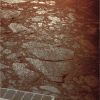
OPP-SOL1308-1P243064411EFF86JZP2365R1M1-3.jpgVictoria's Paving (interpret. n° 4 - possible natural colors; elab. Lunexit) - Sol 130858 visitenessun commentoMareKromium
|
|
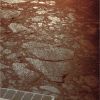
OPP-SOL1308-1P243064411EFF86JZP2365R1M1-2.jpgVictoria's Paving (interpret. n° 3 - possible natural colors; elab. Lunexit) - Sol 130858 visitenessun commentoMareKromium
|
|
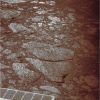
OPP-SOL1308-1P243064411EFF86JZP2365R1M1-0.jpgVictoria's Paving (interpret. n° 1 - possible natural colors; elab. Lunexit) - Sol 130858 visiteCome il nostro Caro Amico e Socio, Dr Marco Faccin, ci ha ricordato in una Sua recente e gentilissima missiva, "...le variabili da considerare ai fini dell'ottenimento di una colorizzazione naturale, razionale e credibile dei frames NASA (sia quelli ottenuti dall'orbita, sia quelli ottenuti dal suolo) sono innumerevoli...".
E' vero, e siamo felici che, oltre al bravissimo Marco, se ne sìano accorti anche tanti altri Lettori. Vi scriviamo queste poche note poichè noi siamo i primi a rammaricarci per il fatto che, nonostante tutti i nostri sforzi, ancora non siamo venuti a capo della questione relativa ai "Colori Naturali di Marte"; tuttavia, come avete notato, i nostri processi di colorizzazione si stanno evolvendo e razionalizzando. Insomma: stanno migliorando.
E se la perfezione, come sanno tutti, è irraggiungibile, è pur vero che l'ottenimento di un risultato valido passa attraverso un cammino - alle volte - molto lungo.
Grazie, quindi, per la Vostra comprensione ed il Vostro costante supporto!
Lo STAFF di Lunar Explorer ItaliaMareKromium
|
|
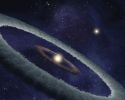
HD-113766-PIA09931.jpgHD 11376658 visiteThis artist's conception shows a binary-star, or two-star, system, called HD 113766, where astronomers suspect a rocky Earth-like planet is forming around one of the stars. At approximately 10 to 16 MY old, astronomers suspect this star is at just the right age for forming rocky planets. The System is located approx. 424 LY away from Earth.
The two yellow spots in the image represent the System's two stars. The brown ring of material circling closest to the central star depicts a huge belt of dusty material, more than 100 times as much as in our asteroid belt, or enough to build a Mars-size planet or larger. The rocky material in the belt represents the early stages of planet formation, when dust grains clump together to form rocks, and rocks collide to form even more massive rocky bodies called planetesimals. The belt is located in the middle of the system's terrestrial Habitable Zone, or the region around a star where liquid water could exist on any rocky planets that might form.
Earth is located in the middle of our sun's terrestrial habitable zone.
Using NASA's Spitzer Space Telescope, astronomers learned that the belt material in HD 113766 is more processed than the snowball-like stuff that makes up infant solar systems and comets, which contain pristine ingredients from the early solar system. However, it is not as processed as the stuff found in mature planets and asteroids. This means that the dust belt is made out of just the right mix of materials to be forming an Earth-like planet. It is composed mainly of rocky silicates and metal sulfides (like fool's gold), similar to the material found in lava flows.
The white outer ring shows a concentration of icy dust also detected in the system. This material is at the equivalent position of the asteroid belt in our solar system, but only contains about one-sixth as much material as the inner ring. Astronomers say it is not clear from the Spitzer observations if anything is occurring in the icy belt, but they believe it could be a source of water later on for the planet that grows from the inner warm ring.
MareKromium
|
|
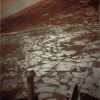
OPP-SOL1313-1N244745088EFF8700P1945R0M1-5.jpgFrom inside Victoria: the Beautiful Martian Paving (1) - Sol 131358 visiteForse la più "verosimile" immagine in Colori Naturali del Paving di Victoria che siamo stati capaci di produrre sino ad ora. Che ne dite?MareKromium
|
|

The_Galxy_Survey.gifLooking Southward...58 visite"...Do not fling away your fearless confidence for it carries a great and glorious compensation of reward.
You have need of steadfast patience and endurance, ...enjoy to the full what is promised..."
(Heb. 10:35-36)MareKromium
|
|

NGC-474.jpgNGC 474 - Interacting Galaxies58 visite"...La Memoria è fida riserva dell'Intelletto ed, in pari tempo, salutare freno della Fantasia..."
A. MaioranaMareKromium
|
|
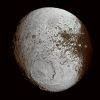
Japetus-PIA08384-2.jpgThe Other Side of Japetus (possible natural colors; elab. Lunexit)58 visitenessun commentoMareKromium
|
|

Japetus-PIA08378.jpgSo close, and yet so far...58 visiteThis mosaic of Cassini images shows the smallest details ever observed on Saturn's moon Japetus.
Visible here are small craters as well as the base of a large mountain ridge located just South of the mosaic. At several places, bright spots about 20 to 50 meters (66 to 164 feet) across are visible. At these locations, more recent impactors have punched through the overlying blanket of dark material to reveal brighter, cleaner ice beneath.
Since the bright craters are relatively small and very shallow, it is likely that the dark blanket is rather thin in this area; it is assumed that its actual average thickness might be on the order of a foot.
The small crater at the upper left edge of the mosaic has a diameter of about 50 meters (164 feet) and shows a distinct ray pattern from excavated ice. This feature is so bright in comparison to the dark surrounding terrain that it had to be darkened manually so as not to look overexposed in this mosaic.
The mosaic consists of 8 image footprints across the surface of Japetus, presented here in simple cylindrical projection. The view is centered on terrain near 0° North Latitude, 164,9° West Longitude, within the dark Leading Hemisphere of Japetus. Image scale is approx. 10 meters (33 feet) per pixel.
The clear spectral filter images in this mosaic were obtained with the Cassini spacecraft narrow-angle camera on Sept. 10, 2007, at distances ranging from 1.627 to 2.040 Km (such as from about 1.011 to 1.268 miles) from Japetus.MareKromium
|
|
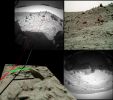
SOL1332-2N24462071-Martian_Wheel.jpgWhere's the Wheel?!? - Sol 133258 visiteUn nuovo, ed anche questo davvero MOLTO suggestivo e ben fatto, Lavoro del Dr Faccin, il quale ci fornisce alcuni "riferimenti" essenziali per tentare una triangolazione e quindi capire DOVE si trova la "Ruota" rispetto al Rover che, come ormai avrete notato, sta facendo delle acrobazie per passarci accanto senza vederla...
Complimenti, ancora una volta meritatissimi, al Dr Faccin e, per il resto, buon lavoro a chiunque voglia tentare non solo di dirci dove si trova, ma anche (e soprattutto) che cosa - effettivamente - potrebbe essere/è questa Ruota Marziana...MareKromium
|
|
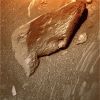
SOL1338-2P245143232EFFAVFUP2514R1M1.jpgSo bright and clean... (2) - Sol 133858 visitenessun commentoMareKromium
|
|
| 25353 immagini su 2113 pagina(e) |
 |
|
|
|
|
1415 | |
|
|
|
|





