| Piú viste |
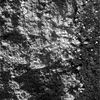
SOL724-2M190653288EFFAMFHP2956M2M1.jpgInside the "trench": Martian Soil's close-up n. 1 - Sol 72458 visiteCaption originale:"Microscopic Imager Non-linearized Full frame EDR acquired on Sol 724 of Spirit's mission to Gusev Crater at approximately 16:05:08 MLT; Microscopic Imager dust cover commanded to be OPEN".
|
|

Mimas-N00048622.jpgOver the clouds of Saturn: Mimas (2)58 visiteOriginal caption:"N00048613.jpg was taken on January 19, 2006 and received on Earth January 19, 2006. The camera was pointing toward Mimas that, at the time, was approximately 1.011.360 kilometers away, and the image was taken using the CL1 and CL2 filters.
This image has not been validated or calibrated".
|
|

OPP-SOL708-1M191049347EFF64KSP2977M2M1.jpgIntact Martian Berries... - Sol 70858 visiteOriginal caption:"MI Non-linearized Full frame EDR acquired on Sol 708 of Opportunity's mission to Meridiani Planum at approximately 15:07:24 MLT.
Microscopic Imager dust cover commanded to be OPEN".
|
|

Saturn~0.jpgSaturn...from France58 visitePresently at opposition in planet Earth's sky, Saturn is well placed for telescopic observations. On Wednesday (Jan., 25, 2006) two Amateur Astronomers took full advantage of the situation from Melun, near Paris, France. With a 12" diameter telescope and web cam they recorded this sharp image of the ringed gas giant and made an exciting discovery: a new storm on Saturn. The storm appears as the white spot visible here in Saturn's Southern Hemisphere (bottom of the picture). In particular, the storm seems to correspond with an outburst of radio noise detected by the Cassini spacecraft. The phenomenon is likely similar to the Dragon Storm recorded by Cassini's instruments early last year. That storm is thought to be analogous to a terrestrial thunderstorm, with radio noise produced in high-voltage lightning discharges.
|
|

NGC-1999-00.jpgNGC 1999 - The "X" Nebula in Orion58 visite"Zéfiro già, di be' fioretti adorno,
avea de' monti tolta ogni pruina,
avea fatto al suo nido già ritorno
la stanca rondinella peregrina;
risonava la selva intorno intorno
soavemente all'òra mattutina:
e la ingegnosa pecchia al primo albore
giva predando ora uno or altro fiore..."
Angelo Poliziano - "Tempo secondo o di Simonetta"
|
|
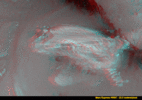
Juventae_Chasma_3D-2.gifJuventae Chasma (High-Def-3D - EDM n.1; credits: ESA)58 visitenessun commento
|
|

OPP-SOL715-1P191674893ESF64KSP2592L6M1.jpgRocks' details (2) - Sol 71558 visitenessun commento
|
|
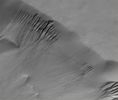
Craters-Lyell_Crater-00.jpgLyell Crater's Gullies (Original NASA/MGS/MSSS b/w Frame)58 visiteCaption originale:"This MGS-MOC image shows a suite of Gullies on a Scarp in Lyell Crater".
Location near: 69,7° South Lat. and 14,0° West Long.
Image width: ~3 Km (~1,9 mi)
Illumination from: upper left
Season: Southern Summer
|
|

South_Polar_Features-Spiders-00.jpgSpiderland (Original NASA/MGS/MSSS b/w Frame)58 visiteCaption originale:"This MGS-MOC image shows an area adjacent to the South Polar Residual Cap that hosts several intricate fracture networks. Each network consists of multiple fractures radiating from a central location. Their origin is not understood - some investigators have speculated that these are sites of release of carbon dioxide from beneath the ground, but this explanation seems inadequate to explain all attributes of the features.
MOC images have shown that these features have not been changing from year to year during the course of the MGS mission".
Location near: 87,1° South Lat. and 234,1° West Long.
Image width: ~3 Km (~1,9 mi)
Illumination from: upper left
Season: Southern Summer
|
|

Telesto-PIA07696.jpgTelesto58 visiteThese views show surface features and color variation on the Trojan moon Telesto. The smooth surface of this moon suggests that, like Pandora, it is covered with a mantle of fine, dust-sized icy material.
This monochrome image was taken in visible light. To create the false-color view (see PIA07697), ultraviolet, green and infrared images were combined into a single black and white picture that isolates and maps regional color differences.
The "color map" was then superposed over a clear-filter image. The origin of the color differences is not yet understood, but may be caused by subtle differences in the surface composition or the sizes of grains making up the icy soil.
Tiny Telesto is a mere 24 Km (about 15 miles) wide.
The image was acquired with the Cassini spacecraft narrow-angle camera on Dec. 25, 2005 at a distance of approx. 20.000 Km (about 12.000 miles) from Telesto and at a Sun-Telesto-spacecraft, or phase, angle of 58°. Image scale is 118 meters (387 feet) per pixel.
|
|
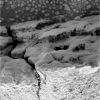
OPP-SOL727-1M192731756EFF64LOP2956M2M1.jpgMartian "Corals" (3) - Sol 72758 visiteCaption originale:"Microscopic Imager Non-linearized Full frame EDR acquired on Sol 727 of Opportunity's mission to Meridiani Planum at approximately 14:03:21 MLT.
Microscopic Imager dust cover commanded to be OPEN".
|
|

Janus&Epimetheus-PIA07699.jpgHigh-Phase in the Darkness: Janus and Epimetheus58 visiteThis close pairing of Janus and Epimetheus shows the 2 moons at "high phase," meaning that only a thin sliver of sunlit terrain is visible on each moon. Portions of each are also lit feebly by reflected light from Saturn.
Janus (181 Km, or about 113 miles across) is at top and Epimetheus (116 Km, or about 72 miles across) is below.
The image was taken in visible light with the Cassini spacecraft narrow-angle camera on Dec. 25, 2005, at a distance of approx. 479.000 Km(roughly 298.000 miles) from Janus and about 455,000 Km (roughly 283.000 miles) from Epimetheus. The image scale is about 3 Km (approx 2 miles) per pixel on both moons.
|
|
| 25353 immagini su 2113 pagina(e) |
 |
|
|
|
|
1410 | |
|
|
|
|





