| Piú viste |

OPP-SOL073.jpgBerries... - Sol 73 (Superdefinition; credits: Dr G. Barca)58 visitenessun commentoMareKromium
|
|

PolarDD.jpgPolar Dust Devil (by José Amaral)58 visitenessun commentoMareKromium
|
|

Weather-PIA10672.gifClear Skies over the Northern Regions (GIF-Movie; credits: NASA)58 visiteScientists are anticipating clear skies when NASA's Phoenix Mars Lander arrives on the north polar plains of the Red Planet Sunday, May 25, 2008.
This orbital view of the north polar region of Mars, where NASA's Phoenix Mars Lander will land, shows clear skies as of May 22, 2008. Mission planners are always on the lookout for dust storms in daily weather updates like this one, provided by the Mars Color Imager on NASA's Mars Reconnaissance Orbiter. Based on current conditions, they are predicting good weather when Phoenix arrives May 25, 2008.
Temperature profiles, used to calculate atmospheric density, are also updated on a regular basis, provided by the Mars Climate Sounder, another instrument on the Mars Reconnaissance Orbiter. Atmospheric density was well within expectations as of May 22, 2008. Mission planners will continue to receive updates on weather and atmospheric conditions prior to landing.
The animated orbital view shows recent weather conditions from May 16 to May 22, 2008, as tracked by the Mars Color Imager on NASA's Mars Reconnaissance Orbiter. A cloud of dust kicked up by Martian winds traveled from west to east between May 19 and May 22, 2008, passing over Phoenix's landing site. The dust cloud was about 500 kilometers (300 miles) from head to tail and made the skies somewhat hazy. Since then, the dust has been replaced by clear skies, indicating that Phoenix will not land in any dust clouds, which are a common occurrence in the northern latitudes of Mars.
MareKromium
|
|
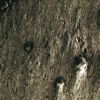
OPP-SOL085-1.jpgUnusual Surface Features - Sol 85 (Superdefinition + MULTISPECTRUM; credits: Dr G. Barca & Lunexit)58 visitenessun commentoMareKromium
|
|

OPP-SOL084-1.jpgPebbles and Spherules - Sol 84 (Superdefinition + MULTISPECTRUM; credits: Dr G. Barca & Lunexit)58 visitenessun commentoMareKromium
|
|

PHOE-SOL001-lg_398-003.jpgGood-Evening Phoenix! - Sol 1 (Natural Colors and MULTISPECTRUM; credits: Lunexit)58 visitenessun commentoMareKromium
|
|

PHOE-SOL001-lg_400-001.jpgVastitas Borealis - Sol 1 (Natural Colors + MULTISPECTRUM; credits: Lunexit)58 visiteCaption NASA:" This flat horizon stretches across the Red Planet as seen by the Phoenix Spacecraft after yesterday's landing on Mars. Touching down shortly after 7:30 pm Eastern Time, Phoenix made the first successful soft landing on Mars, using rockets to control its final speed, since the Viking landers in 1976. Launched in August of 2007, Phoenix has now made the northernmost landing and is intended to explore the Martian arctic's potentially ice-rich soil.
The lander has returned images and data initially indicating that it is in excellent shape after a nearly flawless descent. News updates will be available throughout the day".MareKromium
|
|
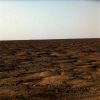
PHOE-SOL001-O-Photocomposite-lg_434-000.jpgVastitas Borealis - Sol 1 (Natural Colors; credits: Dr Marco Faccin)58 visitenessun commentoMareKromium
|
|

PHOE-SOL001-P-lg_431.jpgOne "Leg" and "Landing Pad" of Phoenix - Sol 1 (Natural Colors + MULTISPECTRUM; credits: Dr M. Faccin & Lunexit)58 visitenessun commentoMareKromium
|
|
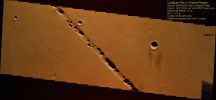
Volcanic_Features-Collapse_Pits-Tharsis_Region-20080526a-PCF-LXTT-00.jpgCollapse Pits in Tharsis Region (Enhanced and Saturated Natural Colors; credits for the additional process. and color.: Dr Paolo C. Fienga - Lunexit Team)58 visiteCaption NASA:"This chain of Collapse Pits occurs within one of the many tectonic graben of the Tharsis Region".MareKromium
|
|

PHOE-SOL002-lg_527.jpgTwilights over Vastitas Borealis... - Sol 2 (MULTISPECTRUM; credits: Lunexit)58 visitenessun commentoMareKromium
|
|

PHOE-SOL000-HIRISE.jpgThe Descent of Phoenix, from MRO - Sol 058 visiteCaption NASA:"NASA's Mars Phoenix Lander can be seen parachuting down to Mars, in this image captured by the High Resolution Imaging Science Experiment (HiRISE) camera on NASA's Mars Reconnaissance Orbiter. This is the first time that a spacecraft has imaged the final descent of another spacecraft onto a planetary body.
From a distance of about 310 Km (193 miles) above the surface of the Red Planet, Mars Reconnaissance Orbiter pointed its HiRISE obliquely toward Phoenix shortly after it opened its parachute while descending through the Martian Atmosphere. The image reveals an apparent 10-meter-wide (30-foot-wide) parachute fully inflated. The bright pixels below the parachute show a dangling Phoenix. The image faintly detects the chords attaching the backshell and parachute. The surroundings look dark, but correspond to the fully illuminated Martian surface, which is much darker than the parachute and backshell.
Phoenix released its parachute at an altitude of about 12,6 Km (7,8 miles) and a velocity of 1.7 times the speed of sound".MareKromium
|
|
| 25353 immagini su 2113 pagina(e) |
 |
|
|
|
|
1381 | |
|
|
|
|





