| Piú viste |
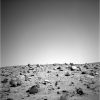
SOL383-2N160364036EFFA2K1P0374R0M1.jpgRocks and outcrops (6)58 visiteIn quest'ultimo frame - che completa la panoramica - ci sono, se osservate il paesaggio con anche solo un minimo di attenzione, rocce dalle forme talmente "assurde" che il dubbio che si tratti di qualcosa di artificiale si affaccia spontaneamente nelle nostre menti. Una roccia, in particolare, data la sua forma e la sua estensione, sembra sfidare le Leggi dell'Equilibrio: sapreste individuarla?
|
|
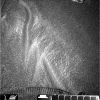
OPP-SOL365-1N160588170EFF4209P1901R0M1.jpg"Sidewinders", "Berries" and Rover Tracks, from very close58 visiteImmagine ravvicinata di alcune "sinuose dunette" (Sidewinders), dei soliti "frutti di bosco" - o "sferule" - (Berries) e delle profonde e scure impronte lasciate dalle ruote del Rover.
Nulla di particolare, in verità, se non il fatto che questo frame è stato ottenuto durante il Sol 365 di Opportunity e quindi...Un secondo "Compleanno Marziano", dopo quello di Spirit!!!
|
|

Enceladus-PIA06579.jpgCrescent Enceladus, the brightest gem of Saturn's System58 visiteCaption NASA originale:"In the dim light of the outer Solar System, Cassini gazed back at Saturn's brightest gem: the moon Enceladus. The icy little world presents only a slim crescent in this natural color view. Cassini has now matched the best spatial resolution on Enceladus achieved by NASA's Voyager spacecraft, and will soon have excellent coverage of the moon (at more than 10 times the resolution in this image), following a flyby planned for February 17.
When seen from its day side, Enceladus (499 Km across) has one of the brightest and whitest surfaces in the Solar System. Since it reflects most of the sunlight that strikes it, the temperature there remains at a chilly -200°C (-330° Fahrenheit).
In this view, Cassini was pointed at the leading hemisphere of Enceladus, which was in darkness at the time. The image has been rotated so that north on Enceladus is up".
|
|

SOL390-2N160995036EFFA300P1820R0M1.jpgSomething up there seems like a pyramid... (2)58 visiteSi, diremmo proprio che l'oggetto "a punta" che si vede in questo frame non pare avere proprio nulla di "naturale": è troppo liscio e squadrato, almeno apparentemente...
Guardate con attenzione e poi provate ad ingrandire l'immagine controllando la definizione ed il contrasto: Vi renderete conto che non stiamo guardando un rilievo qualsiasi.
Le immagini ingannano - spesso - ed i contrasti di luce ed ombra, sovente, uniti al desiderio di "trovare" un'Anomalia, completano il quadro e ci fanno vedere cose che non esistono; ma questa sporgenza rocciosa a noi sembra davvero diversa dalle solite...
|
|

Mimas-PIA06176.jpgBlue Saturn and Mimas58 visiteCaption NASA originale:"Mimas drifts along in its orbit against the azure backdrop of Saturn's northern latitudes in this true color view. The long, dark lines on the atmosphere are shadows cast by the planet's rings.
Saturn's northern hemisphere is presently relatively cloud-free, and rays of sunlight take a long path through the atmosphere. This results in sunlight being scattered at shorter (bluer) wavelengths, thus giving the northernmost latitudes their bluish appearance at visible wavelengths.
At the bottom, craters on icy Mimas (398 Km or 247 miles across) give the moon a dimpled appearance.
Images taken using infrared (930 nanometers), green (568 nanometers) and ultraviolet (338 nanometers) spectral filters were combined. The colors have been adjusted to match closely what the scene would look like in natural color. The images were obtained using the Cassini spacecraft narrow angle camera on Jan. 18, 2005, at a distance of approx. 1,4 MKM from Saturn".
|
|
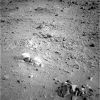
SOL392-2N161169594EFFA400P1824R0M1.jpgImpressive "Rocky Panorama" from Soles 391 and 392 (9)58 visiteQuesta intera sequenza parrebbe dunque rappresentare il solito ("normale" e "ridondante") paesaggio Marziano fatto di sassi, rocce e macigni che non smetteranno mai di stimolare la nostra curiosità e la nostra immaginazione. Sono - quelle che avete visto sino ad ora - tutte immagini riprese dalla camera di Navigazione (NavCam). Ma andiamo adesso a dare un'occhiata alle immagini ottenute tramite la Camera Panoramica (PanCam): le sorprese, su Marte, non finiscono mai...
|
|

Mimas-PIA06582.jpgMimas's "Eye": the "Herschel Crater"58 visiteCaption NASA originale:"Saturn's moon Mimas has many large craters, but its Herschel Crater dwarfs all the rest. This large crater 130 Km wide (80 miles) has a prominent central peak, seen here almost exactly on the terminator. This crater is the moon's most prominent feature, and the impact that formed it probably nearly destroyed Mimas. Mimas is 398 Km (247 miles) across. This image was taken with the Cassini spacecraft narrow angle camera on Jan. 16, 2005, at a distance of approximately 213.000 Km (132.000 miles) from Mimas and at a phase angle of 84°. Resolution in the original image was about 1,3 Km (0,8 mi.s) per pixel. A combination of spectral filters sensitive to ultraviolet and polarized light was used to obtain this view. Contrast was enhanced and the image was magnified by a factor of two to aid visibility".
|
|

Titan-PIA06186.jpgTitan (almost) naked, from 2,5 MKM58 visiteCaption NASA originale:"Titan's surface and atmospheric features are shown here in this processed, visible-light image taken by Cassini. Cassini's visible-light spectral filter is sensitive to a broad range of light, from ultraviolet to near-infrared. Imaging scientists normally use a narrow-band filter centered at 938 nanometers to look at Titan's surface and cloud features. Most images of Titan taken between flybys are in visible light and are used to navigate the spacecraft. Views like these demonstrate that the surface, as well atmospheric features (such as the haze banding seen near the northern limb of Titan), can indeed be seen through this filter. Although the clear filter is not the best way to view the surface, this observation demonstrates that with sufficient processing, this filter can be used to keep track of cloud features during periods between flybys in order to provide a better understanding of the evolution of Titan's atmosphere as the moon nears spring in the northern hemisphere".
|
|

Enceladus-N00028184.jpgEnceladus: from VERY close! (4)58 visite...diversità fra zone e zone e, all'interno della medesima zona, fra crateri e crateri, possa/debba essere ricercata in eventi occorsi in epoche successive a quelle che esposero questa luna Saturniana, in maggiore misura, a bombardamenti meteorici (epoche, queste ultime, risalenti agli albori del Sistema Solare).
Staremo a vedere. Nell'ultimo frame che Vi proponiamo ci pare opportuno suggerirVi di concentrare la Vostra attenzione sul gigantesco crepaccio che segna così profondamente (e nettamente!) la superficie di Encelado. Un crepaccio che, considerate le caratteristiche della superficie circostante, potrebbe aver avuto (in parte) origine da eventi "interni". Attenzione: NON stiamo suggerendo che Encelado sia ancora geologicamente attivo (non esistono elementi a supporto di tale ipotesi). Pensiamo ad un movimento di masse (liquide?) sotterranee rispetto a masse (solide) superficiali dovuto, magari, ad un notevole e repentino rialzo termico provocato, p.e., dall'impatto di un bolide di cospicue dimensioni.
|
|

OPP-SOL379-1N161834451EFF4303P0703L0M1.jpgSol 379: is there another "meteorite" on Mars?!? (1)58 visiteDal Sol 379 del Rover Opportunity ci perviene questa immagine che sembra rappresentare un'altra "roccia anomala" - sia per il luogo di ritrovamento, sia per le sue caratteristiche esteriori - la quale, forse, potrebbe rivelarsi simile al (o "parte" del) meteorite costituito da Ferro e Nickel trovato accanto allo Scudo Termico (?) qualche settimana fa. Vi offriamo le prime due immagini di questo oggetto ed ora staremo a vedere il comportamento del Rover...
|
|

F-Enceladus-N00028770.jpgEnceladus from approx. 1.784.000 Km58 visiteUn'immagine davvero spettacolare di Encelado e (supponiamo...) Epimeteo, apparentemente "divisi" dagli Anelli di Saturno: una sorta di 'pentagramma spaziale" fatto di sottili filamenti luminosi i quali sembrano 'tagliare' il Cielo circostante.
|
|

Dione-N00028517.jpgDione, Epimetheus and the Rings58 visitenessun commento
|
|
| 25353 immagini su 2113 pagina(e) |
 |
|
|
|
|
1379 | |
|
|
|
|





