| Piú viste |

Barnard-163.jpgMolecular Cloud Barnard 16358 visite"...I will give you shepherds after my own heart, who will feed you with knowledge and understanding..."
- Jeremiah 3:15
|
|

TRA_000878_1410_RGB.jpgTerra Sirenum58 visiteThis region receives very little sunlight in Southern Winter, and the bluish areas consist of frost. At the latitude of this image, frost is most likely composed of water because the temperature is not low enough for CO2 condensation. The reddish regions are locations where frost has been removed, most likely by sublimation. The dark, unfrosted regions (for example, in the channel of the gully on the far right) represent the most recent activity in the gullies and are possibly a result of seasonal melting.
|
|

APOLLO_12_AS_12-57-8451_HR.jpgAS 12-57-8541 - The texture of the Moon58 visitenessun commento
|
|

TwoSuns-PIA09227.jpgTwin Suns58 visiteThis diagram illustrates that mature planetary systems like our own might be more common around twin, or binary, stars that are either really close together, or really far apart.
NASA's Spitzer Space Telescope observed that debris disks, which are signposts of mature planetary systems, are more abundant around the tightest and widest of binary stars it studied. Specifically, the infrared telescope found significantly more debris disks around binary stars that are 0 to 3 Astronomical Units (AU) apart (top panel) and 50 to 500 AU apart (bottom panel) than binary stars that are 3 to 50 AU apart (middle panel). An astronomical unit is the distance between Earth and the Sun.
In other words, if 2 stars are as far apart from each other as the Sun is from Jupiter (5 AU) or Pluto (40 AU), they would be unlikely to host a family of planetary bodies.
The Spitzer data also revealed that debris disks circle all the way around both members of a close-knit binary (top panel), but only a single member of a wide duo (bottom panel). This could explain why the intermediately spaced binary systems (middle panel) can be inhospitable to planetary disks: they are too far apart to support one big disk around both stars, and they are too close together to have enough room for a disk around just one star.
|
|
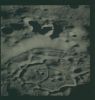
as14-72-09954.jpgAS 14-72-9954 - Chaplygin58 visiteImage Collection: 70mm Hasselblad
Mission: Apollo 14
Magazine: 72
Magazine Letter: L
Latitude: 5,5° South
Longitude: 146° East
Film Type: SO-368
Film Width: 70 mm
Film Color: color
Feature(s): Chaplygin AreaMareKromium
|
|

Io-New_Horizons.jpgIo (HR)58 visiteCaption NASA:"Spewed from a volcano, a complex plume rises over 300 Km above the horizon of Jupiter's moon Io in this image from cameras onboard the New Horizons spacecraft. The volcano, Tvashtar, is marked by the bright glow (about 1 o'clock) at the moon's edge, beyond the terminator or night/day shadow line. The shadow of Io cuts across the plume itself. Also capturing stunning details on the dayside surface, the high resolution image was recorded when the spacecraft was 2,3 MKM from Io. Later it was combined with lower resolution color data by astro-imager Sean Walker to produce this sharp portrait of the solar system's most active moon. Outward bound at almost 23 Km-per-second, the New Horizons spacecraft should cross the orbit of Saturn in June next year, and is ultimately destined to encounter Pluto in 2015".
|
|
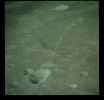
as14-73-10103.jpgAS 14-73-10103 - The "Davy Chain of Craters"58 visiteImage Collection: 70mm Hasselblad
Mission: Apollo 14
Magazine: 73
Magazine Letter: M
Latitude: 10,5° South
Longitude: 6° West
Lens Focal Length: 250 mm
Film Type: SO-368
Film Width: 70 mm
Film Color: color
Feature(s): Davy, Davy "G" and Davy "Y"MareKromium
|
|

as14-73-10092.jpgAS 14-73-10092 - A few good Craters...58 visiteImage Collection: 70mm Hasselblad
Mission: Apollo 14
Magazine: 73
Magazine Letter: M
Latitude: 12,5° South
Longitude: 2° West
Lens Focal Length: 250 mm
Film Type: SO-368
Film Width: 70 mm
Film Color: color
Feature(s): Alpetragius and AlphonsusMareKromium
|
|

as15-81-10969.jpgAS 15-81-10969 - Beer Crater58 visiteImage Collection: 70mm Hasselblad
Mission: Apollo 15
Magazine: 81
Magazine Letter: QQ
Latitude: 27° North
Longitude: 9° West
Lens Focal Length: 500 mm
Camera Look: n.a.
Camera Tilt: Vert
Camera Altitude: 111 Km
Sun Elevation (on local horizon): 60°
Film Type: 3401
Film Width: 70 mm
Film Color: black & white
Feature(s): Beer Crater
|
|

as15-82-11071.jpgAS 15-82-11071 - Looking to the North58 visitenessun commento
|
|

as15-81-11022.jpgAS 15-81-11022 - Spitzbergen Montes58 visiteImage Collection: 70mm Hasselblad
Mission: Apollo 15
Magazine: 81
Magazine Letter: QQ
Lens Focal Length: 500 mm
Camera Look: n.a.
Camera Tilt: 70°
Camera Azimuth: 335
Film Type: 3401
Film Width: 70 mm
Film Color: black & white
Feature(s): Montes Spitzbergen
|
|

SOL1155-2N228912521ESFAS__P1561L0M1.jpgBeyond the Visible Horizon (2) - Sol 115558 visitenessun commento
|
|
| 25353 immagini su 2113 pagina(e) |
 |
|
|
|
|
1376 | |
|
|
|
|





