| Piú viste |

015-Mars_Altitudes.jpgMars "Ups and Downs"... (shaded version)58 visiteHere, the MOLA Altimetry is cast as a 3-D model, a shaded relief map illuminated from the upper right.
BEWARE: this lighting can not ever happen on Mars!
The large volcanos stand out beautifully, as do the impact basins of Hellas and Argyre. Also clear here is how flat the Northern Plains really are (remnants of an ocean basin?), the incredible number of craters on the Highlands, and the distinct difference in elelvations between the Highlands and the Lowlands.MareKromium
|
|

SOL108-2P2.jpgDo you see me? I do not exist! - Sol 108 (processing n. 1; credits: Dr M. Faccin)58 visiteIl Lavoro di elaborazione di questo frame e del relativo "rilievo impossibile" svolto dal Grande Dr Marco Faccin sembra dirci alcune cose. Vediamole insieme:
1) la colorizzazione in colori naturali, effettuata utilizzando l'istogramma NASA corretto (ed occulto: il buon Marco ci ha lavorato su 4 mesi prima di "estrarlo" dal caos creato dagli Amici di Pasadena - ed infatti ora non si dovrebbe parlare più di colorizzazione, bensì di "estrazione dei colori" da frame in finto black&white) ci dice che si tratta/potrebbe trattare di un macigno composito. ATTENZIONE: se fosse vero, questo non sarebbe il primo caso di macigno marziano BI o TRI-COLORE!
2) l'effetto ombra ci dice che il macigno maggiore ha una sorta di gradino sul quale, se rigettiamo l'ipotesi per cui si possa trattare di "roccia unitaria a matrice composita", si potrebbe poggiare la pietra anomala di colore diverso (già, ma...domande: come ha fatto a finire lì, e posizionandosi per giunta in equilibrio palesemente instabile? Chi o che cosa "ce l'ha messa"?!?)
3) colore e texture della porzione di "roccia impossibile" che accede al macigno in primo piano sono analoghi a quelli del boulder che si trova DIETRO alla roccia principale: un caso, una coincidenza o, forse, è qui che è nato l'errore?!?...MareKromium
|
|

OPP-SOL111-1.jpgMartian "Trapdoor" - Sol 111 (True Colors + MULTISPECTRUM; credits: Dr G. Barca & Lunexit)58 visitenessun commentoMareKromium
|
|

AS15-88-12002HR-4.jpgAS 15-88-12002 - The "Bridge" (extra-detail mgnf n. 3; credits: Dr G. Barca)58 visitenessun commentoMareKromium
|
|
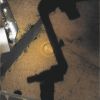
OPP-SOL1430-1.jpgVictoria's Paving - Sol 1430 (Possible True Colors; credits: Dr Marco Faccin & Lunexit)58 visitenessun commentoMareKromium
|
|

as12-52-7757.jpgAS 12-52-7757 - Marius Crater (sunstruck)58 visiteImage Collection: 70mm Hasselblad
Mission: 12
Magazine: 52
Magazine Letter: S
Latitude: 12,8° North
Longitude: 50,3° West
Film Type: SO164
Film Width: 70 mm
Film Color: black & white
Feature(s): MARIUS CRATERMareKromium
|
|
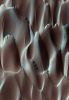
PSP_007193_2640_RED_abrowse-01.jpgDefrosting Northern Dunes (extra-detail mgnf - MULTISPECTRUM; credits: Lunexit)58 visiteThis extra-detail mgnf shows a Region of the dunes that are just beginning to lose their seasonal ice cover. In most of the image the dunes are a muted red color. Where the sun is shining on the steep dune crests the frost is gone and dark dust is free to cascade down the sides. This thin layer of dust, like slope streaks found elsewhere on Mars, flows down around obstacles and may come to rest mid-slope.MareKromium
|
|
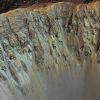
PSP_007151_1445_RED_abrowse-01.jpgColorful Layers in the Walls of an Unnamed Southern Crater (extra-detail mgnf - MULTISPECTRUM; credits: Lunexit)58 visiteThis extra-detail mgnf (enhanced to exaggerate color contrast) shows part of the North-facing walls of the crater, deeply carved by landslides. Rocky layers, mostly purplish in color, can be followed for hundreds of meters, poking through the loose materials that cover the slopes.
Locally, the rocky layers show patches of diverse colors (blue, green, yellow). These colors may be indicative of compositional differences in the rocky layers.MareKromium
|
|

ZO-Mercury21_Messenger-big.jpgCrescent Mercury (in Accentuated Colors; credits: NASA)58 visiteCaption NASA:"The colors of Mercury are subtle but beautiful. At first glance, our Solar System's innermost Planet appears simply black and white, but images that include IR colors normally beyond human vision accentuate a world of detail. One such image, shown above, was acquired by the robotic MESSENGER Spacecraft that swung by Mercury in mid-January 2008.
Here, most generally, the hot world itself acquires a slightly more brown hue. Many craters that appear on top of other craters - and so surely have formed more recently - appear here as bright with bright rays that include a slightly blue tint, indicating that soil upended during the impact was light in color. A few craters, such as some in the huge Caloris Basin impact feature visible on the upper right, appear unexpectedly to be ringed with a dark material, the nature of which is being researched.
MESSENGER continues to glide through the inner Solar System and will pass Mercury again this October and next September, before entering orbit around the desolate world in 2011".MareKromium
|
|

OPP-SOL489-1.jpgDeep, deep Rover Track - Sol 489 (True Colors; credits: Dr Gianluigi Barca)58 visitenessun commentoMareKromium
|
|
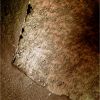
OPP-SOL1472-1.jpgRazorblades - Sol 1472 (True Colors; credits: Lunexit)58 visitenessun commentoMareKromium
|
|

SOL317-2N154514768EFF9400P0645L0M1.jpgPanorama from Sol 317 (natural colors; credits: Lunexit)58 visitenessun commentoMareKromium
|
|
| 25353 immagini su 2113 pagina(e) |
 |
|
|
|
|
1373 | |
|
|
|
|





