| Piú viste |
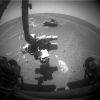
OPP-SOL1959-PIA12160.jpgApproaching Block Island: a "new" Martian Meteorite Fragment - Sol 195958 visiteCaption NASA:"This image of “Block Island” was taken on July 28, 2009, with the front Hazard-Identification Camera on NASA’s Mars Exploration Rover Opportunity.
Scientists will be testing the rock with the Particle X-Ray Spectrometer to get composition measurements and to confirm if indeed it is a meteorite".MareKromium
|
|

ESP_012584_1265_RED_abrowse-00.jpg"Hot Surprise" in Nia Vallis (ctx frame - Natural Colors; credits: Lunexit)58 visiteImmagini orbitali come questa, nel 99,99% dei casi passano del tutto inosservate ma, come Voi sapete (e come noi abbiamo - da tempo - imparato), spesso le più grosse sorprese si annidano tra le pieghe dei frames - apparentemente - meno intriganti.
In fondo, che cosa ci mostra di particolare questo frame? Si tratta della Regione Marziana di Nia Vallis (siamo nelle medie Latitudini dell'Emisfero Australe di Marte, intorno alle coordinate 53° Sud e 323° Est) ed il dettaglio colto dagli occhi della Sonda MRO ci mostra quelli che sembrano residui di antiche (ed ormai del tutto estinte) attività fluviali su una superficie rocciosa e ricca di macigni di dimensioni medio-piccole. Nulla di più.
Eppure, una volta che il nostro Dr Faccin ha "scansionato" il frame nella sua versione JP2000, qualcosa è emersa.
Qualcosa che vedrete nel prossimo frame...MareKromium
|
|
![South_Polar_Regions-South_Pole-MGS-mg90s000[1]-PCF-LXTT-1.jpg](albums/userpics/10060/small_South_Polar_Regions-South_Pole-MGS-mg90s000%5B1%5D-PCF-LXTT-1.jpg "Nome del file=South_Polar_Regions-South_Pole-MGS-mg90s000[1]-PCF-LXTT-1.jpg
Dimensione del file=48KiB
Dimensioni=1062x1000
Aggiunta il=Ago 09, 2009")
South_Polar_Regions-South_Pole-MGS-mg90s000[1]-PCF-LXTT-1.jpgMartian South Pole and South Polar Regions, from MGS (Darkened Natural Colors; credits for the additional process. and color.: Dr Paolo C. Fienga - Lunexit Team)58 visitenessun commentoMareKromium
|
|

V838-Monocerotis-3D-2.jpgV-838 Monocerotis58 visiteMareKromium
|
|
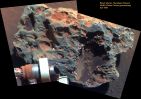
OPP-SOL1961-1249578498_17705-1_BlockIsland_VP_L257_full1.jpgBlock Island - Sol 1961 (False Colors; credits: NASA/JPL-Caltech/Cornell University)58 visiteCaption NASA:"This view of a rock called "Block Island", such as the largest meteorite yet found on Mars, comes from the Panoramic Camera (PanCam) on NASA's MER (Mars Exploration Rover) Opportunity.
Analysis of Block Island's composition using the Rover's Alpha Particle X-Ray Spectrometer confirmed that it is rich in Iron and Nickel. The rock is about 60 centimeters (approx. 2 feet) across.
This is a False-Color, red-green-blue composite view generated from images taken through the PanCam's 750-nanometer, 530-nanometer and 430-nanometer filters. The exaggeraged color is used for enhancing the visibility of differences among the types of rock and soil materials".MareKromium
|
|

ESP_013545_1110_RED_abrowse-01.jpgSouthern Dust Devil (EDM - Natural Colors; credits: Lunexit)58 visitenessun commentoMareKromium
|
|

PSP_001367_1620_RED_abrowse.jpgGratteri Crater (Natural Colors; credits: Lunexit)58 visitenessun commentoMareKromium
|
|
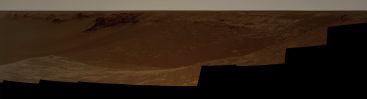
OPP-SOL970-VictoriaCrater-PIA09103-2.jpgVictoria's Panorama (2) - Sol 970 (Natural Colors; credits: Dr G. Barca)58 visiteNASA's Mars Exploration Rover Opportunity captured this vista of "Victoria Crater" from the viewpoint of "Cape Verde", one of the promontories that are part of the scalloped rim of the Crater. Opportunity drove onto Cape Verde shortly after arriving at the rim of Victoria in September 2006.
The view combines hundreds of exposures taken by the Rover's PanCam. The camera began taking the component images during Opportunity's 970th Martian day, or Sol, on Mars (such as Oct., 16, 2006). Work on the panorama continued through the Solar Conjunction Period, when Mars was nearly behind the Sun from Earth's perspective and communications were minimized. Acquisition of images for this panorama was completed on Opportunity's 991st Sol (such as Nov., 7, 2006).
The top of Cape Verde is in the immediate foreground at the center of the image. To the left and right are two of the more gradually sloped bays that alternate with the cliff-faced capes or promontories around the Rim of the crater.
"Duck Bay", where Opportunity first reached the rim, is to the right.
Beyond Duck Bay counterclockwise around the Rim, the next promontory is "Cabo Frio", about 150 meters (500 feet) from the rover. On the left side of the panorama is "Cape St. Mary", the next promontory clockwise from Cape Verde and about 40 meters (130 feet) from the Rover.
The vantage point atop Cape Verde offered a good view of the rock layers in the cliff face of Cape St. Mary, which is about 15 meters or 50 feet tall.
By about two weeks after the PanCam finished collecting the images for this panorama, Opportunity had driven to Cape St. Mary and was photographing Cape Verde's rock layers.
The far side of the Crater lies about 800 meters (half a mile) away, toward the South-East. MareKromium
|
|
The_Rings-N00140419.jpgRings and "noise"58 visitenessun commentoMareKromium
|
|
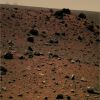
SOL1919-GB-LXT.jpgHorizon with Dust Devils - Sol 1919 (Natural Colors; credits: Dr G. Barca & Lunexit)58 visitenessun commentoMareKromium
|
|

IC-1396~2.jpgIC 1396 - Emission Nebula58 visite"L'aforisma è uno stimolo a pensare, oltre che un self-service di pensieri ben confezionati.
A volerne fare un po' di storia, il termine è un grecismo - che significa "delimitare, separare, scegliere" - rimasto a lungo nell'ambito del linguaggio tecnico-scientifico. Solo nell'Ottocento avanzato l'aforisma divenne un vero e proprio genere letterario, specie dopo l'uscita di "II crepuscolo degli idoli" di Friedrich Nietzsche (1888).
Da allora ne sono state tentate varie definizioni e delimitazioni, che però poco ci interessano: a partire dalla più brutale, quella di Gesualdo Bufalino per cui "Un aforisma benfatto sta tutto in otto parole".
Un aforisma benfatto, a mio parere, è quello capace di generare un effetto-sorpresa, tanto più nel caso di quelli scelti per questa raccolta, che vuole essere l'esaltazione del paradosso, forma estrema dell'aforisma".
da "Pensieri scorretti", di Giordano Bruno Guerri MareKromium
|
|
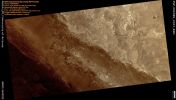
PSP_006989_2025_RED_abrowse.jpgWell-exposed Scarp along Nili Fossae (Natural Colors; credits: Lunexit)58 visitenessun commentoMareKromium
|
|
| 25353 immagini su 2113 pagina(e) |
 |
|
|
|
|
1357 | |
|
|
|
|





