| Piú viste |

ORIGINAL NASA - APOLLO 17 - AS 17-150-23064.jpgAS 17-150-23064 - Watching down... (6)58 visite
|
|
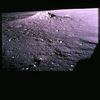
ORIGINAL NASA - APOLLO 12 - AS 12-46-6795.jpgAS 12-46-6795 - The "Lunar Mound"58 visite
|
|

ORIGINAL NASA - APOLLO 17 - AS 17-147-22468.jpgAS 17-147-22468 - The CSM America is fadin in the night...58 visiteIn questo frame e' davvero difficile (anzi: e' impossibile) dire che cosa stiamo guardando; tuttavia, grazie all'aiuto fornitoci sia dai full-frames precedenti, sia dai detail mgnf del CSM America che si allontanava dal LM Challenger, riusciamo - sebbene con difficolta' - ad "intravedere", nella chiazza di luce, i "lineamenti" del Command Space Module mentre si perde dalla visuale del Challenger e sparisce - per ora - nello spazio circum-lunare.
Verificate Voi stessi, anche aiutandoVi con il detail mgnf.
|
|

022-The Moon from Clem-FroelichCrater.gif081 - Froelich Crater58 visitenessun commento
|
|

029-The Moon from Clem-OrientaleBasin.jpg070 - The "Orientale" basin58 visiteMosaic of more than 2000 Clementine (750-nanometers) images, showing the Orientale Basin of the Moon at full resolution of about 250 mt per pixel. The Orientale Basin is about 930 Km in diameter and is only partly filled by dark, mare lava.
The relative paucity of mare basalt fill, coupled with the young age and topographic freshness of the basin, makes this feature the archetypal lunar multiring basin.
|
|

035-The Moon from Clem-PolarAreas.jpg111 - Polar Areas: Views of the South Pole58 visiteThe spin axis of the Moon is nearly vertical (inclined 1,6°) to the ecliptic plane (the plane of its orbit around the Sun), in marked contrast to the Earth (axis inclination 23,5°). However, even this small inclination means that the hemispheres of the Moon experience seasons as the Pole tracks toward and away from the Sun. Clementine started its lunar mapping in the dead of Southern Winter (axis away from the Sun), but by the 2nd month of mapping, the axis had begun to point closer in that direction. These two mosaics show the difference in lighting conditions between the first month of mapping (left, maximum winter) and the second month's coverage (right, toward the solstice).
Careful examination of the two mosaics reveals some slight shadow changes; note in particular the shadows that cover the floors of the craters Amundsen and Scott (large central peak crater at about 3 o'clock and the crater just above it). However, the large region of permanent shadow near the center of the mosaics discovered by Clementine remains virtually unchanged in the two mosaics.
|
|

ORIGINAL NASA - APOLLO 17 - AS 17-147-22464-2.jpgAS 17-147-22464 - The CSM America (detail mgnf-t. 3D)58 visite
|
|

Rydberg Crater.JPG191 - Rydberg Crater58 visiteRydberg crater mosaic imaged by the UV/VIS camera from an altitude of about 485 Km. Rydberg is located at 47° North Lat. and 97° West Long.
Strip width is about 50 Km.
|
|

Eartshine.JPG024 - Earthshine58 visiteThe Clementine Startracker acquired this image of the Moon glowing from the reflected light of the Earth.
|
|

LUB20152.gif184 - Rydberg Crater and surroundings58 visitenessun commento
|
|

Copernicus-UVVis.jpg050 - Copernicus58 visitenessun commento
|
|

Apollo 11 Landing Site from Clem.jpg211-0 - The Apollo 11 "Landing Site"58 visitenessun commento
|
|
| 25353 immagini su 2113 pagina(e) |
 |
|
|
|
|
1353 | |
|
|
|
|





