| Piú viste |

ESP_021925_1650_RED_abrowse-00.jpgDust Devil near Spirit (CTX Frame - Absolute Natural Colors; credits for the additional process. and color.: Dr Paolo C. Fienga - Lunexit Team) 220 visitenessun commentoMareKromium
|
|

ESP_022171_1430_RED_abrowse-PCF-LXTT-1.jpgUnnamed Crater S/E of Bosporus Planum (Natural Colors; credits for the additional process. and color.: Dr Paolo C. Fienga - Lunexit Team)220 visiteAquisition date: 20 April 2011
Mars Local Time (M.L.T.): 14:43 (Early Afternoon)
Latitude (centered): 36,4° South
Longitude (East): 302,7°
Range to Target Site (Spacecraft Altitude): 252,1 Km (157,6 miles)
Original Image Scale Range: 50,4 cm/pixel (with 2 x 2 binning) so objects ~1 meter and 51 cm across are resolved
Map Projected Scale: 50 cm/pixel
Map projection: EQUIRECTANGULAR
Emission Angle: 5,3°
Sun-Crater-Spacecraft Angle (Phase Angle): 41,9°
Solar Incidence Angle (S.AI.A.): 37° (with the Sun about 53° above the Local Horizon)
Solar Longitude: 277,3° (Northern Winter)
Nota Lunexit: un esempio eclatante di quanto la colorizzazione in Colori Naturali differisca da quella in Colori Naturali Assoluti.MareKromium
|
|

Volcanoes-Olympus_Mons_Caldera-1-015-090204_1-0037_01-6v-PCF-LXTT.jpgOlympus Mons' Caldera (Absolute Natural Colors; credits for the additional process. and color: Dr Paolo C. Fienga - Lunexit Team)220 visitenessun commentoMareKromium
|
|
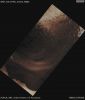
ESP_023796_1010_RED_abrowse.jpgUSGS Dune Database Entry Number 2325-787 (Absolute Natural Colors; credits for the additional process. and color.: Dr Paolo C. Fienga - Lunexit Team)220 visiteMars Local Time: 15:03 (Early Afternoon)
Coord. (centered): 78,8° South Lat. and 232,5° East Long.
Spacecraft altitude: 249,5 Km (such as about 155,9 miles)
Original image scale range: 49,9 cm/pixel (with 2 x 2 binning) so objects ~ 1 mt and 50 cm across are resolved
Map projected scale: 50 cm/pixel
Map projection: POLAR STEREOGRAPHIC
Emission Angle: 1,9°
Sun-Mars-Spacecraft (or "Phase") Angle: 79,1°
Solar Incidence Angle: 78° (meaning that the Sun is about 12° above the Local Horizon)
Solar Longitude: 349,9° (Northern Winter)
Credits: NASA/JPL/University of Arizona
Additional process. and coloring: Dr Paolo C. Fienga - Lunar Explorer ItaliaMareKromium
|
|
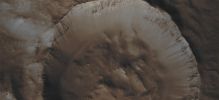
ESP_024108_1525-PCF-LXTT-00.jpgUnnamed Southern Crater (Absolute Natural Colors; credits for the additional process. and color.: Dr Paolo C. Fienga - Lunexit Team)220 visiteMars Local Time: 14:23 (Early Afternoon)
Coord. (centered): 27,1° South Lat. and 399,5° East Long.
Spacecraft altitude: 257,0 Km (such as about 160,6 miles)
Original image scale range: 51,4 cm/pixel (with 2 x 2 binning) so objects ~ 1 mt and 54 cm across are resolved
Map projected scale: 50 cm/pixel
Map projection: EQUIRECTANGULAR
Emission Angle: 2,6°
Sun-Mars-Spacecraft (or "Phase") Angle: 42,8°
Solar Incidence Angle: 45° (meaning that the Sun is about 45° above the Local Horizon)
Solar Longitude: 2,2° (Northern Spring)
Credits: NASA/JPL/University of Arizona
Additional process. and coloring: Dr Paolo C. Fienga - Lunar Explorer ItaliaMareKromium
|
|
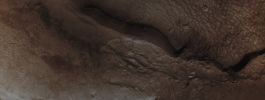
ESP_024595_2185-PCF-LXTT.jpgPeriglacial Surface Feature in Arabia Terra (Absolute Natural Colors; credits for the additional process. and color.: Dr Paolo C. Fienga - Lunexit Team)220 visiteMars Local Time: 14:13 (early afternoon)
Coord. (centered): 38,2° North Lat. and 353,5° East Long.
Spacecraft altitude: 315,9 Km (such as about 197,4 miles)
Original image scale range: 63,2 cm/pixel (with 2 x 2 binning) so objects ~1 mt and 90 cm across are resolved
Map projected scale: 50 cm/pixel
Map projection: EQUIRECTANGULAR
Emission Angle: 20,0°
Phase Angle: 60,7°
Solar Incidence Angle: 42° (meaning that the Sun is about 48° above the Local Horizon)
Solar Longitude: 20,5° (Northern Spring)
Credits: NASA/JPL/University of Arizona
Additional process. and coloring: Lunar Explorer ItaliaMareKromium
|
|
ESP_024532_1715-PCF-LXTT-00.jpgFeatures of Jus Chasma (CTX Frame "A" - Absolute Natural Colors; credits for the additional process. and color.: Dr Paolo C. Fienga - Lunexit Team) 220 visiteMars Local Time: 14:27 (early afternoon)
Coord. (centered): 8,6° South Lat. and 281,2° East Long.
Spacecraft altitude: 267,9 Km (such as about 167,4 miles)
Original image scale range: 53,6 cm/pixel (with 2 x 2 binning) so objects ~ 1 mt and 61 cm across are resolved
Map projected scale: 50 cm/pixel
Map projection: EQUIRECTANGULAR
Emission Angle: 7,9°
Phase Angle: 47,3°
Solar Incidence Angle: 40° (meaning that the Sun is about 50° above the Local Horizon)
Solar Longitude: 18,2° (Northern Spring)
Credits: NASA/JPL/University of Arizona
Additional process. and coloring: Lunar Explorer ItaliaMareKromium
|
|
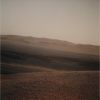
OPP-SOL2776-GB-PCF-LXTT.jpgDistant Horizon - Sol 2776 (Absolute Natural Colors; credits for the additional process. and color.: Drr Gianluigi Barca and Paolo C. Fienga - Lunexit Team)220 visitenessun commentoMareKromium
|
|
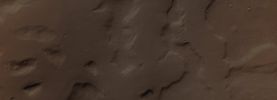
ESP_024449_2170_RED-PCF-LXTT.jpgFeatures of Deuteronilus Mensae (Absolute Natural Colors; credits for the additional process. and color.: Dr Paolo C. Fienga - Lunexit Team)220 visiteCoord. (centered): 36,6° North Lat. and 23,2° East Long.
MareKromium
|
|

ESP_024886_1765_RED-PCF-LXTT-00.jpgPeri-Equatorial Layered Features (CTX Frame - Absolute Natural Colors; credits for the additional process. and color.: Dr Paolo C. Fienga - Lunexit Team)220 visiteCoord. (centered): 3,5° South Lat. and 335,5° East Long.MareKromium
|
|

APOLLO 11 AS 11-39-5757.jpgAS 11-39-5757 - Bright "Star-like" object over Apollo 11 (5)219 visiteLa lucentezza dello star-like object è nuovamente molto elevata. La sua posizione, alta sull'orizzonte, stazionaria. A volte, guardando questa immagine, viene da pensare a due mondi che si osservano vicendevolmente: Apollo 11 guarda lo star-like object e lo star-like object guarda Apollo 11. Ma questa interpretazione, forse, non è fantascienza. Tutt'altro.
|
|

9-Venus.jpgVenus from 2.700.000 Km (Galileo Probe)219 visiteLa competizione USA/URSS, finchè l'URSS è esistita, ha dato grandi risultati in termini di inventiva, volontà, capacità di fronteggiare le difficoltà e superare gli ostacoli (il Programma Apollo ne è la prova lampante!) ma poi...Dissoltasi l'Unione Sovietica e svanita la 'corsa' verso le Stelle, si è incominciato a guardare il 'portafogli' e, dato che le missioni spaziali "costano care", la NASA (o dovremmo dire "Il Congresso"?!?) ha ritenuto più saggio, sicuro ed economico limitarsi ad inviare sonde programmate per entrare in orbita attorno a Venere e poi scattare foto a raggi X della superficie, così da superare l'ostacolo costituito dalla coltre perenne di nubi che sovrasta il Pianeta, SENZA dover ricorrere al landing ed alla successiva, rapida ed inevitabile perdita della navicella.
|
|
| 25353 immagini su 2113 pagina(e) |
 |
|
|
|
|
134 | |
|
|
|
|





