| Piú viste |
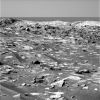
OPP-SOL891-1P207288219EFF74V1P2352L2M1.jpgBeagle Crater (7) - Sol 89158 visitenessun commento
|
|
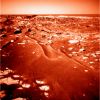
OPP-SOL891-1N207287541EFF74V1P1825L0M1~0.jpgBeagle Crater...in Old Mars Colors! - Sol 89158 visitePer gli Appassionati di Marte nella sua versione "NASA Anni '70"...
|
|
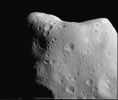
IDA&DACTYL-gal_0202562313.jpgAsteroid Ida (detail mgnf)58 visitenessun commento
|
|

Volcanic_Features-Pits-A.jpgUnusually-looking Collapse Pits (Original NASA/MGS/MSSS b/w CTX Frame)58 visiteLocation near: 22,1° North Lat. and 53,2° East Long.
Image width: ~3 Km (~1,9 mi)
Season: Northern Spring
Resolution: 18 mt/pixel
|
|

Craters-Unnamed_Craters_in_Thaumasia_Region.jpgUnnamed Craters in Thaumasia Region (Original NASA/JPL/ASU CTX b/w Frame)58 visiteLocation near: 22,1° North; 53,2° East
Image width: ~3 Km (~1,9 mi)
Season: Northern Spring
Resolution: 18 mt/pixel
|
|

Northern_Regions-Mesas-MGS.jpgMesas in Vastitas Borealis (Original NASA/MGS/MSSS b/w frame)58 visiteCaption NASA originale:"This MGS-MOC image shows two mesas on the Northern Plains of Mars. "Mesa" is the Spanish word for "table" and that is a very good description of the two elliptical features captured in this MOC image. In both cases, the Mesa tops and the material beneath them, down to the level of the surrounding, rugged Plain, are remnants of a once more extensive layer (or layers) of material that has been largely eroded away. The circular feature near the center of the larger Mesa is the site of a filled and buried Impact Crater".
Location near: 53,5° North Lat. and 153,5° West Long.
Image width: ~3 Km (~1,9 mi)
Illumination from: lower left
Season: Northern Spring
|
|

Oberon-vg2_2683623.jpgLeaving Oberon (HR)58 visitenessun commento
|
|

APOLLO 14 AS 14-70-9671.jpgAS 14-70-9671 - The "Bright One"58 visiteThis crater on the Lunar Far-Side is similar in age and size to the near- side crater Euler. It is located midway between the craters Becvar and Langemak. About 36 Km in diameter, it was informally called the "Bright One" by the Apollo 14 Astronauts because of its bright ejecta and ray pattern. The bright halo that surrounds the crater is about 150 Km in diameter. Its brightness is not evident in this view because the picture was taken when the Sun angle was low. The radial pattern of dunelike ejecta around the crater is most apparent where the Sun's rays are perpendicular to the direction of ejecta flow, as in the lower part of the picture. The hummocky or bumpy floor of the crater is caused largely by material that has slumped from the walls. Stuart A. Roosa, the Apollo 14 CMP, used a handheld camera with an 80-mm lens for this photograph. Later, using a 500-mm lens, he photographed in much more detail that part of the floor of the crater outlined in this photograph and shown in AS 14-9975.
|
|

APOLLO 15 AS 15-9591.jpgAS 15-9591 - Tsiolkovsky58 visiteModerate enlargement of part of a panoramic camera frame provides greater detail of the central peak complex of Tsiolkovsky. A relatively large population of superposed craters has been preserved on level areas of the peaks (near the left-center of the photograph). In contrast, very few craters are present on steep slopes-most have been destroyed by the downslope movement of erosional debris. An intermediate population of craters on the dark mare shows that the mare surface is younger than the level areas of the peak complex but older than the freshly exposed steep slopes of the peaks. The youngest part of the mare surface is the dark, smooth area adjacent to the small angular rifle in the upper left corner. Here small craters have been almost completely filled by the flow and are barely discernible. The rifle may have served as the vent for the young lavas.
|
|

APOLLO 15 AS 15-9596.jpgAS 15-9596 - Tsiolkovsky58 visiteDrastic enlargement of a panoramic camera frame provides a wealth of detail within the small area outlined in AS 15-9591. Note the many large blocks on the slope. The largest block is about 125 mt wide. Most blocks apparently originated at the discontinuous ledge near the top of the slope. Note also the fillets on the upslope side of many of the blocks. They probably consist of fine-grained debris that was trapped behind the blocks as it moved downslope. The arrows identify what appear to be two craters in the process of being destroyed by erosion. Otherwise, craters are absent on the steeply dipping slope, although numerous craters are present on the gentler slopes above.
|
|

APOLLO 15 AS 15-1541.jpgAS 15-1541 - Archimedes and Aristillus58 visiteThe ejecta blanket and secondary impact craters of the mare-filled crater Archimedes (80 Km in diameter) are visible on the terrain toward the viewer (South) but not on the mare surface to the crater's left and right. Yet at one time ejecta like that to the south must have completely surrounded Archimedes because similar ejecta surrounds craters such as Aristillus (upper right). Thus, the mare lavas, in addition to filling the interior of Archimedes, obviously have covered the eastern and western parts of the ejecta. In turn, ejecta from Archimedes has covered materials of the Imbrium Basin like the rugged hills in the lower left of the picture. These stratigraphic relations prove that time elapsed between formation of the Imbrium basin and its filling by mare-time enough for impacts to create Archimedes, the deeply flooded crater to its right (arrow), and similar "Imbrian-age" craters elsewhere, as was pointed out by Eugene Shoemaker in 1962.
Archimedes has no visible central peak complex. Presumably the complex exists but has been completely inundated by the mare.
|
|

APOLLO 16-4136-B.jpgAS 16-4136 - Cratered Region near Mandel'shtam (2)58 visiteThis enlarged view of part of frame AS 16-4136 shows some of the smooth flows that originate near the crest of the crater rim at the left side of photograph. Arrows point to the lower ends of two flows.
The origin of the flow material is controversial.
It was probably molten material generated by shock-wave compression of lunar rocks and ejected at relatively low velocities during the late stages of the formation of the impact crater; or it may have resulted from the flow of rock debris mixed with a fluidizing agent such as gas or water; or it may have been volcanically generated lava.
|
|
| 25353 immagini su 2113 pagina(e) |
 |
|
|
|
|
1331 | |
|
|
|
|





