| Piú viste |

Tempel1-S-ImpactConfirmation.jpgTempel-1 from Kitt Peak National Obs.58 visiteOriginal caption:"The image was taken through an R band filter and has the smoothed dust light profile removed to enhance the jets. North is up, East to the left, the Sun at PA (Position Angle) 290 and the FOV is 2,5 arcmin (which is now 96.500 km at the comet)".
T. Farnham and Jianyang Li
(University of Maryland)
|
|

Clouds-Chasma_Australe-M0904026-01.jpgClouds over Chasma Australe (Original NASA/MGS/MSSS b/w Frame - EDM)58 visiteQuesta immagine è stata ottenuta dalla Sonda MGS quando si trovava ad un'altitudine di circa 370 Km; l'ora locale del rilievo ripreso segna le 16 circa, MLT.
|
|

OPP-SOL512-1P173635645EFF55XKP2429L2M1.jpgA boundless sea of dunes...On the way to Erebus (5) - Sol 51258 visitenessun commento
|
|

Mimas-PIA07534.jpgRound? Not really...58 visiteCaption NASA originale:"Saturn's moon Mimas, whose low density suggests that it is primarily composed of ice, has a flattened or oblate shape reminiscent of Saturn's. The moon's equatorial dimension is nearly 10% larger than the polar one due to the satellite's rapid rotation. This view shows principally the leading hemisphere on Mimas. Mimas' largest crater, Herschel (130 Km, or 80 miles wide), is centered roughly on the equator and can be seen here. North on Mimas is toward upper left.
The moon's oblateness is exaggerated by Cassini's viewing angle here -- the Sun-Mimas-spacecraft, or phase, angle was only 5° leaving a sliver of the moon's disk in shadow on the northwest limb.
The image was taken in visible light with the Cassini spacecraft narrow-angle camera on May 20, 2005, at a distance of approx. 916.000 Km (about 569.000 miles) from Mimas. Resolution in the original image was 5 Km (about 3 miles) per pixel".
|
|

Tempel1-XX-HRI_937_1.jpgDeep-impact...67 seconds after collision!58 visitecaption NASA originale:"This spectacular image of comet Tempel 1 was taken 67 seconds after it obliterated Deep Impact's impactor spacecraft. The image was taken by the HR camera on the mission's flyby craft. Scattered light from the collision saturated the camera's detector, creating the bright splash seen here. Linear spokes of light radiate away from the impact site, while reflected sunlight illuminates most of the comet surface. The image reveals topographic features, including ridges, scalloped edges and possibly impact craters formed long ago".
|
|

Tempel1-VV-nhvcaxf9000910-PIA02131.jpgImpact Time!58 visiteWhen NASA's Deep Impact probe collided with Tempel-1, a bright, small flash was created, which rapidly expanded above the surface of the comet. This flash lasted for more than a second and its overall brightness is close to that predicted by several models. After the initial flash, there was a pause before a bright plume quickly extended above the comet surface. The debris from the impact eventually cast a long shadow across the surface, indicating a narrow plume of ejected material, rather than a wide cone. The Deep Impact probe appears to have struck deep, before gases were heated and explosively released. The impact crater was observed to grow in size over time. A preliminary interpretation of these data indicate that the upper surface of the comet may be fluffy, or highly porous. The observed sequence of impact events is similar to laboratory experiments using highly porous targets, especially those that are rich in volatile substances. The duration of the hot, luminous gas phase, as well as the continued growth of the crater over time, all point to a model consistent with a large crater.
|
|
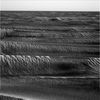
OPP-SOL512-1P173638219EFF55XKP2430L2M1.jpgThe Side-Winders ahead (3) - Sol 51258 visitenessun commento
|
|
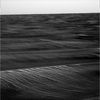
OPP-SOL515-1P173905336EFF55Z0P2431R2M1.jpgDune-City (5) - Sol 51558 visitenessun commento
|
|

OPP-SOL515-1P173905615EFF55Z0P2431L2M1.jpgDune-City (6) - Sol 51558 visitenessun commento
|
|

Volcanic_Features-Fissure-Tharsis_Region-M0806311Det.jpgMartian "Freeway" in Tharsis Region (Original NASA/MGS/MSSS b/w Frame)58 visiteUn'autostrada Marziana (come ci piacerebbe pensare...) o un gigantesco e lunghissimo crack che attraversa la suggestiva regione dove sorgono i vulcani Ascraeus e Pavonis Montes?
Uno splendido fotogramma MGS-MOC che ci mostra l'antico letto di un fiume Marziano o, più probabilmente, il risultato di un grande evento sismico occorso in ere remote. Non possediamo informazioni al riguardo ma potrebbe anche darsi che questo grande canale sia stato disegnato, in prima battuta, da un sisma e poi sia stato "perfezionato", nella sua struttura di dettaglio, da qualche altro evento vulcanico (la Regione è quella giusta...). Le solite dune che appaiono in qualche sua sezione ci fanno anche considerare l'ipotesi che questa gola, un tempo e solo in qualche suo punto preciso, sia anche stata invasa dalle acque.
|
|

OPP-SOL516-1P173998867EFF5600P2432R2M1.jpgSummary and near future: Sol 51658 visiteCommenti NASA sul presente, il recente passato ed il prossimo futuro di Opportunity:"...Opportunity finished examining Purgatory Dune and started driving again. The first few drives were to the North so that possible paths to the South could be imaged and evaluated. The next few steps took the Rover East, then Southward down a wide trough.
A new set of "rules of the road" have been developed and implemented to prevent the Rover from getting bogged down again.
Opportunity will now continue the drive South, but more slowly than before to ensure a safe path".
Dunque: manovre zig-zaganti per vedere meglio i dintorni e poi via di nuovo verso Erebus ma...molto lentamente, così da non farsi inghiottire ancora da qualche duna. Che dire? Le immagini in arrivo da Meridiani Planum sono, come avevamo già detto, sempre le stesse da oltre due mesi ed il cammino sembra molto arduo se i dati NASA sono corretti. Dobbiamo aspettare e poi, fra un paio di settimane, faremo un nuovo punto della situazione.
|
|

024-Iani_Chaos_and_Ares_Valles.jpgMargaritifer Terra58 visiteCaption ESA originale:"This map shows that the Iani Chaos depression – 180 Km long and 200 Km wide – is connected to the beginning of Ares Vallis by a 100-Km wide Transition Zone, centred around 342,5º East and 3º North".
|
|
| 25353 immagini su 2113 pagina(e) |
 |
|
|
|
|
1327 | |
|
|
|
|





