| Piú viste |
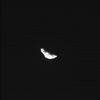
Hyperion-N00035437.jpgHyperion, from about 330.000 Km (4)58 visitenessun commento
|
|

Hyperion-N00035375.jpgHyperion, from about 176.000 Km (2)58 visite...celesti i quali, con i loro campi gravitazionali di diversa intensità e dimensione, ne hanno alterato il moto e la traiettoria originali rendendo altresì la sua rotazione, ai nostri occhi, così enormemente complessa ed inusuale, da giungere a farci congetturare un'intrinseca disomogeneità della medesima.
Un'intrinseca disomogeneità che, tuttavia, nelle logiche dell'Universo, non è altro che una delle infinite forme attraverso le quali si può manifestare quel fenomeno chiamato "movimento".
La corsa di Iperione è terminata, quindi, nel momento in cui l'abbraccio gravitazionale di Saturno si è reso troppo forte da poter resistere e così, dal vagare senza mèta attraverso il Sistema Solare, siamo infine giunti all'orbita lineare, attorno a Saturno.
Certo, la 'cattura' di Iperione da parte del Gigante Anellato non è valsa a modificare la sua 'disomogenea' rotazione ma, secondo Voi, questo fatto cambia qualcosa nei Grandi Equlibri e Disequilibri che governano il moto dei Pianeti e delle loro Lune?
|
|
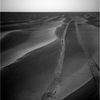
OPP-SOL488-1N171505311EFF55TIP1700L0M1.jpgOut of 'Purgatory', straight to 'Heaven'?!? (4) - Sol 48858 visitenessun commento
|
|

SOL519-2P172445628EFFABAKP2291L2M1.jpgRocks, boulders and dust on the way to the Summit (4) - Sol 51958 visitenessun commento
|
|
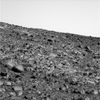
SOL519-2P172445958EFFABAKP2291L2M1.jpgRocks, boulders and dust on the way to the Summit (5) - Sol 51958 visitenessun commento
|
|

SOL520-2P172547561EFFABEJP2698L7M1.jpgDarkness falls... (3) - Sol 52058 visitenessun commento
|
|

Prometheus_and_the_Rings.jpgPrometheus and the Rings58 visiteCaption NASA originale:"What do Saturn's Rings look like from the other side? From Earth, we usually see Saturn's Rings from the same side of the ring-plane that the Sun illuminates them. Geometrically, in the above picture taken in April by the Cassini Spacecraft, the Sun is behind the camera but on the other side of the ring-plane. Such a vantage point gives a breathtaking views of the most splendid ring system in the Solar System. Strangely, the Rings have similarities to a photographic negative of a front view. For example, the dark band in the middle is actually the normally bright B-Ring. The Ring brightness as recorded from different angles indicates ring thickness and particle density of ring particles. Images like these are also interesting for what they do not show: such as the spokes. The unexpected shadowy regions once recorded by the Voyager missions when they passed Saturn in the early '80s are not, so far, being seen by Cassini. Extra credit: Can you spot the small moon (Prometheus)?
|
|

DioneandEpimetheus-PIA07525.jpgDione and Epimetheus58 visiteCaption NASA originale:"Cassini looks toward Saturn's night side in this view, capturing a glimpse of Dione's tortured surface in the foreground and a far-off view of Epimetheus, beyond Saturn. The spacecraft was just 1/10th of a degree above the ring-plane when this image was taken.
Parts of Dione's surface have been stretched and ripped apart by tectonic forces. Some of these faults are visible here, as is a large impact basin (not seen in NASA Voyager spacecraft images) near the moon's South Pole. Although this crater's diameter has not yet been measured by imaging scientists, it appears to be wider than 250 Km, which would make it the largest impact structure yet identified on this moon.
The image was taken in visible light with the Cassini spacecraft narrow-angle camera on May 5, 2005, at a distance of approx. 910.000 Km from Dione; 1,28 MKM from Epimetheus and 1,42 MKM from Saturn. The image scale is 5 Km per pixel on Dione and 9 Km per pixel on Epimetheus".
|
|

Channels-Bahram_Vallis-M1000914-00.jpgBahram Vallis' River and Landslides: the Area (Original NASA/MGS/MSSS b/w CTX Frame)58 visiteUn rapido avvicinamento ad una curiosa 'valanga di fango' che ha molto ben visibilmente alterato una modesta sezione del letto di questo antico fiume Marziano.
Nessuna Anomalia, solo una serie di tre bellissime immagini.
|
|

Tithonium_Chasma-PIA03968-PCF-LXTT-00.jpgFeatures of Tithonium Chasma (Original NASA/MGS/MSSS b/w Frame)58 visiteCaption NASA originale:"This MGS-MOC image shows dark rippled surfaces and a patch of light-toned, perhaps sedimentary rock exposed on the floor of western Tithonium Chasma, part of the vast Valles Marineris Canyon System".
Location near: 5,0° South Lat. and 90,3° West Long.
Image width: ~3 Km (~1,9 mi)
Illumination from: lower left
Season Southern Spring
|
|
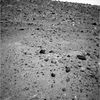
SOL529-2N173328280EFFACAQP0665R0M1.jpgThe rocks and boulders around Spirit (4) - Sol 52958 visitenessun commento
|
|

Tempel1-r-ImpactConfirmation.jpgDeep-impact...58 visiteTime of Impact: July 4, 05:52:15.0 +/- 17 sec UT as seen from Earth (1-sigma uncertainty)
Impact successfully occurred on July 4 at 05:52:24 UT as seen from Earth
|
|
| 25353 immagini su 2113 pagina(e) |
 |
|
|
|
|
1326 | |
|
|
|
|





