| Piú viste |

as16-131-20182.jpgAS 16-131-20182 - Earth in UltraViolet58 visitenessun commentoMareKromium
|
|

Titan-Atmosphere-N00098823.jpgThe "Multi-Layered" Atmosphere of Titan (MULTISPECTRUM - Overexposed; credits for the additional process. and color.: Lunexit)58 visiteCaption NASA:"N00098823.jpg was taken on December 20, 2007 and received on Earth December 22, 2007. The camera was pointing toward TITAN that, at the time, was approx. 186.227 Km away, and the image was taken using the CL1 and UV3 filters. This image has not been validated or calibrated".MareKromium
|
|

OPP-SOL1213-PIA10211-1.jpgCape St. Mary (natural - but highly darkened - colors; MULTISPECTRUM processing; credits: Lunexit)58 visiteCaption NASA:"Another of the best examples of spectacular cross-bedding in Victoria Crater are the outcrops at Cape St. Mary, which is an approx. 15 mt (45 foot) high promontory located along the Western Rim of Victoria Crater and near the beginning of the Rover's traverse around the rim. Like the Cape St. Vincent images, these Pancam Super-Resolution images have allowed scientists to discern that the rocks at Victoria Crater once represented a large dune field that migrated across this region.
This is a Mars Exploration Rover Opportunity PanCam image mosaic acquired on Sol 1213 (June 23, 2007), and was constructed from a mathematical combination of 32 different blue filter (480 nm) images".
Nota Lunexit: attraverso il darkening del frame originale e l'esaltazione dei contrasti, riteniamo di poter dire - con un ragionevole margine di certezza - che il "Paving" (di Victoria come di Endurance) ed il "Boulders Carpet" (tappeto di macigni) che paiono caratterizzare l'outer rim di questi Crateri, posseggono un'albedo molto più alta delle pareti dei Crateri stessi ed un colore molto più vicino all'argento/arancio, piuttosto che al giallo/cenere. Questi indizi, a nostro parere, sono il possibile indice di una matrice cristallina dei rilievi in questione (vetrificazione?); una matrice che potrebbe essere "responsabile" dei curiosi giochi di colore che i Crateri Victoria ed Endurance sembrano generare allorchè viene tentata la colorizzazione di frames ottenuti in particolari ore del giorno (e cioè con luci radenti e/o con luci perpendicolari al rim dei Crateri).MareKromium
|
|
OPP-SOL709-2.jpgAnomalous Object in-transit during Solar Eclipse - Sol 709 (credits: Dr Marco Faccin)58 visiteL'oggetto che "scintilla", per un istante, nel frame n. 7 del GIF-Movie realizzato dal Dr Faccin è irrisolvibile (nonostante gli sforzi), ma esiste.
Si tratta di un OVNI, forse?
O è solo un image-artifact?
O forse è una Sonda NASA che sta passando - casualmente - nei paraggi?
Probabilmente, una risposta a questo quesito non l'avremo mai...MareKromium
|
|
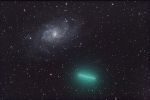
Comets-Comet_Tuttle_and_M33.jpgComet 8-P/Tuttle and M-3358 visiteCaption NASA:"This gorgeous galaxy and comet portrait was recorded on December 30th, 2007, in the skies over Hoogeveen (NL). The combined series of 60-by-60" exposures finds the lovely green coma of Comet 8P/Tuttle near its predicted conjunction with the Triangulum Galaxy.
Aligning each exposure with the stars shows the comet as a streak, slowly moving against the background stars and galaxy. An alternative composition with exposures centered on the comet, shows the background stars and galaxy as streaks.
The alluring celestial scene would also have been a rewarding one for the influential 18th Century comet hunter Charles Messier. While Messier scanned French skies for comets, he carefully cataloged positions of things which were fuzzy and comet-like in appearance but did not move against the background stars and so were definitely not comets. The Triangulum Galaxy, also known as M-33, is the 33rd object in his famous not-a-comet catalog.
The modern understanding holds that the Triangulum Galaxy is a large spiral galaxy some 3 MLY distant. Comet 8P/Tuttle, just bright enough to be visible to the unaided eye in dark, Northern Skies, is about 40 MKM (such as 2 LM - Light Minutes) away".MareKromium
|
|
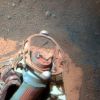
OPP-SOL1399-3.jpgColored Martian Visions: bright daylights - Sol 1399 (3 - natural colors; credits: Dr Gianluigi Barca)58 visitenessun commentoMareKromium
|
|
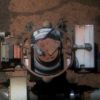
OPP-SOL1399-2.jpgColored Martian Visions: middle afternoon hours - Sol 1399 (2 - natural colors; credits: Dr Gianluigi Barca)58 visitenessun commentoMareKromium
|
|

as08-14-2402.JPGAS 08-14-2402 - The Dark Side of the Moon (6 - MULTISPECTRUM; credits: Lunexit)58 visiteImage Collection: 70mm Hasselblad
Mission: 8
Magazine: 14
Magazine Letter: B
Latitude: approx. 3,0° South
Longitude: approx. 157,0° West
Lens Focal Length: 250 mm
Description: NEAR TERMINATOR; FARSIDE
Film Type: SO-368
Film Width: 70 mm
Film Color: colorMareKromium
|
|
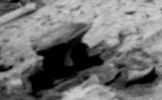
SOL1422-2P252603427EFFAX00P2265L2M1-2.jpgThe "Anvil" - Sol 1422 (extra-detail mgnf; credits: Dr Gianluigi Barca)58 visiteL'incudine: in questa versione fortemente magnificata, la bizzarria del dettaglio può essere colta senza sforzi.
La nostra opinione (non esotica) è che si tratti di quello che rimane di una struttura stratificata più complessa la quale è stata "limata, molata e, in parte spazzata via" dai venti che soffiano su Gusev Crater. Insomma: un esempio - ravvicinatissimo - di mini-Yardang (o "wind-work", come lo chiamano scherzosamente alla NASA).
Un grande complimento al Dr Barca per l'occhio e la costante dedizione!MareKromium
|
|

OPP-SOL323-2.jpgThe "nuances" of Meridiani... - Sol 323 (Saturated Natural Colors; credits for the additional process. and color.: Dr G. Barca - Lunexit Team)58 visitenessun commentoMareKromium
|
|
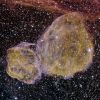
DEL-L316.jpgDouble Supernova Remnants "DEM L316"58 visite"...Arator, nisi incurvus, praevaricatur..."
(Plinio)
"...Colui che vuole arare un campo, se non cammina curvo (su se stesso), traccia un cattivo solco..." (trad. libera)MareKromium
|
|

ZO-Mercury01_Messenger.jpgApproaching Mercury58 visiteDa "NASA - Picture of the Day", del 16 Gennaio 2008:"Two days ago, the MESSENGER Spacecraft became only the second in Human History to swoop past Mercury. The last spacecraft to visit the Sun's closest Planet was Mariner 10, over 35 years ago.
Mariner 10 was not able to photograph Mercury's entire surface, and the images it did send back raised many questions. Therefore, much about planet Mercury remains unknown. This week's MESSENGER flyby was only the first of three. Over the next few years MESSENGER will swing past Mercury twice more and finally orbit in 2011, but MESSENGER is currently moving too fast to enter orbit around Mercury now.
This image was taken by MESSENGER two days ago upon approach to Mercury.
Many detailed images of Mercury are expected to be sent back over the next few days. The data acquired by MESSENGER will help better understand how Mercury's surface was formed, and why it is so dense".MareKromium
|
|
| 25353 immagini su 2113 pagina(e) |
 |
|
|
|
|
1324 | |
|
|
|
|





