| Piú viste |

SOL015-Adirondack-PIA05220_modest.jpgAdirondack - Sol 15 (Approximate True Colors; credits: NASA/JPL-Caltech)221 visiteCaption NASA:"This image shows the Mars Exploration Rover Spirit's "hand," or the tip of the instrument deployment device, poised in front of the rock nicknamed Adirondack, the rover's first science target since developing communication problems over two weeks ago. In preparation for grinding into Adirondack, Spirit cleaned off a portion of the rock's surface with a stainless steel brush located on its Rock Abrasion Tool (RAT). The image was taken by the Rover's Panoramic Camera - or PanCam, for short".
Nota Lunexit: ancora una delle primissime immagini a colori provenienti da Spirit la quale è stata ripresa all'inizio del suo viaggio verso le Columbia Hills. Noi abbiamo notato, in particolare, il colorito "arancio-vivo" delle sabbie dell'Area di Gusaev Crater: un colorito "autentico" - a detta della NASA - il quale, tuttavia, "sbiadirà" progressivamente e senza nessuna apparente ragione. Insomma: i colori di Marte, nei primi giorni di Spirit (ed Opportunity), erano più "vivaci" (e se non ci credete, controllate pure le immagini); con il tempo (e le sempre più sofisticate tecnologie utilizzate...) si sono attenuati, sino a diventare - oggi - così "anonimi" da lasciare perplessi.
Anzi, non sono soltanto anonimi: sono, a nostro modesto parere, totalmente (o quasi) falsi.
|
|

Image028-Heat-Shields.jpgOnce again, the whole "scene"...221 visiteVirtual? Maybe what we saw was just a defective (or used for testing) Heat-Shield that was stored in one of Cape Canaveral's warehouses... Anyway, while putting the word "END" to this ridiculous farce, we wish to quote the snide comment of Dr A. Feltri, Author of this outstanding reconstruction of events:"...It makes me laugh when I think that (the Technicians of NASA's Mission Control) took nice pictures - for a month or so - of the old Heat-Shield they kept in their junkyard...".
LUN-EX-IT agrees with what Dr Feltri said and we also wish to make a small addition (on behalf of the President and Members): yes, we do laugh for a while, but then we become nauseated by watching how both NASA and the American Science Adm.n are trying to fool us. ALL OF US!
Unless... Unless this habit of telling (and SHOWING!) a bunch of BBS about Mars is just a very clever part of the "New Deal" created by Mr George W. Bush?!?...
No jokes: we are worried.
What did they find on Mars? "ALIEN 5", maybe?!?...
|
|

Image044-Ukert-2.jpgUkert: the "pseudo-triangular" Lunar Crater221 visite"...ma delle immense lastre perforate trasparenti e modellate ad angoli retti nulla si vede nelle foto orbitali (notare, peraltro, i puntini a "foglia di fico" sull'immagine Lunar Orbiter e le notevoli differenze rispetto a quanto appare nella foto Clementine)..."
|
|

APOLLO 15 AS 15 82-11122 HR.jpgAS 15-82-11122 - Elbow and S. George Crater (HR)221 visiteOriginal caption:"165:21:14 MT. This frame from Jim's Station 9 pan is an excellent picture toward the South showing the bend of the rille near Elbow Crater".
|
|

APOLLO 16 AS 16 106-17314 HR.jpgAS 16-106-17314 - UFO? (HR)221 visitenessun commento
|
|

SOL067-ANOMALY-2P2-ATC.jpgThe "Silver Sphere"221 visitenessun commentoMareKromium
|
|

Miranda-PIA01354-PCF-LXTT.jpgVerona Rupes (Absolute Natural Colors; credits for the additional process. and color.: Dr Paolo C. Fienga - Lunexit Team)221 visitenessun commentoMareKromium
|
|
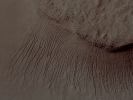
Gullies-Hellas_Planitia-PIA13802.jpgGullies in Hellas Planitia (Absolute Natural Colors; credits for the additional process. and color.: Dr Paolo C. Fienga - Lunexit) 221 visiteImages like this from the High Resolution Imaging Science Experiment (HiRISE) camera on NASA's Mars Reconnaissance Orbiter show portions of the Martian surface in unprecedented detail. This one shows many channels from 1 meter to 10 meters (approximately 3 feet to 33 feet) wide on a scarp in the Hellas impact basin. On Earth we would call these Gullies. Some larger channels on Mars that are sometimes called Gullies are big enough to be called ravines on Earth.
This view is an excerpt from a HiRISE observation taken on Jan. 14, 2011, nearly five years after the March 10, 2006, arrival of the Mars Reconnaissance Orbiter at Mars. North is up. The image was taken at 15:44 Local Mars Time. The observation is centered at 48,4° South Latitude, 73,5° East Longitude.MareKromium
|
|

Craters-Proctor_Crater-Dunefield-PIA13916-PCF-LXTT.jpgProctor Crater's Dunefield (Natural Colors; credits for the additional process. and color.: Dr Paolo C. Fienga - Lunexit Team)221 visitenessun commentoMareKromium
|
|

Craters-Unnamed_Crater_with_Tiled_Floor-MGS-PCF-LXTT.jpgUnnamed Crater in Vastitas Borealis (Natural Colors; credits for the additional process. and color.: Dr Paolo C. Fienga - Lunexit) 221 visiteCaption NASA originale:"This MGS-MOC image shows Polygonal Cracks formed in the material that nearly fills an Impact Crater on the Martian Northern Plains. The light-toned patches in the Cracks are the remains of Ice, left over from the preceding Winter.
On Earth, Polygons such as these are most common in the Polar Regions and form in the presence of ground ice. Whether the same is true for Mars remains to be determined, but, certainly, this is a good possibility".
Location near: 65,7° North; 277,5° West
Image width: ~3 Km (~1,9 mi)
Illumination from: lower left
Season: Northern Spring MareKromium
|
|
SOL682-2P186884437EFFAJW6P2748L1M1-PCF-LXTT.jpgSetting Phobos and Deimos (1) - Sol 682 (Possible Natural Colors; credits for the additional process. and color.: Dr Paolo C. Fienga - Lunexit Team)221 visitenessun commentoMareKromium
|
|
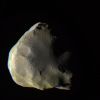
Helene-N00172877_78_79.jpgHelene (RAW Natural Colors; credits for the additional process. and color.: Dr Marco Faccin - Lunexit Team)221 visitenessun commentoMareKromium
|
|
| 25353 immagini su 2113 pagina(e) |
 |
|
|
|
|
132 | |
|
|
|
|





