| Piú viste |

PSP_002184_2005_RED_browse-1.jpgOn the Edge of Olympus (Natural Colors; credits: Lunexit)59 visiteOlympus Mons, the largest volcano in the Solar System, has a mysterious halo (or "Aureole") of material on its Western and Northern Sides. There have been many ideas about how this feature may have formed over the years, but the hypothesis that this is a giant landslide deposit has gained favor.
Many large volcanoes on the Earth collapse under their own weight, so it seems reasonable that Olympus Mons would do the same. The edge of the Aureole is seen on the left (North) part of the image.
It is interesting that the main part of the Aureole seems sunk down compared to the edge. It is possible that the ridge along the outer margin of the Aureole formed as the flow turned around after pushing uphill for a ways. Imagine a giant wave of rock pushing up onto the "beach" and then receding. It might leave a deposit like this.
Alternatively, glaciers push up a ramp of rock at their fronts.
After they retreat, the ridge of rock is left at the furthest extent of the glacier. These are called "Terminal Moraines" by geologists.MareKromium
|
|

OPP-SOL1095-1P225388193EFF79R1P2371L2M1_v3.jpgHeads & Tails... - Sol 1095 (EDM n.2 - credits: Ivana Tognoloni)59 visite...Profili davvero bizzarri, immagini semplicemente fantastiche: che altro dire?
Effetti ottici ed immaginazione a parte, la Verità è che, oggi come oggi, più si va avanti e si cerca di approfondire la "conoscenza", se non altro visiva, della Superficie di Marte, e più si ha la sensazione che ci sia "Qualcosa", tra le rocce, che si muove, che sfugge, che si intravede, che a volte ha una "forma" ed altre volte non ce l'ha.
Qualcosa che sembra e non sembra ma che, molto probabilmente, esiste.
Ancora un Grazie di Cuore ad Ivana Tognoloni, per l'Amicizia, l'Occhio e la Pazienza!MareKromium
|
|
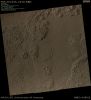
PSP_001456_2010_RED_abrowse.jpgFlood-carved Canyon in Kasei Valles (Natural Colors; credits: Lunexit)59 visiteThis HiRISE image shows a wonderfully complex surface on the floor of this ancient Flood-carved Canyon.
The floor of this Canyon, now, does not show any kind of landform that scientists expect to see from the occurrence of flood erosion phenomena.
Instead, it appears that the floor of the valley has been covered, after the inundation that first designed it, by another flow made by some very dense material that also contained huge ridged plates.
Some of the plates are more than 1 Km (0,6 miles) across. The ridges appear to have formed when the solid crust on the flow crumpled; the plates are pieces of the crust that were rafted apart.
Actually, very large Lava Flows can produce a surface like this, but also water-ice and frozen mud can create similar features.MareKromium
|
|

Craters-Unnamed_Crater-Vastitas_Borealis-PIA08475-01.jpgUnnamed Crater with frosted Rim... (Absolute Natural Colors; credits for the additional process. and color.: Dr Paolo C. Fienga - Lunexit Team)59 visitenessun commentoMareKromium
|
|
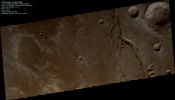
Channels-Nirgal_Vallis-20091208a.jpgTributaries in Nirgal Vallis (Absolute Natural Colors; credits: Lunexit)59 visitenessun commentoMareKromium
|
|
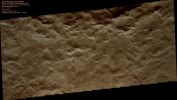
Terra_Sabaea-20091130a.jpgDark Slope Streaks in Terra Sabaea (Natural Colors; credits: Lunexit)59 visitenessun commentoMareKromium
|
|
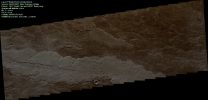
Volcanic_Features-Lava_Flows-Arsia_Mons-20091201a.jpgLava Flows (False Colors; credits: Lunexit)59 visitenessun commentoMareKromium
|
|
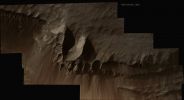
PSP_001456_1695_RED_abrowse-01.jpgLight Layered Deposits in Valles Marineris Region (EDM - Superdef. + Natural Colors; credits: Dr M. Faccin & Lunexit)59 visiteL'estrazione del dettaglio in formato JP2 e Superdefinizione è del Dr Faccin; la colorizzazione Multispettrale e la calibrazione sono del Dr Fienga. A nostro parere, il risultato si commenta da solo...MareKromium
|
|

PSP_003176_1745_RED_browse-01~0.jpgLayered Region in Gale Crater (EDM - Natural Colors; credits: Lunexit)59 visiteThis EDM shows several Light-Toned Layers.
The origin of the sediments composing the Layers is unknown and could have included deposition in an ancient flood or lake or the deposition of windblown particles such as Dust or Volcanic Ash.
The relatively uniform character of the Layers and the manner of erosion suggests that the sediments are fine-grained. MareKromium
|
|

Channel-ScamanderVallis-20070920a.jpgSinuous Channel in Scamander Vallis: image taken in September, 20th, 200759 visitenessun commentoMareKromium
|
|

PSP_008691_1445-Crack-MF.jpgRecent "Crack" in West Hellas? (an Image-Mosaic by Dr M. Faccin)59 visiteAcquisition date: 03 June 2008
Mars Local Time: 15:27 (Early afternoon)
Latitude (centered): 35,3° South
Longitude (East): 46,9°
Range to target site: 258,5 km (approx. 161,6 miles)
Original image scale range: 51,7 cm/pixel (with 2 x 2 binning) so objects ~155 cm across are resolved
Map projected scale: 50 cm/pixel and North is up
Map projection: EQUIRECTANGULAR
Emission angle: 6,2°
Phase angle: 74,0°
Solar Incidence Angle: 78° (with the Sun about 12° above the Local Horizon)
Solar Longitude: 80,5° (Northern Spring)MareKromium
|
|
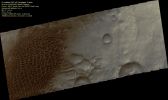
Dunes-20091211a.jpgSand-Sheet and Dunefield (Natural Colors; credits: Lunexit)59 visitenessun commentoMareKromium
|
|
| 25353 immagini su 2113 pagina(e) |
 |
|
|
|
|
1308 | |
|
|
|
|





