| Piú viste |
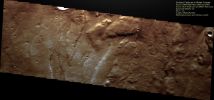
Melas_Chasma-Melas_Fossae-20080304a-PCF-LXTT.jpgSurface Features in Melas Fossae (Enhanced Natural Colors; credits for the additional process. and color.: Dr Poalo C. Fienga - Lunexit Team)59 visitenessun commentoMareKromium
|
|
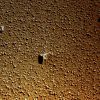
OPP-SOL1671-1P276536128ESF90__P2456L7M2.jpgUnusually-looking small rock, near Victoria's Outer Rim (natural colors; credits: Lunexit)59 visitenessun commentoMareKromium
|
|
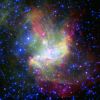
NGC-0346-PIA11227.jpgNGC 346 in the Small Magellanic Cloud59 visiteThis painterly portrait of a star-forming cloud, called NGC 346, is a combination of multiwavelength light from NASA's Spitzer Space Telescope (infrared), the European Southern Observatory's New Technology Telescope (visible), and the European Space Agency's XMM-Newton space telescope (X-ray).
The infrared observations highlight cold dust in red, visible data show glowing gas in green, and X-rays show very warm gas in blue. Ordinary stars appear as blue spots with white centers, while young stars enshrouded in dust appear as red spots with white centers.
The colorful picture demonstrates that stars in this region are being created by two different types of triggered star formation — one involving wind, and the other, radiation.
Triggered star formation occurs when massive stars spur new, smaller stars into existence. The first radiation-based mechanism is demonstrated near the center of the cloud. There, radiation from the massive stars is eating away at the surrounding dust cloud, creating shock waves that compress gas and dust into new stars. This compressed material appears as an arc-shaped orange-red filament, while the new stars within this filament are still blanketed with dust and cannot be seen.
The second wind-based mechanism is at play higher up in the cloud. The isolated, pinkish blob of stars at the upper left was triggered by winds from a massive star located to the left of it. This massive star blew up in a supernova explosion 50,000 years ago, but before it died, its winds pushed gas and dust together into new stars. While this massive star cannot be seen in the image, a bubble created when it exploded can be seen near the large, white spot with a blue halo at the upper left (this white spot is actually a collection of three stars).
NGC 346 is the brightest star-forming region in the Small Magellanic Cloud, an irregular dwarf galaxy that orbits our Milky Way galaxy, 210.000 LY away.MareKromium
|
|

OPP-SOL0014-3DMICRO-2.jpgBerries... - Sol 14 (Hi-Def3-D - Natural Colors; credits and Copyright: Dr G. Barca and Lunar Explorer Italia)59 visitenessun commentoMareKromium
|
|

Dione-PIA10500.jpgCross-Worlds: the Answer!59 visiteRicordate la sequenza (intitolata, appunto, Cross-Worlds) che pubblicammo qualche settimana fa (era il 14 Settembre 2008, per l'esattezza) e che ci mostrava (ovviamente nell'ottica di CASSINI) Dione mentre eclissava un'altra Luna non identificata?
Noi ipotizzammo che si potesse trattare di Mimas o di Encelado. La NASA, oggi, tramite il suo Planetary Photojournal, ci ha risposto: si trattava di Encelado.
Un grazie alla NASA (che, quando vuole, sa anche rispondere) ed un 6+ a noi perchè, anche se non siamo riusciti ad identificare con sicurezza assoluta la seconda luna "misteriosa" in transito, siamo stati comunque abbastanza bravi dal ridurre la rosa dei "candidati" a due soli Corpi Celesti.
Insomma...Non male!MareKromium
|
|

Enceladus-PIA11121.jpgEnceladus Oct. 9, 2008 Flyby59 visiteCaption NASA:"The image was taken with the Cassini Spacecraft narrow-angle camera on Oct. 9, 2008, a distance of approx. 42.000 Km (about 26.000 miles) from Enceladus.
Image scale is 503 meters (1650 feet) per pixel".MareKromium
|
|
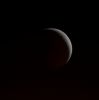
Enceladus-PIA10498.jpgNorthern Craters of Enceladus (natural colors; credits: Lunexit)59 visiteCaption NASA:"This image is part of an observation designed to view the moon's plume of icy particles at a moderately High Phase Angle.
The "Phase Angle" is the angle formed between the Sun, the target being imaged, and the Spacecraft, and it ranges from 0 to 180°. Tiny particles, like those in the plume, brighten substantially at high phase angles.
This view was taken from a vantage point 37° above the Equator of Enceladus (about 504 Km, or approx. 313 miles across). Reflected light from Saturn dimly illuminates the moon's dark side.
The image was taken in visible light with the Cassini Spacecraft narrow-angle camera on Sept. 17, 2008. The view was acquired at a distance of approx. 262.000 Km (such as about 163.000 miles) from Enceladus and at a Phase Angle of 140°.
Image scale is roughly 2 Km (5137 feet) per pixel".MareKromium
|
|

PHOE-SOL150-lg42375-42376-42377-2.jpgFrost on the Rocks... - Sol 150 (Superdefinition and natural colors; credits: Dr G. Barca)59 visitenessun commentoMareKromium
|
|

NGC-7000-01.jpgNGC 7000 - The "North America Nebula"59 visite"...Post equitem sedet atra cura..."
(Orazio)
"...Dietro al cavaliere siede la sua tristezza..." (trad. libera)MareKromium
|
|
|
|
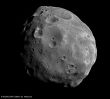
PHOBOS-Image001-409-20081008-5870-6-nd3-02-PhobosSeries_H1.jpgPhobos, from Mars Express59 visiteThis image was obtained by the High Resolution Stereo Camera (HRSC) on board ESA’s Mars Express on 28 July 2008 (orbit 5870), at a distance of 351 Km from the moon’s centre. The image was taken using the camera’s nadir channel, at a resolution of 14 mt/pixel.
The origin of Phobos is debated. While its density, lower than the density of the Martian Surface rocks, make it appear to belong to "D-Class" Asteroids, the moon appears to share many surface characteristics with the class of carbonaceous "C-Type" asteroids, which suggests it might have been captured from this population.
However, it is difficult to explain either the capture mechanism or the following evolution of its orbit into the Equatorial Plane of Mars.
An alternative hypothesis is that it formed in its present position, and is therefore a remnant from the planetary formation period.MareKromium
|
|
| 25353 immagini su 2113 pagina(e) |
 |
|
|
|
|
1304 | |
|
|
|
|





