| Piú viste |

Volcanic_Features-Apollinaris_Patera-PCF-LXTT.jpgApollinaris Patera (Natural Colors; credits for the additional process. and color.: Dr Paolo C. Fienga - Lunexit Team)59 visiteThis Martian Volcano is found along the border between the ancient Martian Highlands and the younger Northern Lowlands.
It is characterized by a large caldera (~60 Km diameter), a basal scarp, and a large fan that emanates from the caldera and covers the Southern Flanks. Like other martian volcanoes it appears to have undergone episodes of both explosive and effusive eruptions. The color information in this mosaic of Apollinaris Patera comes from a series of color frames acquired by Viking 1 during orbit 468S (~350 m/pixel).
To sharpen details of morphology, the color mosaic was merged with a higher resolution (~180 mt/pixel) series of images acquired during orbit 088A.
For more information on Apollinaris Patera see:
- Robinson et al., Chronology, Eruption Duration, and Atmospheric Contribution of the Martian Volcano Apollinaris Patera, Icarus, 104, pp. 301-323, 1993.
- Scott, D.H., J.M. Dohm, D.J. Applebee, Geologic Map of Science Study Area 8, Apollinaris Patera Region of Mars, (Special MTM-10186 Quadrangle), USGS Misc. Investigations Series, MAP-I-2351, 1993.MareKromium
|
|
OPP-SOL1487-2.jpgVictoria's Paving (1) - Sol 1487 (natural Colors; credits: Dr G. Barca)59 visitenessun commentoMareKromium
|
|

Psp_008240_2500_red.jpgLouth Crater South Rim (Extremely Enhanced Natural Colors; credits for the additional process. and color: Dr Paolo C. Fienga - Lunexit Team)59 visitenessun commentoMareKromium
|
|
OPP-SOL1487-05.jpgBeautiful Victoria... (5) - Sol 1487 (natural colors; credits: Dr G. Barca)59 visitenessun commentoMareKromium
|
|
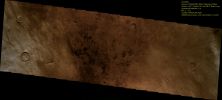
Dunes-Dunefield-20080407a-PCF-LXTT.jpgDunes... (Absolute Natural Colors; credits for the additional process. and color.: Dr Paolo C. Fienga - Lunexit Team)59 visitenessun commentoMareKromium
|
|
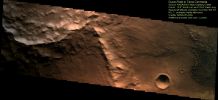
Dunes-Dunefield_in_Terra_Cimmeria-20080507a-PCF-LXTT.jpgDunefield in Terra Cimmeria (Natural Colors; credits for the additional process. and color: Dr Paolo C. Fienga - Lunexit Team)59 visitenessun commentoMareKromium
|
|

Dione-N00119788.jpgCross-Worlds! (4)59 visitenessun commentoMareKromium
|
|

Dione-N00119785.jpgCross-Worlds! (1)59 visiteI "lineamenti" superficiali di Dione sono inconfondibili; più difficile, invece, è l'individuazione del secondo Corpo Celeste che va ad incrociare Dione. Le immagini non sono perfette e la loro definizione è scarsa; tuttavia, applicando una notevole magnificazione, ci sembra di intravedere il bordo di un grande cratere, situato all'estremo Nord (dal punto di vista di Cassini - ergo dell'Osservatore) della seconda luna.
Si tratta, forse, del grande cratere Herschel, noto anche come "L'Occhio di Mimas".
Oppure, come suggerisce l'albedo della seconda luna, si potrebbe trattare di Encelado?
E Voi che ne dite?
In attesa che la NASA ci confermi o ci smentisca "l'ID" della seconda luna, le Vostre opinioni saranno profondamente apprezzate!MareKromium
|
|
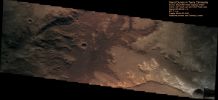
Dunes-Dunefield_in_Terrra_Cimmeria-20080327a-PCF-LXTT.jpgLarge Dunefield in Terra Cimmeria (Absolute Natural Colors; credits for the additional process. and color.: Dr Paolo C. Fienga - Lunexit Team)59 visitenessun commentoMareKromium
|
|
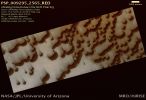
PSP_009295_2565_RED.jpgAbrading Dunes in the North Polar Erg (natural colors; credits: Lunexit)59 visiteThis location is where Mars Global Surveyor (a.k.a.: MGS) saw evidence of dunes that either shrank or completely disappeared over a span of a few years. HiRISE provides new details at higher resolution.
As seen here, the dunes show clear evidence of erosion.
Based on the shape of the dunes in this picture, the strongest winds have blown from the upper right (South-East) to lower left (North-West).
Streamers of dark sand are visible on the white, frost-covered surface downwind of the dunes. This is particularly prominent at the “horns” of the barchan dunes (these are the dunes with the prominent points at their edges).
Scientists believe these dunes are cemented, by ice, such that the wind is progressively eroding them over time. Future observations by HiRISE will determine if the dunes shrink as indicated by MGS, or maybe even migrate, over time.MareKromium
|
|
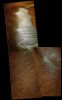
OPP-SOL1650-MF-LXT.jpgColours' Variety... - Sol 1650 (True Colors; credits: Dr M. Faccin)59 visitenessun commentoMareKromium
|
|
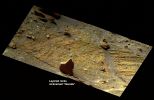
OPP-SOL1591-LXT.jpgNevada! - Sol 1591 (possible natural colors; credits: Lunexit)59 visitenessun commentoMareKromium
|
|
| 25353 immagini su 2113 pagina(e) |
 |
|
|
|
|
1302 | |
|
|
|
|





