| Piú viste |

SOL1408-2.jpgThe terrain near Spirit: a "colourful comparison" - Sol 1408 (Credits: Dr Gianluigi Barca & Lunexit - for the inset)59 visitenessun commentoMareKromium
|
|
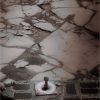
OPP-SOL1390-2.jpgVictoria's Paving - Sol 1390 (natural colors + MULTISPECTRUM; credits: Dr Gianluigi Barca & Lunexit)59 visitenessun commentoMareKromium
|
|
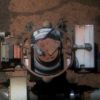
OPP-SOL1399-2.jpgColored Martian Visions: middle afternoon hours - Sol 1399 (2 - natural colors; credits: Dr Gianluigi Barca)59 visitenessun commentoMareKromium
|
|

as08-14-2402.JPGAS 08-14-2402 - The Dark Side of the Moon (6 - MULTISPECTRUM; credits: Lunexit)59 visiteImage Collection: 70mm Hasselblad
Mission: 8
Magazine: 14
Magazine Letter: B
Latitude: approx. 3,0° South
Longitude: approx. 157,0° West
Lens Focal Length: 250 mm
Description: NEAR TERMINATOR; FARSIDE
Film Type: SO-368
Film Width: 70 mm
Film Color: colorMareKromium
|
|
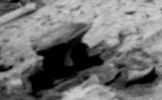
SOL1422-2P252603427EFFAX00P2265L2M1-2.jpgThe "Anvil" - Sol 1422 (extra-detail mgnf; credits: Dr Gianluigi Barca)59 visiteL'incudine: in questa versione fortemente magnificata, la bizzarria del dettaglio può essere colta senza sforzi.
La nostra opinione (non esotica) è che si tratti di quello che rimane di una struttura stratificata più complessa la quale è stata "limata, molata e, in parte spazzata via" dai venti che soffiano su Gusev Crater. Insomma: un esempio - ravvicinatissimo - di mini-Yardang (o "wind-work", come lo chiamano scherzosamente alla NASA).
Un grande complimento al Dr Barca per l'occhio e la costante dedizione!MareKromium
|
|

OPP-SOL1099-2.jpgBerries and Pebbles - Sol 1099 (natural colors + MULTISPECTRUM; credits: Dr G. Barca & Lunexit)59 visitenessun commentoMareKromium
|
|
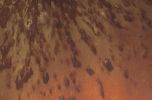
PSP_004313_1760_RED_abrowse-01.jpgWinslow Crater - extra-detail mgnf from frame n. 1: the "Herringbone Pattern" (MULTISPECTRUM; credits: Lunexit)59 visitenessun commentoMareKromium
|
|

APOLLO_12_AS_12-57-8441_HR-b.jpgAS 12-57-8441 (b) - Soil surface disturbed by the LM descent engine exhaust (coloring: NASA)59 visitenessun commentoMareKromium
|
|

ZO-Mercury01_Messenger.jpgApproaching Mercury59 visiteDa "NASA - Picture of the Day", del 16 Gennaio 2008:"Two days ago, the MESSENGER Spacecraft became only the second in Human History to swoop past Mercury. The last spacecraft to visit the Sun's closest Planet was Mariner 10, over 35 years ago.
Mariner 10 was not able to photograph Mercury's entire surface, and the images it did send back raised many questions. Therefore, much about planet Mercury remains unknown. This week's MESSENGER flyby was only the first of three. Over the next few years MESSENGER will swing past Mercury twice more and finally orbit in 2011, but MESSENGER is currently moving too fast to enter orbit around Mercury now.
This image was taken by MESSENGER two days ago upon approach to Mercury.
Many detailed images of Mercury are expected to be sent back over the next few days. The data acquired by MESSENGER will help better understand how Mercury's surface was formed, and why it is so dense".MareKromium
|
|
OPP-SOL126-1B-1TI441F139378078EFF2837P1222R0M1.jpgShining and Rising? - Sol 126 (2 - credits: Dr M. Faccin)59 visite...Osservate con attenzione: a noi, questa "scintilla" NON PARE un image-artifact...Però potremmo sbagliarci.
Cosa può essere? Impossibile dirlo.
Piuttosto, siate Voi a dirci che cosa pensate che sia...MareKromium
|
|

OPP-SOL1412-1N253534999EFF8826F0006L0M1.jpgThe Sky over Opportunity... - Sol 1412 (MULTISPECTRUM; credits: Lunexit)59 visiteElaborazione del Cielo di Marte in versione multispettrale, senza applicazione di filtri rossi o arancio/gialli.
Frame da osservare in congiunzione alla coppia di immagini Spirit relative al Cielo di Gusev nel Sol 1432.
(notare le pessime condizioni dell'ottica utilizzata la quale sembra essere abbondantemente cosparsa di polvere)MareKromium
|
|

ZO-Mercury03_Messenger-208855main_half_merc_350.jpgCrescent Mercury59 visiteAs NASA’s MESSENGER neared Mercury on January 14, 2008, the Spacecraft took this image of the Planet’s full crescent.
The image shows portions of Mercury previously seen by Mariner 10, but when Mariner 10 flew by the Planet at each of its encounters, the Sun was nearly overhead. For this MESSENGER flyby, in contrast, the Sun is shining obliquely on Regions near the day/night boundary (called the Terminator) on the right-hand side of the crescent, revealing the surface topography.
This image illustrates how MESSENGER, during its future flybys and subsequent orbital mission, will teach scientists much about the portion of Mercury already imaged by Mariner 10.MareKromium
|
|
| 25353 immagini su 2113 pagina(e) |
 |
|
|
|
|
1294 | |
|
|
|
|





