| Piú viste |

GRB-080319B.jpgSpace "Flash"! GRB-080319B59 visiteCaption NASA:"Peering across 7,5 BLY (Billion Light-Years) and halfway back to the Big Bang, NASA's Hubble Space Telescope has photographed the fading optical counterpart of a powerful Gamma Ray Burst (GRB) that holds the record for being the intrinsically brightest naked-eye object ever seen from Earth. For nearly a minute this single star was as bright as 10 million galaxies.
Hubble Wide Field and Planetary Camera 2 (WFPC2) images of GRB 080319B, taken on Monday, April 7, 2008, show the fading optical counterpart of the titanic blast. The object erupted in a brilliant flash of Gamma Rays and other electromagnetic radiation at 2:12 a.m. EDT on March 19, and was detected by Swift, NASA's Gamma Ray Burst "Watchdog Satellite". Immediately after the explosion, the Gamma Ray Burst glowed as a dim 5th magnitude "star" in the spring constellation Bootes.
Designated GRB 080319B, the intergalactic firework has been fading away ever since then. Hubble astronomers had hoped to see the host galaxy where the burst presumably originated, but were taken aback that the light from the GRB is still drowning out the galaxy's light even three weeks after the explosion.
This is particularly surprising because it was such a bright GRB initially. Previously, bright bursts have tended to fade more rapidly, which fits in to the theory that brighter GRBs emit their energy in a more tightly confined beam. The slow fading leaves astronomers puzzling about just where the energy came from to power this GRB, and makes Hubble's next observations of this object in May 2008 all the more crucial.
Called a Long-Duration GRB, such events are theorized to be caused by the death of a very massive star, perhaps weighing as much as 50 times our Sun. Such explosions, sometimes dubbed "hypernovae", are more powerful than ordinary supernova explosions and are far more luminous, in part because their energy seems to be concentrated into a blowtorch-like beam that, in this case, was aimed directly at Earth. The Hubble exposure also shows field galaxies around the fading optical component of the gamma ray burst, which are probably unrelated to the burst itself".MareKromium
|
|
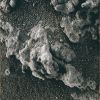
SOL1085.jpgMartian Reef - Sol 1085 - (Superdefinition + MULTISPECTRUM; credits: Dr G. Barca & Lunexit)59 visitenessun commentoMareKromium
|
|

001-Mars.jpgMars, according to Schiaparelli59 visiteDal nostro Amico Roberto Tremolada, una bellissima (e "datata"!) Mappa del Pianeta Rosso realizzata dal Grande Schiaparelli.
E quindi, se volete VEDERE e SAPERE di più, Vi invitiamo a consultare la Sezione a Lui dedicata - ed intitolata "Per Ricordare" - dal bellissimo Sito Lunar Explorer Italia (Sez. Liguria e Piemonte), curato dal nostro Grandissimo Amico e Collega, il Dr Gianluigi Barca.
Vi basterà andare su http://www.lunarexplorer.it/, Sez. "Storia", sub-Sezione "Per Ricordare" e poi...Buona Lettura!MareKromium
|
|
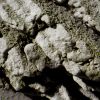
SOL276.jpgMadreporic-like Surface with Martian Moss - Sol 276 (Superdefinition; credits: Dr G. Barca)59 visitenessun commentoMareKromium
|
|
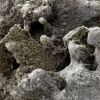
SOL170.jpgGreenish "dust" or Martian Moss? - Sol 170 (Superdefinition; credits: Dr G. Barca)59 visitenessun commentoMareKromium
|
|

PSP_007820_1505_RED_abrowse-05.jpgThis IS SOMETHING! (context frame - credits: Dr M. Faccin)59 visiteGrazie all'occhio del Dr Faccin, un (probabilmente AUTENTICO Mistero Marziano; anzi...forse addirittura due!).
Andate a vedere che cosa si nasconde nella zona indicata dalla croce...MareKromium
|
|

Animazione_OPP-SOL199-1M145850485EFF3505P2977M2M1_copia.gifChangings... - Sol 199 (credits: Dr G. Barca)59 visiteCi sono dunque delle azioni "eoliche" alla base dei "Cambiamenti"?... Secondo noi no: il Rover, in qualche modo, ha interagito direttamente con il suolo.
Ma un particolare ulteriormente curioso ed intrigante è nel fatto che non si vedono (o, almeno, noi non riconosciamo) i tipici "segni" che indicano un'azione di disturbo operata sul suolo la quale sia stata operata dalle attrezzature disposte sul RA di Opportunity (ad es.: non si vedono nè "graffi", nè "striature"; al suolo non vi è traccia del "marchio" tipico dello Spettrometro Mossbauer; non c'è traccia di azioni leviganti nè di "spazzolature" etc.).
Insomma: tutto è strano, ma l'azione "meccanica", a nostro parere, è l'unica ipotizzabile in un caso simile...MareKromium
|
|
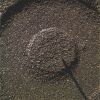
SOL709-2.jpgGreenish "dust"? - Sol 709 (Superdefinition + MULTISPECTRUM; credits: Dr G. Barca & Lunexit)59 visitenessun commentoMareKromium
|
|
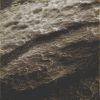
SOL761-2.jpgGreenish "dust"? - Sol 761 (Superdefinition + MULTISPECTRUM; credits: Dr G. Barca & Lunexit)59 visitenessun commentoMareKromium
|
|
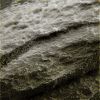
SOL761-1.jpgGreenish "dust"? - Sol 761 (Superdefinition; credits: Dr G. Barca)59 visitenessun commentoMareKromium
|
|
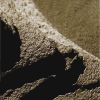
SOL753-2.jpgGreenish "dust"... - Sol 753 (Superdefinition + MULTISPECTRUM; credits: Dr G. Barca & Lunexit)59 visitenessun commentoMareKromium
|
|
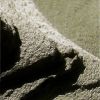
SOL753-1.jpgGreenish "dust"... - Sol 753 (Superdefinition; credits: Dr G. Barca)59 visitenessun commentoMareKromium
|
|
| 25353 immagini su 2113 pagina(e) |
 |
|
|
|
|
1293 | |
|
|
|
|





