| |
| Piú viste |

The_Local_Universe.jpgAll Around Us...59 visite"...Omnia humana, brevia et caduca sunt; et infiniti temporis, nullam partem occupantia..."
(Seneca)
"...Tutte le cose umane (per quanto grandi possano apparire) sono pur sempre brevi, e caduche; e nel Tempo, infinito, esse si perdono senza lasciare traccia alcuna..." (trad. libera)MareKromium
|
|
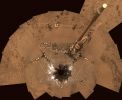
SOL1355-PIA10128.jpgSpirit self-portrait (approx. true colors; credits: NASA)59 visiteCaption NASA:"The deck of NASA's MER Spirit is so dusty that the Rover almost blends into the dusty background in this image assembled from frames taken by the panoramic camera (Pancam) during the period from Spirit's Sol 1355 through Sol 1358 (Oct. 26-29, 2007). Dust on the Solar Panels reduces the amount of electrical power the Rover can generate from sunlight each Sol. Earlier self-portraits by Spirit, such as one taken on Sol 586 (PIA03272), offer a comparison view of cleaner Solar Panels.
The vertical projection used here produces the best view of the Rover deck, though it distorts the ground and antennas somewhat. The eight-pointed star shape near the front of the Rover (bottom of the image) marks the location of the Camera MAST, which is out of view of the PanCam atop the MAST.
This mosaic view in approximate true color is a composite of frames taken through the PanCam's filters centered on wavelengths of 600, 530 and 480 nanometers".
Nota Lunexit: un esempio di quanto sìano brutte, malfatte e (sostanzialmente) insignificanti le "interpretazioni cromatiche" della NASA. Difficile dire il motivo di siffatta pochezza. Diciamo che, forse, non hanno voglia di impegnarsi sui "colori" e quindi spacciano per "scientifiche ricostruzioni in approx. true colors" quelle che sono solo delle orribili (e distratte) colorizzazioni fatta usando un Software comune...MareKromium
|
|
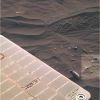
SOL960-2P211586798EDNAS00P2265L6M1.jpgExtremely anomalous Surface Feature: the "Seep" - Sol 960 (credits: Dr Marco Faccin)59 visitenessun commentoMareKromium
|
|

Europa-PIA10149.jpgThe Inner Ocean of Europa59 visiteCaption NASA:"Like Earth, Europa is thought to have an iron core, a rocky mantle and a surface ocean of salty water. Unlike on Earth, however, this ocean is deep enough to cover the whole moon, and being far from the Sun, the ocean surface is globally frozen over.
Europa's orbit is eccentric, which means as it travels around Jupiter, large tides, raised by Jupiter, rise and fall. Jupiter's position relative to Europa is also seen to librate, or wobble, with the same period. This tidal kneading causes frictional heating within Europa, much in the same way a paper clip bent back and forth can get hot to the touch, as illustrated by the red glow in the interior of Europa's rocky mantle and in the lower, warmer part of its ice shell. This tidal heating is what keeps Europa's ocean liquid and could prove critical to the survival of simple organisms within the ocean, if they exist".MareKromium
|
|

Europa-PIA10131.jpgThe Inner Ocean of Europa59 visiteCaption NASA:"Scientists are all but certain that Europa has an ocean underneath its icy surface, but they do not know how thick this ice might be. This artist concept illustrates 2 possible cut-away views through Europa's ice shell. In both, heat escapes, possibly volcanically, from Europa's rocky mantle and is carried upward by buoyant oceanic currents. If the heat from below is intense and the ice shell is thin enough (left), the ice shell can directly melt, causing what are called "chaos" on Europa, regions of what appear to be broken, rotated and tilted ice blocks. On the other hand, if the ice shell is sufficiently thick (right), the less intense interior heat will be transferred to the warmer ice at the bottom of the shell, and additional heat is generated by tidal squeezing of the warmer ice. This warmer ice will slowly rise, flowing as glaciers do on Earth, and the slow but steady motion may also disrupt the extremely cold, brittle ice at the surface.
Europa is no larger than Earth's moon, and its internal heating stems from its eccentric orbit about Jupiter, seen in the distance. As tides raised by Jupiter in Europa's ocean rise and fall, they may cause cracking, additional heating and even venting of water vapor into the airless sky above Europa's icy surface".MareKromium
|
|
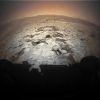
SOL1405-2F251096975EFFAW__P1214R0M1.jpgDaylights on Mars - Front HazCam - Sol 1405 (MULTISPECTRUM; credits: Lunexit)59 visitenessun commentoMareKromium
|
|

M-106-PIA10204.jpgM 106 - Spiral Galaxy59 visite"...Male parta, male dilabuntur..."
(Nevio)
"...Le cose iniquamente accumulate (guadagnate), iniquamente vengono dilapidate..."MareKromium
|
|
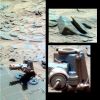
SOL1369.jpgSomething like a "box"... - Sol 1369 (credits: Dr Marco Faccin)59 visiteContestualizzazione: un concetto chiave per l'individuazione e l'analisi delle possibili Anomalìe e Singolarità presenti su rilievi extra-terrestri.
Lo spunto per parlarne in un recente commento (sebbene in termini di pura teoria), ci è stato dato dal nostro caro Amico e Socio, "Ufologo"; una risposta sul campo, invece, è subito arrivata dal nostro sempre bravissimo Ricercatore, Dr Marco Faccin.
Ed è quindi dedicato ai nostri due Amici il commento su questo frame il quale - come vedete - ci mostra, in alto a Dx del quadro maggiore (posto a Sx dell’Osservatore), assieme ad una discreta quantità di elementi irrilevanti, un dettaglio davvero intrigante.
Si tratta, in apparenza, di un "frammento" parzialmente interrato di qualcosa che, come sembra del tutto evidente, possiede un’albedo piuttosto elevata, è liscio, squadrato ed apparentemente disposto/strutturato/articolato su due livelli.
Un qualcosa che, effettivamente, "sembra" assai poco naturale...
Contestualizzazione: ossìa trasposizione del dettaglio che, ai nostri occhi, appare come "anomalo" (e cioè, tanto per adottare una definizione chiara ed alla buona, diciamo un dettaglio "non allineato"/"incongruo" con il/rispetto al paesaggio al quale accede e di cui fa parte), NEL SUO CONTESTO di riferimento (ivi: un'area rocciosa e ricca di macigni e rocce stratificate, non lontana dalla Collina "Husband" ed a ridosso della zona conosciuta come "Home Plate").
Ecco: questo dettaglio, ottimamente individuato dal Dr Faccin, è EFFETTIVAMENTE (a nostro parere e dopo aver effettuato la Contestualizzazione nei termini di cui sopra) un rilievo quanto meno Singolare, se non del tutto Anomalo.
Ma questo non vuol dire, naturalmente, rilievo "artificiale"!
Magari lo sarà pure o magari no: questo non lo sa nessuno.
E, al momento, non importa.
Noi sappiamo solo che questo rilievo, una volta CONTESTUALIZZATO, NON SI SPOSA con il resto del paesaggio su cui sorge e del quale dovrebbe pienamente condividerne la Natura. Tutto qui.
Le analisi DECONTESTUALIZZATE – e che sono tanto care alla Scuola del Prof. Hoagland e del Dr Skipper (due esempi fra i tanti) –, a nostro parere, non sono analisi complete.
Forse, da un certo punto di vista, non sono neppure analisi, ma semplici “chiacchiere” (interessanti ed accattivanti finché si vuole, ma sempre chiacchiere), fondate su mere associazioni visive, logiche e mnemoniche (della serie “questo rilievo MI RICORDA questo oggetto” etc.).
Il che è cosa ben diversa dalla Ricerca ed Analisi delle possibili Singolarità ed Anomalìe contenute nelle immagini in arrivo dallo Spazio…O no?!?
Un grande saluto e ringraziamento al Dr Faccin!
MareKromium
|
|

as16-131-20182.jpgAS 16-131-20182 - Earth in UltraViolet59 visitenessun commentoMareKromium
|
|
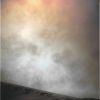
OPP-SOL1389-1N251488685EDN8800P1585L0M1.jpgMassive Clouds of Dust over Victoria! - Sol 1389 (MULTISPECTRUM; credits: Lunexit)59 visiteUna possibile "prova" della corretta intuizione del bravissimo Dr Faccin: il cielo sopra Victoria Crater è, come appare da questo interessante frame, letteralmente INVASO da nuvole di polvere che non solo lo "oscurano e colorano", ma che, usando alcune ottiche, si evidenziano in tutta la loro - chiamiamola così - "imponente maestosità".
Nuvole di polvere, quindi, che attraverso determinati filtri e riprese, SPARISCONO (sinchè non vengono "recuperate" processando i frames), ma che attraverso ALTRI Filtri ed ALTRE (tipologie di) Riprese, EMERGONO con grande chiarezza. Come si può vedere benissimo in questo quadro ed in altri quadri (che non pubblichiamo) del Sol 1389 di Opportunity.
Saluti e complimenti al Dr Faccin per averci fornito lo spunto e gli elementi necessari per giungere a capire e spiegare quest'altra (fotografica stavolta) Martian Oddity!MareKromium
|
|

Titan-Atmosphere-N00098823.jpgThe "Multi-Layered" Atmosphere of Titan (MULTISPECTRUM - Overexposed; credits for the additional process. and color.: Lunexit)59 visiteCaption NASA:"N00098823.jpg was taken on December 20, 2007 and received on Earth December 22, 2007. The camera was pointing toward TITAN that, at the time, was approx. 186.227 Km away, and the image was taken using the CL1 and UV3 filters. This image has not been validated or calibrated".MareKromium
|
|

Aeolian_Features-DD_and_Dust_Storms-2003_06_02-01.jpgDust Storms and Dust Devils between Syria Planum and Claritas Fossae (Enhanced Absolute Natural Colors; credits for the additional process. and color.: Dr Paolo C. Fienga - Lunexit Team)59 visitenessun commentoMareKromium
|
|
| 25353 immagini su 2113 pagina(e) |
 |
|
|
|
|
1280 | |
|
|
|
|
|
|





