| Piú viste |

New_View_of_Dark_Pit_on_Arsia_Mons_(PSP_004847_1745)-2.jpgCollapse Pit on Arsia Mons (Natural Colors; credits: Lunar Explorer Italia)59 visitenessun commentoMareKromium
|
|

LRO-0008b-369444main_lroc_apollo17_lrg.jpgTaurus-Littrow Highlands: the Apollo 17 Landing Site (edm)59 visitenessun commentoMareKromium
|
|
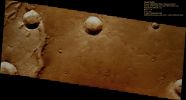
Channels-Nirgal_Vallis-MO-20090721a.jpgNirgal Vallis (Enhanced Natural Colors; credits: Lunar Explorer Italia)59 visitenessun commentoMareKromium
|
|
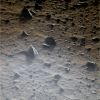
SOL1945-GB.jpgMartian "White Sands" - Sol 1945 (possible True Colors; credits: Dr G. Barca)59 visitenessun commentoMareKromium
|
|

Jupiter-Impact05-PIA12148.jpgImpact on Jupiter!59 visitenessun commentoMareKromium
|
|

South_Polar_Features-Dunes-2-20090728a.jpgSouth Polar Dunes near Reynolds Crater (Natural Colors; credits: Lunar Explorer Italia)59 visiteCoord.: 77,1° South Lat. and 197,9° East Long.MareKromium
|
|

Aurora_Borealis~0.jpgAuroral Corona59 visiteCaption NASA, da "NASA - Picture of the Day" del giorno 28 Luglio 2009:"Few Auroras show this level of detail. Above, a standard digital camera captured a particularly active and colorful Auroral Corona that occurred last week above Alberta, Canada. With a shape reminiscent of a flower, the spectacular Aurora had an unusually high degree of detail. The vivid green and purple auroral colors are caused by high Atmospheric Oxygen and Hydrogen reacting to a burst of incoming electrons. Many photogenic Auroras have been triggered from a Solar Wind Stream that recently passed the Earth. The Auroras were unexpected because the initiating Sun has been unusually quiet lately".MareKromium
|
|

ESP_012252_1245-00.jpgOutcrop in Southern Noachis (ctx frame - Natural Colors; credits: Dr M. Faccin)59 visiteCoord.: 55,1° South Lat. and 26,8° East Long.
Spacecraft altitude: about 251 Km
M.L.T.: 15:52 (middle afternoon)
S.I.A.: 58° (Sun about 32° high on the L.H.)MareKromium
|
|

DevilsTower-jpg.JPGDevils Tower59 visiteUna bellissima immagine della Via Lattea mentre fa capolino su una montagna famosissima: la Torre del Diavolo (Devil's Tower - Wyoming - USA - resa famosa dal film "Incontri Ravvicinati del III Tipo").
Coglo l'occasione fornitami da questo splendido frame per Salutare, a nome di Tutti i Partner, i Soci e gli Amici di Lunar Explorer Italia, il nostro nuovo Amico e Compagno di Viaggio, il Dr Stefano Cicetti, Curatore del bellissimo Sito "IRGENDWO" (http : / / stefanocicetti.blogspot.com /).
Questa dedica va a suggellare un'Amicizia nata sulle onde dei commenti e degli scambi dialettici intercorsi fra il Dr Cicetti ed il sottoscritto, sempre sulle pagine del summenzionato Sito (che viene aggiornato con cadenza quasi quotidiana e che Vi invito di Cuore a visitare, non appena Vi sentirete con lo Spirito giusto per andare "da qualche parte" - Irgendwo, in Lingua Tedesca, appunto).
Perchè andare "da qualche parte"? Perchè, come dice il Buon Stefano :"...Siamo sempre da qualche parte. Solo che la mente e il cuore ci arrivano prima. Sono dannatamente più rapidi dei nostri piedi...".
Ed anche delle nostre Astronavi, naturalmente.
Un Saluto al Dr Cicetti e Benvenuto nella nostra (piccola) Galassia!
Dr Paolo C. Fienga - Lunar Explorer Italia - Presidente e Socio Fondatore
MareKromium
|
|

Titan-Lakes-South_Polar_Unnamed_Lake-PIA12162.jpgLake-like Feature near the South Pole of Titan59 visiteCaption NASA:"This mosaic of image swaths from Cassini's Titan Radar Mapper, taken with the Synthetic-Aperture Radar (SAR), features a large Dark Region several hundred kilometers across that differs in several significant ways from potential lakes observed on Titan.
It is not as dark to the radar as many lakes (including lakes seen here), and the nature of the margin is unusual. It has many characteristics in common with lakes, including its channels and interior, yet its differences distinguish it from other similar features. Some similarities are seen with the dark feature in Titan pass T7 (see PIA03563).
At top (North), the feature has characteristics of a shoreline, with round bay-like margins and channels that drain into it; at left (West) and right (East) it is rimmed by bright, feathery, branching channel-like structures, some of which extend for tens of kilometers. Within the Dark Feature some details can be seen, some of which seem to be extensions of the channels draining into the Dark Feature.
The mosaic is near the South Pole, centered near 82° South and 205° West. It includes data from Titan passes T39, T55, T57, T58, and T59, collected between December 2007 and July 2009. The individual swaths vary in resolution and illumination angle, so the edges are visible and surface features look somewhat different across swath boundaries, but the regional view can still be understood. As more SAR image swaths of Titan are collected by Cassini, mosaics of those images reveal features that cannot be appreciated within the individual observations".MareKromium
|
|

The_Rings-PIA11665.jpgSmall Object in the "B"-Ring59 visiteCaption NASA:"The Cassini Spacecraft captured this image of a small object in the outer portion of Saturn's "B"-Ring casting a shadow on the Rings as Saturn approaches its August 2009 Equinox.
This new moonlet, situated about 300 miles (approx. 480 Km), inward from the outer edge of the "B"-Ring, was found by detection of its shadow which stretches 25 miles, or about 41 Km, across the Rings.
The shadow length implies the moonlet is protruding about 660 feet, or 200 meters, above the Ring-Plane.
If the moonlet is orbiting in the same plane as the ring material surrounding it, which is likely, it must be about 1300 feet, or 400 meters, across.
This object is not attended by a Propeller feature, unlike the band of moonlets discovered in Saturn's "A"-Ring earlier by Cassini (see PIA07792 and PIA06196). The "A"-Ring moonlets, which have not been directly imaged, were found because of the propeller-like narrow gaps on either side of them that they create as they orbit within the Rings. The lack of a propeller feature surrounding the new moonlet is likely because the "B"-Ring is dense, and the ring material in a dense ring would be expected to fill in any gaps around the moonlet more quickly than in a less dense region like the mid-"A"-Ring. Also, it may simply be harder in the first place for a moonlet to create propeller-like gaps in a dense ring.
Straw-like patterns of clumping ring material are also visible along the edge of the outer "B"-Ring near the right of this image. See PIA09855 to learn more about these features.
This image and others like it (see PIA11656 and PIA11659) are only possible around the time of Saturn's Equinox which occurs every half-Saturn-year (equivalent to about 15 Earth years). The illumination geometry that accompanies Equinox lowers the Sun's angle to the Ring-Plane and causes out-of-plane structures to cast long shadows across the Rings.
This view looks toward the sunlit side of the Rings from about 42° below the Ring-Plane. Background stars are visible on the right of the image. They appear elongated by the camera's exposure time.
The image was taken in Visible Light with the Cassini Spacecraft narrow-angle camera on July 26, 2009. The view was obtained at a distance of approx. 296.000 Km (such as about 184.000 miles) from Saturn and at a Sun-Saturn-Spacecraft, or Phase, Angle of 120°.
Image scale is roughly 1 Km (4680 feet) per pixel".MareKromium
|
|
![South_Polar_Regions-South_Pole-MGS-mg90s000[1]-PCF-LXTT-1.jpg](albums/userpics/10060/small_South_Polar_Regions-South_Pole-MGS-mg90s000%5B1%5D-PCF-LXTT-1.jpg "Nome del file=South_Polar_Regions-South_Pole-MGS-mg90s000[1]-PCF-LXTT-1.jpg
Dimensione del file=48KiB
Dimensioni=1062x1000
Aggiunta il=Ago 09, 2009")
South_Polar_Regions-South_Pole-MGS-mg90s000[1]-PCF-LXTT-1.jpgMartian South Pole and South Polar Regions, from MGS (Darkened Natural Colors; credits for the additional process. and color.: Dr Paolo C. Fienga - Lunexit Team)59 visitenessun commentoMareKromium
|
|
| 25353 immagini su 2113 pagina(e) |
 |
|
|
|
|
1277 | |
|
|
|
|





