| Piú viste |
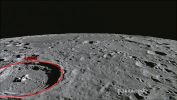
Kaguya-021-hdtv_004_2c.jpgSome Lunar Geography from Kaguya: the South-Western side of the South Pole and Aitken Basin: Lyman Crater (FarSide)59 visiteCoord.: 64,8° South Lat. and 163,6° East Long.; Diam.: about 84 KmMareKromium
|
|

M-016-1.jpgM 16 - The "Eagle Nebula"59 visite"...Virtutem incolumem odimus; Sublatam ex oculis quaerimus invidi..."
(Orazio)
"...Sinchè intatta, odiamo la Virtù; (ma) ci rattristiamo quando essa scompare..."
e G. Leopardi, sullo stesso tema:"...Virtù viva sprezziam, lodiamo estinta..."MareKromium
|
|
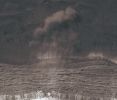
PSP_007338_2640_RED_abrowse-1.jpgCaught in Action: Avalanches on North Polar Scarps (natural colors; credits: Lunexit)59 visitenessun commentoMareKromium
|
|

018-Mars_Magnetic_Anomalies.jpgThe Magnetic Anomalies of Mars59 visiteThe Magnetic Anomalies found by the MAG/ER experiment on the Mars Global Surveyor spacecraft are inconveniently bisected by the 180° Longitude line, and so appear at both ends of the standard Mars Mercator Projection.
Here, the MAG/ER team have made hemispheric projections centered on the area of strongest anomalies.
The 3 hemispheres show the 3 components of the Magnetic Field: B(r) is the Radial Field, which is perpendicular to Mars' Surface; B(Θ) is the Polar Field, oriented along lines of Longitude; and B(Φ) is the Circumferential Field, oriented along lines of Latitude. MareKromium
|
|

016-Mars_Altitudes.jpgMars "Ups and Downs"...59 visiteTo complement the MOLA Laser Altimeter Mercator maps of Mars' elevations and topography, the MOLA Team also produced views of selected hemispheres.
These views emphasize specific interesting areas or angles. These maps show altitude data coded into colors - blue is low and red/white are high.
These two hemispheres are centered on the Tharsis Plateau (including the Valles Marineris and the large volcanos) and on the Isidis Impact Basin (with the Hellas Basin to the South).MareKromium
|
|

MARS-001.jpgMars from Hubble Space Telescope59 visiteThe Hubble Space Telescope has taken lovely images of Mars, which complement the MOC Atlas Mercator Projection. This image montage is from Mars' 1999 oppoxition.MareKromium
|
|

as12-52-7759.jpgAS 12-52-7759 - Marius Crater (sunstruck)59 visiteImage Collection: 70mm Hasselblad
Mission: 12
Magazine: 52
Magazine Letter: S
Latitude: 13,9° North
Longitude: 51,5° West
Film Type: SO164
Film Width: 70 mm
Film Color: black & white
Feature(s): MARIUS CRATERMareKromium
|
|
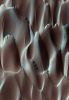
PSP_007193_2640_RED_abrowse-01.jpgDefrosting Northern Dunes (extra-detail mgnf - MULTISPECTRUM; credits: Lunexit)59 visiteThis extra-detail mgnf shows a Region of the dunes that are just beginning to lose their seasonal ice cover. In most of the image the dunes are a muted red color. Where the sun is shining on the steep dune crests the frost is gone and dark dust is free to cascade down the sides. This thin layer of dust, like slope streaks found elsewhere on Mars, flows down around obstacles and may come to rest mid-slope.MareKromium
|
|
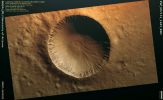
PSP_007151_1445_RED_abrowse-00.jpgColorful Layers in the Walls of an Unnamed Southern Crater (context frame - MULTISPECTRUM; credits: Lunexit)59 visiteThis image shows an unnamed, bowl-shaped impact crater located in the Southern Highlands. The crater is approximately 4 Km (about 2,5 miles) in diameter and 600 meters (approx. 2000 feet) deep.MareKromium
|
|

OPP-SOL489-1.jpgDeep, deep Rover Track - Sol 489 (True Colors; credits: Dr Gianluigi Barca)59 visitenessun commentoMareKromium
|
|

APOLLO_14_AS_14-77-10366a.JPGAS 14-77-10366 (a) - Thermal Degradation Sample59 visiteThermal Degradation Sample; taken in the vicinity of Station "A".MareKromium
|
|

PSP_005574_1720_RED_abrowse-01.jpgLayers and Slope-Streaks within Valleys along the Highland-Lowland Boundary (extra-detail mgnf - MULTISPECTRUM; credits: Lunexit)59 visiteSlope Streak formation is among the few known processes currently active on Mars. Since the Slope Streaks in this image appear to superpose (lie on top of) the surfaces between individual dunes, the Streaks most likely formed more recently and are younger than the dunes.
Many hypotheses have been proposed for the formation of Slope Streaks including dry avalanching, geochemical weathering, liquid stains or flows, and moisture wickering.
Recent observations from HiRISE images have revealed that the dark interior of Slope Streaks is lower in elevation than the surroundings, suggesting that material must have been removed in the formation of the streak.MareKromium
|
|
| 25353 immagini su 2113 pagina(e) |
 |
|
|
|
|
1271 | |
|
|
|
|





