| Piú viste |

Supernova-PIA09119.jpgBipolar Nebula59 visiteCaption NASA:"A luminous blue variable star in our galaxy, named HD168625, surrounded by a bipolar nebula that is similar to the one around SN1987A.
SN1987A was a supernova that exploded in 1987 in the Large Magellanic Cloud, and was the nearest supernova in about 400 years.
Rings near the equator are sometimes seen around stars that shed mass from their surfaces, but the larger rings above the poles are very rare. Tipped toward Earth and illuminated by the star, the rings look like ellipses in images taken with NASA's Spitzer Space Telescope.
The image was taken in 2004 by the infrared array camera on Spitzer at wavelengths between 3,6 and 8 microns. The massive star at the center, which lies within the constellation Sagittarius, is about 7.200 Light-Years from Earth". MareKromium
|
|

as12-51-7467.jpgAS 12-51-7467 - Flying over Theophilus Crater (2)59 visitenessun commento
|
|

as12-51-7517.jpgAS 12-51-7517 - Approaching Copernicus59 visitenessun commentoMareKromium
|
|

Streak-W00026015.jpgA new "Streak" in the Sky of Saturn (original NASA image)59 visiteCaption NASA:"W00026015.jpg was taken on March 06, 2007 and received on Earth March 07, 2007. The camera was pointing toward Saturn-Rings that, at the time, were approx. 808.714 Km away.
The image was taken using the CL1 and VIO filters and has not been validated or calibrated".
Nota: volevamo commentare, ma...è fiato sprecato. Qualunque ipotesi facessimo, dalla più logica e razionale (tipo: "è una luna di Saturno che è venuta "mossa), alla più esotica (tipo: dato che le stelle sullo sfondo sono - quasi - puntiformi, si può dedurre che lo Streak rapprsenta un oggetto luminoso che SI STAVA MUOVENDO MOLTO RAPIDAMENTE rispetto a Cassini), sarebbero comunque ipotesi inutili, in quanto non sostanziabili.
Dunque...decidete Voi che cosa Vi piace immaginare di più!
|
|
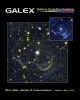
Z-Camelopardalis-PIA09219.jpgZ-Camelopardalis59 visiteThis composite image shows Z Camelopardalis, or Z Cam, a double-star system featuring a collapsed, dead star, called a white dwarf, and a companion star, as well as a ghostly shell around the system. The massive shell provides evidence of lingering material ejected during and swept up by a powerful classical nova explosion that occurred probably a few thousand years ago.
The image combines data gathered from the far-ultraviolet and near-ultraviolet detectors on NASA's Galaxy Evolution Explorer on Jan. 25, 2004. The orbiting observatory first began imaging Z Cam in 2003.
Z Cam is the largest white object in the image, located near the center. Parts of the shell are seen as a lobe-like, wispy, yellowish feature below and to the right of Z Cam, and as two large, whitish, perpendicular lines on the left.
Z Cam was one of the first known recurrent dwarf nova, meaning it erupts in a series of small, "hiccup-like" blasts, unlike classical novae, which undergo a massive explosion. That's why the huge shell around Z Cam caught the eye of astronomer Dr. Mark Seibert of Carnegie Institution of Washington in Pasadena, Calif. - it could only be explained as the remnant of a full-blown classical nova explosion. This finding provides the first evidence that some binary systems undergo both types of explosions. Previously, a link between the two types of novae had been predicted, but there was no evidence to support the theory.
The faint bluish streak in the bottom right corner of the image is ultraviolet light reflected by dust that may or may not be related to Z Cam. Numerous foreground and background stars and galaxies are visible as yellow and white spots. The yellow objects are strong near-ultraviolet emitters; blue features have strong far-ultraviolet emission; and white objects have nearly equal amounts of near-ultraviolet and far-ultraviolet emission.
|
|

as09-19-2973.jpgAS 09-19-2973 - Outside the Spacecraft59 visitenessun commento
|
|

Titan-Lakes-Unnamed_North_Polar_Lakes-07-PIA08363-1.jpgThe Great Lake of Titan (False Colors; elab. Lunexit)59 visiteCaption NASA:"This view of Titan taken on Feb. 25, 2007, reveals a giant lake-like feature in Titan's North Polar Region. It is approximately 1100 Km (about 680 miles) long and has a surface area slightly smaller than that of Earth's largest lake, the Caspian Sea".
|
|

Big_Dipper-01.jpgBig Dipper59 visite“…Avevo voglia di chiederle quanti anni avesse; sembrava giovane ma parlava come una donna vissuta, eppure non c’erano tracce particolari sul suo volto o nelle sue mani che suggerissero un suo incontro profondo con la Vita.
Mentre parlava, mi fissava senza guardarmi, come se ogni parola la pescasse lontano tra i suoi ricordi, ed anche le mani, adesso, erano ferme e quasi abbandonate l’una nell’altra. Mi fermai a guardare meglio quegli occhi: erano neri come può esserlo il Cielo d’Inverno, quando è sera e ci sono le stelle.
Improvvisamente tornò a mostrarmi la bianca fila di denti che le facevano corona, quando sorrideva, e con fare scanzonato disse che quel pranzo lo avrebbe offerto lei, per festeggiare la sua prima vera intervista da quando aveva cominciato quel lavoro.
A proposito, le chiesi, ma per conto di chi svolgi questo “sciagurato lavoro”, come lo chiami tu?
- Per me stessa! Vedi, sto scrivendo un libro su tutto ciò che circola dentro quella poltiglia grigia, - l’hai chiamata così, vero? - che sta dentro la testa della gente comune; di quello che pensano i cervelloni come i politici, gli scienziati, il Papa, i Presidenti, gli Amministratori delegati e via dicendo, sappiamo tutto e cioè che non dicono niente mentre, al contrario, di cosa siano fatti i pensieri di quelli come noi non se ne sa quasi nulla, è un mistero. Si, ci accoriamo per la situazione politica ed economica, per l’inquinamento, la questione sociale, le guerre, gli UFO e le apparizioni Mariane, ma questo è ciò di cui ci costringono ad occuparci; cos’altro c’è nella Coscienza Collettiva che non viene mai a galla ma che ti tiene in piedi o ti ferisce profondamente, che ti fa fare delle scelte, ti fa amare, reagire, crescere ?...”.
Giuseppe Spina – “L’Intervista”
|
|

SOL1135-2N227122096EDNASY4P1558L0M1.jpgBright Sun, Dark Sky (2) - Sol 113559 visitenessun commento
|
|

SOL1135-2N227121982EDNASY4P1558L0M1.jpgBright Sun, Dark Sky (1) - Sol 113559 visitenessun commento
|
|

Titan-Seas-Kraken_Mare-PIA08365.jpgTitanian Seas59 visiteCassini peers through the murky orange haze of Titan to spy what are believed to be bodies of liquid hydrocarbons, 2 of them as large as seas on Earth, near the moon's North Pole. This picture blends a near natural-color view and an infrared glimpse of Titan's surface obtained by the visual cameras, followed by a transition to imagery collected by the radar instrument aboard Cassini, for a dramatic reveal of the North Pole of Saturn's largest moon.
As the image zooms in on the North Pole, the most readily visible bodies are outlined in blue. The largest of these, on the left, is as big as the Caspian Sea on Earth; the next largest, on the right, is about the size of Lake Superior. When compared to the surface area of Titan however (which is six times smaller than Earth's), these bodies are equivalent in size to the Bay of Bengal and Timor Sea, respectively. Geographically speaking, they are more like seas.
|
|

SOL1135-2N227121950EDNASY4P1558L0M1.jpgThe Sun and the Sky from Mars - Sol 113559 visitenessun commentoMareKromium
|
|
| 25353 immagini su 2113 pagina(e) |
 |
|
|
|
|
1269 | |
|
|
|
|





