| Piú viste |
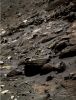
OPP-SOL1615-2.jpgFrom inside Victoria - Sol 1615 (True Colors; credits: Dr G. Barca)59 visitenessun commentoMareKromium
|
|
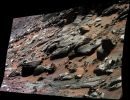
OPP-SOL1606-MF.jpgFrom inside Victoria - Sol 1606 (True Colors; credits: Dr M. Faccin)59 visitenessun commentoMareKromium
|
|

Partial_Lunar_Eclipse.jpgEarth's Shadow59 visitenessun commentoMareKromium
|
|

Solar_Eclipse.jpgFull Solar Eclipse59 visitenessun commentoMareKromium
|
|
AS16-108-17726HR-2.jpgfrom AS 16-108-17726 (HR)59 visiteU.O.MareKromium
|
|

AS15-88-11905HR-2.jpgfrom AS 15-88-11905 (HR)59 visiteU.O.MareKromium
|
|

ZZ-Mercury-Terminator-PIA10939.jpgSveinsdóttir Crater and Beagle Rupes (natural colors; credits: Lunexit)59 visiteNamed for Júlíana Sveinsdóttir, an Icelandic painter and textile artist, Sveinsdóttir Crater superimposed by Beagle Rupes is a distinctive feature on Mercury's landscape. Unusually elliptical in shape, the Crater was produced by the impact of an object that hit Mercury’s Surface obliquely. More than 600 Km (about 370 miles) long and one of the largest fault scarps on the Planet, Beagle Rupes marks the surface expression of a large thrust fault believed to have formed as Mercury cooled and the entire planet shrank. Beagle Rupes crosscuts Sveinsdóttir Crater and has uplifted the easternmost portion (right side portion) of the crater floor by almost a kilometer, indicating that most of the fault activity at Beagle Rupes occurred after the impact that created Sveinsdóttir. Crosscutting relationships such as this are used to understand the sequence in time of the different processes that have affected Mercury’s evolution.
Date Acquired: January 14, 2008
Image Mission Elapsed Time (MET):108830230
Instrument: Narrow Angle Camera (NAC) of the Mercury Dual Imaging System (MDIS)
Resolution: 0,77 Kilometers/pixel (0,48 miles/pixel)
Scale: This image is about 780 Km (approx. 490 miles) across; Sveinsdóttir crater is about 120 by 220 Km (appprox. 75 by 140 miles)
Spacecraft Altitude: about 30.300 Km (approx. 18.800 miles)
MareKromium
|
|

ZQ-Mercury-PIA10984.jpgCraters "Deformed" and "Shortened" on Mercury59 visiteNumerous examples of craters that have been deformed and shortened by younger faults have been identified on images returned from MESSENGER’s first flyby of Mercury. In three cases shown here (arrows), portions of the floor and rim of a crater were buried when a large block of crust was thrust over the crater during the formation of a prominent fault scarp or cliff. By comparing the estimated size and shape of the original, undeformed crater with the crater’s current geometry, scientists can infer the amount of movement between the two crustal blocks on either side of the fault. This figure was recently published in Science magazine.
For each of the three examples of deformed and shortened craters shown here, movement on the faults buried at least a kilometer of the original crater. A: 17-Km (11-mile) diameter crater (arrows) shortened by Beagle Rupes. B: 5-Km (3-mile) diameter crater deformed near the rim of an older, larger crater, shown enlarged in the box on the lower left. C: 11-Km (7-mile) diameter crater (arrows) shortened by a North/West-South/East-trending fault scarp.MareKromium
|
|

The_Rings-PIA10454.jpgOut of the Darkness (natural colors; credits: NASA)59 visiteCaption NASA:"Saturn's rings burst out of shadow and curve gracefully around the Planet.
Prometheus (86 Km, or 53 about miles across at its widest point) appears as a bright speck touching the inside of the narrow F-Ring. Atlas (30 Km, or approx. 19 miles across at its widest point) is also visible, faintly, upward and to the left of Prometheus, just outside the A-Ring edge. Saturn's shadow cuts across the Rings at top right.
Several dark, narrow spokes are faintly visible near the B-Ring ansa, left of center.
This view looks toward the unilluminated side of the Rings from about 13° above the Ring-Plane. Images taken using red, green and blue spectral filters were combined to create this natural color view. The images were obtained with the Cassini Spacecraft wide-angle camera on July 4, 2008 at a distance of approx. 1,2 MKM (about 775.000 miles) from Saturn.
Image scale is roughly 71 Km (about 44 miles) per pixel".MareKromium
|
|

OPP-SOL1136-1.jpgRover Tracks and Berries - Sol 1136 (True Colors; credits: Dr G. Barca)59 visitenessun commentoMareKromium
|
|

OPP-SOL1109-1.jpgBi-colored pebble and Berries - Sol 1109 (True Colors; credits: Dr G. Barca)59 visitenessun commentoMareKromium
|
|

Darkness-1.jpgMidnight-Sun over Vastitas (by Dr Marco Faccin)59 visitenessun commentoMareKromium
|
|
| 25353 immagini su 2113 pagina(e) |
 |
|
|
|
|
1265 | |
|
|
|
|





