| Piú viste |

Saturn-W00010821.jpgSaturn and Enceladus59 visiteOriginal caption:"W00010821.jpg was taken on October 02, 2005 and received on Earth October 04, 2005. The camera was pointing toward Saturn at approximately 2.408.824 Km away and the image was taken using the MT2 and CL2 filters".
|
|

SOL620-2P181408005EFFAERFP2292L2M1.jpgStones - Sol 62059 visiteIniziamo ora una panoramica che copre un'abbondante varietà di rocce marziane, alcune delle quali sembrano decisamente interessanti. Questa roccia, ad esempio (che vedremo in seguito più da vicino, in un frame del Sol 623), sembra distinguersi nettamente dal resto del paesaggio. La sua natura, ai nostri occhi, è ambigua (si tratta di una roccia di matrice apparentemente non vulcanica e potrebbe anche trattarsi di un ejecta) ma la sua liscia e - relativamente - piatta porzione superiore, a ben vedere, potrebbe essere indice del fatto che essa, in un tempo remoto, venne sottoposta all'azione levigatrice propria dell'acqua. Davvero molto intrigante (e, almeno in apparenza, "estraneo" rispetto al resto del macigno) è il dettaglio che abbiamo cerchiato in rosso...
|
|
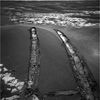
OPP-SOL605-1N181898466EFF62GMP1832L0M1.jpgDeep tracks, new problems? (1) - Sol 60559 visiteSperiamo di sbagliarci (anche se con la NASA non si può mai dire...) ma queste tracce che vediamo, decisamente profonde e che si interrompono bruscamente, seguite da una marea di scatti relativi alle ruote anteriori del Rover, potrebbero presagire a qualche problema.
Un nuovo "insabbiamento" alle viste? Probabilmente no. Almeno non in senso strettamente "tecnico"...
|
|
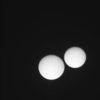
Dione-N00041004.jpgDione and Rhea (1)59 visiteIn questa serie di frames vediamo una splendida eclisse che coinvolge Rhea e Dione (con Dione che eclissa Rhea). Si tratta, come ovvio, di un evento frequente, quando le Lune che orbitano attorno al loro Mondo Genitore sono decine e decine... Ma per noi, abituati a vedere una sola Luna nel nostro cielo, spettacoli come questo costituiscono sempre una sorgente di profonda emozione e di meraviglia: una fusione perfetta fra Natura e Scienza.
|
|

Dione-N00041190.jpgDione's Fly-By (8): from about 26.000 Km59 visitenessun commento
|
|

Telesto-N00041282.jpgTelesto59 visiteOriginal caption:"N00041282.jpg was taken on October 11, 2005 and received on Earth October 12, 2005. The camera was pointing toward TELESTO at approx. 15.409 Km away; this image was taken using the P0 and GRN filters. This image has not been validated or calibrated".
|
|
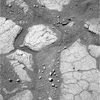
OPP-SOL609-1P182246601EFF62JLP2537R1M1.jpgDetails of the "Paving" (2) - Sol 60959 visiteCome vedete, quindi, lo "scenario" nel quale ci muoviamo è piuttosto deprimente ed è anche per questa ragione che (molto spesso) i nostri commenti "devono" essere leggeri ed a-scientifici (e mèta-scientifici...).
Ma c'è un particolare che deve essere sottolineato: in questo "panorama di riferimento" qualcosa, come avete già imparato a notare, "sfugge sempre". Questo perchè, alla prova dei fatti, non si può (e forse perchè qualcuno - qualche "scheggia impazzita" interna alla NASA... - NON vuole neppure...) ricostruire una realtà che sia completamente virtuale (ergo falsa).
Ed ecco allora che l'opera, ardua ed ingrata (e quasi sempre invisibile), del Libero Ricercatore, ritorna/diventa "decisiva": trovare i dettagli di Verità in un quadro fatto di bugie.
Un'Opera difficilissima, siamo d'accordo, ma è l'unica che, oggi come oggi, può avere - in prospettiva futura - un significato ed una portata reali.
Non credete?!?
|
|

Ganymede-PIA02582.jpgScarps on Ganymede59 visiteOriginal caption:"NASA's Galileo spacecraft took this image of dark terrain within Nicholson Regio, near the border with Harpagia Sulcus on Jupiter's moon Ganymede. The ancient, heavily cratered dark terrain is faulted by a series of scarps. The faulted blocks form a series of "stair-steps" like a tilted stack of books. On Earth, similar types of features form when tectonic faulting breaks the crust and the intervening blocks are pulled apart and rotate. This image supports the notion that the boundary between bright and dark terrain is created by that type of extensional faulting.
North is to the right of the picture and the Sun illuminates the surface from the west (top). The image is centered at -14° latitude and 320° longitude and covers an area approx. 16 by 15 Km (about 10 by 9 miles). The resolution is 20 mt (66 feet) per picture element. The image was taken on May 20, 2000, at a range of 2.090 Km (about 1.299 miles)".
|
|

Jupiter_s Rings-PIA01627.jpgThe Rings of Jupiter (1)59 visiteOriginal caption:"This schematic cut-away view of the components of Jupiter's Ring System shows the geometry of the Rings in relation to Jupiter and to the small inner moons, which are the source of the dust forming the Rings themselves. The innermost and thickest Ring, shown in gray shading, is the halo that ends at the Main Ring. The thin, narrow Main Ring, shown with red shading, is bounded by the 16- Km-wide (10-miles) satellite Adrastea and shows a marked decrease in brightness near the orbit of Jupiter's innermost moon, Metis. It is composed of fine particles knocked off Adrastea and Metis. Although the orbits of Adrastea and Metis are about 1000 Km (about 600 miles) apart, that separation is not depicted in this drawing. Impacts by small meteoroids (fragments of asteroids and comets) into these small, low-gravity satellites feed material into the Rings. Thebe and Amalthea, the next 2 moons in increasing distance from Jupiter, supply dust which forms the thicker, disk-like 'Gossamer' Rings".
|
|

SOL634-2P182650531EFFAEVOP2385R7M1.jpgThe rocks of "Hillary Outcrop" (2) - Sol 63459 visite"...Spirit began Sol 626 on a steep slope, with Hillary in the work area. However, the right front wheel did not look like it was in stable contact with the ground. A set of 3 wheel wiggles and a final move to steer the wheels against the slip direction reduced Spirit's overall tilt by 2°. After looking at several images, Rover "meshes" and "RSVP" simulations, the Planning Team was able to determine that the wheel was in a more stable area than it had been earlier. Rover "meshes" are 3D terrain maps created by Rover Team Members by "gluing" together multiple pieces of data from the Haz-Cams (up-close images), Nav-Cams (middle distance images) and PanCams (far-away images) to give a view of the Martian landscape for multiple tactical purposes. RSVP stands for Rover Sequencing and Visualization Program. The Rover Planners use this software tool to plan sequences of commands for driving and RA work. It can simulate the sequence, showing a model of the Rover superimposed on actual images of the Martian terrain".
|
|

Io-LokiPatera-PIA00320.jpgLoki patera: an everlasting eruption...59 visiteA huge area of Io's volcanic plains is shown in this Voyager 1 image mosaic. Numerous volcanic calderas and lava flows are visible here. Loki Patera, an active lava lake, is the large shield-shaped black feature. Heat emitted from Loki can be seen through telescopes all the way from Earth. These telescopic observations tell us that Loki has been active continuously (or at least every time astronomers have looked) since the Voyager 1 flyby in March 1979. The composition of Io's volcanic plains and lava flows has not been determined, but they could consist dominantly of Sulphur (S) with surface frosts of S dioxide or of silicates (such as basalts) encrusted with S and S dioxide condensates. The bright whitish patches probably consist of freshly deposited SO2 frost. The black spots, including Loki, are probably hot sulfur lava, which may remain molten by intrusions of molten silicate magma, coming up from deeper within Io. The ultimate source of heat that keeps Io active is tidal frictional heating due to the continual flexure of Io by the gravity of Jupiter and Europa, another of Jupiter's satellites.
|
|

Io-GalaiPatera-PIA00324.jpgGalai Patera59 visiteIo's volcanic plains are shown in this Voyager 1 image, which spans an area about 1030 km (640 miles) from left to right. North is about the 1:30 position. Numerous volcanic calderas and lava flows are visible here. The brown teardrop-shaped feature at left center is Galai Patera, a 100-km-long (62 mi) lava-flooded caldera (collapsed vent) of a volcano. The composition of Io's volcanic plains and lava flows has not been determined. The prevalent yellow, brown, and orange material may consist dominantly of sulfur with surface frosts of sulfur dioxide or of silicates (such as basalt) encrusted with sulfur and sulfur dioxide condensates. The whitish patches probably are freshly deposited SO2 frost.
|
|
| 25353 immagini su 2113 pagina(e) |
 |
|
|
|
|
1261 | |
|
|
|
|





