| |
| Piú viste |
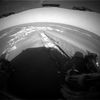
OPP-SOL550-1R177011320EFF58D4P1311R0M1.jpgOutcrops or Paving? (6) - Sol 55059 visite...si raggiungono nuovi obbiettivi e, quindi, si evolve.
Potremmo scrivere libri su questo argomento e/o parlarne per ore, ma preferiamo soffermarci solo su un concetto semplicissimo: la Scienza è un Mondo aperto a tutti ed ognuno di noi, a condizione di non pretendere di essere il Titolare Esclusivo della Verità, può dire e/o dare qualcosa. Anche solo un'Idea, un'Intuizione o una Direzione: il Teorema ed il Modello Esplicativo, verranno.
Noi crediamo fermamente in questo approccio, così come crediamo che la Scienza Positiva, da un certo punto di vista, si sia fermata.
Lo scopo della nostra "propensione" alle Teorie Esotiche (un modo poco carino per definire le Teorie Nuove) è solo quello di (tentare) di ridare un minimo di energia ad un motore che sembra essersi bloccato. Sappiamo bene che la nostra posizione è provocatoria e, in molti casi, difficile, ma non importa: non c'è solo una strada che porta alla Verità, non credete?!?
E questo vale per Marte e per tutto il resto del Cosmo.
|
|
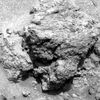
SOL572-2P177142010ESFADAEP2541L2M1.jpgInteresting rock (1) - Sol 57259 visiteTre fotogrammi che ci mostrano una roccia davvero intrigante e che pare presentare, se guardate bene, qualche dettaglio curioso...
|
|

NGC 0001 and 0002.jpgNGC 1 and 259 visite"Professor does cold exist?"
The professor replied "Of course it exists. Have you never been cold?"
The students snickered at the young man's question.
The young man replied, "In fact sir, cold does not exist. According to the laws of physics, what we consider cold is in reality the absence of heat. Everybody or object is susceptible to study when it has or transmits energy, and heat is what makes a body, or matter, have or transmit energy.
Absolute zero (- 460 degrees F) is the total absence of heat. Cold does not exist. We have created this word only to describe how we feel if we have no heat".
The student continued. "Professor, does darkness exist?"
The professor responded, "Of course it does."
The student replied, "Once again you are wrong sir. Darkness does not exist either. Darkness is in reality the absence of light. Light we can study, but not darkness. In fact we can use Newton's prism to break white light into many colors and study the various wavelengths of each color.
You cannot measure darkness. A simple ray of light can break into a world of darkness and illuminate it. How can you know how dark a certain space is? You measure the amount of light present. Isn't this correct? Darkness is a term used by man to describe what happens when there is no light present".
|
|
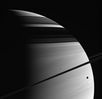
Saturn-PIA07569.jpgThe Kingdom of Beauty59 visiteAbbiamo da tempo notato che le immagini di Saturno (e/o di Giove) e dei loro Sistemi non sembrano interessare i Lettori. Non è solo il counter che esprime "quante volte" un frame è stato aperto che parla e ci racconta, bensì anche gli altri indici statistici che ci informano su quanti Visitatori sono entrati in ciascuna Sezione o sub-Sezione del Sito. Ebbene, quando verifichiamo questi dati per le sub-Sezioni dedicate a Giove e Saturno, la delusione è grande. Forse la colpa è nostra, ci siamo detti, perchè non riusciamo a rendere 'accattivante' il Regno dei Giganti Gassosi...O forse la colpa, se di colpa si può parlare, è dei media i quali, spesso e volentieri, parlano - anche a vanvera - di Marte e/o della Luna, ma molto raramente (2/3 volte l'anno) accennano a Saturno (e Titano). Giove, ormai, è solo un ricordo.
La verità, secondo noi, è che su Marte i media si sono sbizzarriti così tanto che viene quasi naturale interessarsi solo al Pianeta Rosso...Ma attenti: il Futuro, è ben oltre le sabbie di Cydonia!
|
|

Titan-PIA07730.jpgTitan, from about 159.000 Km59 visiteThis processed image from Cassini's Aug. 22, 2005, flyby of Titan reveals mid-latitudes on the Moon's Saturn-facing side.
Provisional names recently have been applied to a number of features on Titan. Features within the Region seen here - long known informally as the "H" - now have names like Tsegihi, Aztlan and Quivira.
The bright 215-Km-wide feature provisionally named "Bazaruto Facula" is clearly visible right of center, with its dark, unnamed 80-Km-wide crater at its center.
This view was acquired with the wide-angle camera at a distance of approx. 159.000 Km from Titan using a spectral filter centered on infrared wavelengths at 939 nnmts. The image scale is 9 Km per pixel.
Previous observations indicate that, due to Titan's thick and very hazy atmosphere, the sizes of surface features that can be resolved are a few times larger than the actual pixel scale.
|
|

SOU-SOL008-81437_full.jpg"Monster-Pan" in 3-D (9) - Sol 859 visitenessun commento
|
|
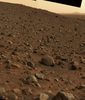
SOL519-Husband4-PIA04180.jpgLooking at Husband's Summit - Sol 519 (Natural Colors; credits: NASA/JPL-Caltech)59 visiteMolto bella e suggestiva - oltre che realistica - ci sembra l'immagine che copre il versante lontano - dal nostro punto di vista, ovviamente - di Gusev Crater, allorchè le colline (situate fra i 65 ed i 75 Km dal Rover) sembrano svanire nella nebbia e nel chiarore bianco che caratterizza quella parte dell'orizzonte. Si tratta, comunque, come avrete già capito Voi stessi, di un evento comune anche sulla Terra allorchè, di regola nelle ore del primo pomeriggio, i quantitativi di polveri sottili (e/o di umidità...) presenti negli strati più bassi dell'atmosfera (ed allorchè particolarmente abbondanti), interagiscono con la luce del Sole e rendono, sia pure solo a tratti ed in zone generalmente limitate, il cielo di un colore bianco intenso e, a tratti, accecante.
|
|

Janus-PIA07580.jpgJanus59 visiteOriginal NASA caption:"The Roman god Janus is usually depicted with two faces (nota: "Giano Bifronte"), one looking forward and one behind. Janus is captured here by Cassini, showing two faces of its own.
This view shows a sliver of Janus's dayside, plus much of the dark side. Part of the darkened terrain to the left is lit dimly by reflected light from Saturn, revealing craters there.
North on Janus is up in this image. A brightly sunlit view of Janus (181 Km, or 113 miles across) can also be seen in PIA07529.
The image was taken in visible green light with the Cassini spacecraft narrow-angle camera on Aug. 2, 2005, at a distance of approx. 541.000 Km (about 336.000 miles) from Janus and at a Sun-Janus-spacecraft, or phase, angle of 147°. Resolution in the original image was 3 Km (about 2 miles) per pixel.
The image has been contrast-enhanced and magnified by a factor of two to aid visibility".
|
|

SOL590-2P179273121ESFAEDNP2564L7M1.jpgLittle Bright "Eyes" inside a stone... (2) - Sol 590 (?)59 visitePotremmo speculare per un anno su che cosa questi due puntini luminosi sono o potrebbero essere, senza arrivare a niente. Onestamente, non ci sentiamo di interpellare la NASA poichè si tratterebbe di una "enquiry" destinata a rimanere pendente e allora...E allora ipotizziamo noi.
1) molte delle rocce di Husband Hill sembrano essere cristalline e quindi, ragionevolmente, si potrebbe pensare a due minuscoli cristalli - magari simili al quarzo? - leggermente sporgenti rispetto al piano roccioso al quale accedono e che quindi riescono a riflettere i raggi del Sole (nota: dopo aver portato il frame sino al full-size dovreste essere in grado di notare che si intravedono altri corpi luccicanti - sebbene in maniera meno eclatante rispetto ai due "occhi" - nella zona in ombra);
2) il nostro software è scadente e, nonostante le nostre impressioni ed interpretazioni, si tratta di artefatti fotografici;
3) potremmo ipotizzare anche dei "raggi di luce che filtrano da forellini - per noi del tutto invisibili...
|
|

SOL600-2M179628035EFFAEGHP2936M2M1.jpgA smooth and strange rock, from very close... (1) - Sol 60059 visiteUn'immagine MI che ci fornisce almeno due notevoli spunti di riflessione: 1) innanzitutto questa roccia, a dispetto del vento che (come dicono alla NASA) soffia quasi costantemente sul Summit di Husband Hill - dapprima trasportando e poi depositando su di esso un buon quantitativo di quelle sabbie e polveri sottili che rendono l'atmosfera di Marte costantemente nebbiosa (NASA dixit), è - almeno in apparenza - decisamente "pulita". Tanto pulita dall'apparire, almeno in parte, come parzialmente vitrea o, se preferite, "lavata da poco".
2) Notate poi il curioso rilievo che caratterizza il margine superiore della roccia e dell'immagine: esso sembra proprio essere rappresentativo di una roccia che ha avuto una "vita difficile" e che si è, in parte, fusa - margine superiore - per poi solidificarsi in un lasso di tempo molto breve.
Ora, rocce di questo tipo, a quanto ne sappiamo, caratterizzano le aree vulcaniche ma Gusev Crater, a detta della NASA, NON dovrebbe esserlo.
Interessante, non credete?!?
|
|

South_Polar_Features-South_Polar_Cap-PIA04287.jpgThe South Pole of Mars (Original NASA/MGS/MSSS b/ Frame)59 visiteOn 8 September 2005 (UT), the MGS-MOC resumed imaging of Mars after a nearly 2-week hiatus to recover the spacecraft from a glitch that put MGS into a protective "safe mode". The MOC was turned on during MGS orbit 29053, while the spacecraft was flying across day side of the Planet. MOC then resumed taking pictures on the next orbit. Shown here is a portion of the first picture acquired following MOC turn-on. The image shows a view of the Martian South Polar Region, as it appeared on September 8, 2005. The image was taken by MOC's red wide angle camera. In this case, the spacecraft began imaging Mars as it passed across the southern terminator, at the bottom of the image. MGS then flew southward, over the Polar Cap, then northward toward the Equator. The Equatorial Region is further north than the area shown here. The equatorial region is further north than the area shown here. The image not only provided the MOC team a confirmation that MOC imaging has resumed, this particular image, in the map-projected form shown here, is being used by the team to assist in setting the exposures for MOC narrow angle camera images that will be acquired from the south polar region over the next several days.
|
|
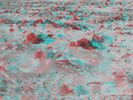
SOU-SOL008-81447_full.jpg"Monster-Pan" in 3-D (19) - Sol 859 visitenessun commento
|
|
| 25353 immagini su 2113 pagina(e) |
 |
|
|
|
|
1259 | |
|
|
|
|
|
|





