| Piú viste |

Psp_001497_2480_red-00.jpgThe Northern Lakes: Lake "Ginny" (CTX Frame - False Colors)60 visiteQuando si sa dove guardare e che cosa cercare...Si finisce SEMPRE (o quasi...) con il trovare.
L'albedo del dettaglio che vedete in basso alla Vostra Dx è inconfondibile. Il detail-mgnf che abbiamo operato (e che vedrete nel prossimo quadro) è chiarissimo: c'è un nuovo Lago nelle Grandi Pianure Nordiche di Marte!
"Lake Ginny", questa volta (sempre con buona pace di IAU, NASA, ESA e di tutti gli altri Fenomeni che guardano, guardano, guardano...etc.).MareKromium
|
|

NorthPoleoftheMoon.JPG114 - North Polar Region (in natural colors)60 visitenessun commento
|
|
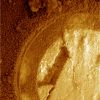
SOL1070-2M221356101EFFASCGP2936M2M1.jpgThe texture of the "reef" (False Colors; credits: Lunexit)60 visiteImmagini ravvicinate e davvero difficili da commentare: la tessitura della roccia Marziana intaccata dalle dotazioni di Spirit (forse si intravede anche il "marchio" dello Spettrometro) denuncia la sua natura "umida" - anche se il Dr Feltri, probabilmente con ampia ragione, direbbe "fibrosa".
Al di sotto dello strato, ora più ed ora meno sottile di polveri arancio/rossastre e marroni, infatti, la superficie del Pianeta si mostra per quello che è: in questo caso, ad esempio, vediamo bene diversi strati di materiale (roccia?) molto fragile che, laddove pressato, si spacca così come farebbe una parete fabbricata con semplici sabbie compattate da azioni eoliche - ed intrise di ghiaccio - la quale venisse sottoposta a pressione localizzata.
Risultato? La parete di sabbia si "crepa" e, nei punti di frattura, ci permette di dare un'occhiata alla sua tessitura interna (frame precedente - "inside the crack"). Guardate bene...MareKromium
|
|

M-016-PIA09107.jpgM 16 - The "Eagle Nebula"60 visiteThis majestic view taken by NASA's Spitzer Space Telescope tells an untold story of life and death in the Eagle Nebula, an industrious star-making factory located 7000 L.Y. away in the Serpens constellation. The image shows the region's entire network of turbulent clouds and newborn stars in infrared light.
The color green denotes cooler towers and fields of dust, including the three famous space pillars, dubbed the "Pillars of Creation," which were photographed by NASA's Hubble Space Telescope in 1995 (see inset).
But it is the color red that speaks of the drama taking place in this region. Red represents hotter dust thought to have been warmed by the explosion of a massive star about 8,000 to 9,000 years ago. Since light from the Eagle nebula takes 7000 years to reach us, this "supernova" explosion would have appeared as an oddly bright star in our skies about 1000 to 2000 years ago.
According to astronomers' estimations, the explosion's blast wave would have spread outward and toppled the three pillars about 6,000 years ago (which means we wouldn't witness the destruction for another 1,000 years or so). The blast wave would have crumbled the mighty towers, exposing newborn stars that were buried inside, and triggering the birth of new ones.
The pillars of the Eagle nebula were originally sculpted by radiation and wind from about 20 or so massive stars hidden from view in the upper left portion of the image. The radiation and wind blew dust away, carving out a hollow cavity (center) and leaving only the densest nuggets of dust and gas (tops of pillars) flanked by columns of lighter dust that lie in shadow (base of pillars). This sculpting process led to the creation of a second generation of stars inside the pillars.
If a star did blow up in this region, it is probably located among the other massive stars in the upper left portion of the image. Its blast wave might have already caused a third generation of stars to spring from the wreckage of the busted pillars.
This image is a composite of infrared light detected by Spitzer's infrared array camera and multiband imaging photometer. Blue is 4.5-micron light; green is 8-micron light; and red is 24-micron light.
|
|

SOL1070-2M221356823EFFASCGP2956M2M1.jpgIs that organic? - Sol 107060 visitenessun commentoMareKromium
|
|

OPP-SOL1055-1P221849069EFF78AZP2449R2M1.jpgVictoria's Panorama (5) - Sol 105560 visitenessun commento
|
|
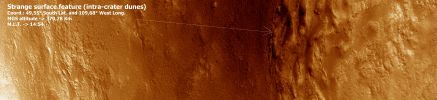
Craters-Unnamed_Crater_with_Intra-crater_Dunes-M0700566-00.jpgIntra-Crater Dunes (CTX Frame - Extremely Enhanced and Saturated Natural Colors; credits for the additional process. and color.: Dr Paolo C. Fienga - Lunexit Team)60 visitenessun commento
|
|
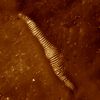
Thaumasia_Region-The_Electric_Dunes-06.jpgThe "Bright Dunes" of Thaumasia (EDM n.1 - Enhanced Natural Colors; credits for the additional process. and color.: Dr Paolo C. Fienga - Lunexit Team)60 visitenessun commento
|
|
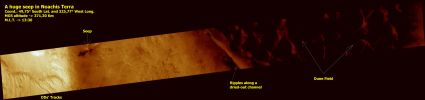
Noachis_Terra-M1501427-PCF-LXTT-00.jpgNoachis Panorama (CTX Frame - Enhanced and Darkened Natural Colors; credits for the additional process. and color.: Dr Paolo C. Fienga - Lunexit Team)60 visitenessun commento
|
|
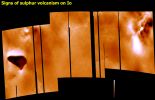
Io-Sulphur_Volcanism-Original_NASA_Galileo.jpgRecent Sulphur Volcanism on Io (natural colors)60 visitenessun commento
|
|

McNaught-01.jpgComet McNaught (2)60 visiteCaption NASA:"The brightest comet in decades is unexpectedly now visible. The most optimistic predictions have Comet McNaught (C/2006 P1) shortly becoming one of the brightest comets of the past century. For the next few days, its short tail and bright coma can be spotted with the unaided eye close to the Sun and near the horizon in both evening and morning skies. This dramatic picture of the comet shining through cloudy skies was taken near sunset on January 7, 2007, from Bad Mergentheim, Germany".
|
|
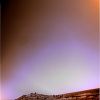
SOL1079-2N222151251EDNASCGP1585L0M1.jpgLate morning at Gusev - Sol 107960 visiteUna nuova elaborazione dei "Colori di Marte" secondo Lunexit che, a quanto sembra, sta iniziando a piacere: cielo scuro e tendenzialmente color arancio/mattone a partire dai 45/50°, un'area più luminosa (bianca e celeste pallida) a ridosso dell'orizzonte ed una regione di transizione fra i 20/25 ed i 35° in cui, come la NASA stessa ci pare che abbia suggerito in passato, il cielo potrebbe assumere una colorazione violetta.
A ridosso del disco solare, invece, mentre alla NASA suggeriscono/suppongono che il cielo dovrebbe apparire color violetto/azzurro pallido (...due to the scattering of the Sunlight...), noi ribattiamo dicendo che la giusta colorazione del Cielo Marziano - specie allorchè il Sole è alto sull'orizzonte - dovrebbe essere di un arancio piuttosto vivace.
Poi, chi vivrà, vedrà...MareKromium
|
|
| 25353 immagini su 2113 pagina(e) |
 |
|
|
|
|
1223 | |
|
|
|
|





