| Piú viste |
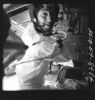
as13-59-8484.jpgAS 13-59-8484 - The "Smile of Fear": Astronaut John Leonard Swigert, Jr.60 visitenessun commentoMareKromium
|
|

M-045-9.jpgDeep inside M 45 (false colors)60 visite"...L'Uomo ha bisogno di sognare.
Noi abbiamo bisogno di sognare: tutti noi!
Ne abbiamo bisogno perchè, una volta gettati via i sogni, non ci resta che la realtà.
E la realtà, purtroppo, spesso è del tutto insopportabile.
Dunque cerchiamo di sognare e non stanchiamoci mai di sognare: ne va della nostra Vita e della stabilità della nostra Umana Condizione.
Ma non stanchiamoci mai neppure di respingere con forza coloro che, i sogni, cercano di venderceli a buon mercato..."
P.C. Floegers - "Conversations for Tomorrow"
|
|

OPP-SOL1148-1M230096787EFF81O7P2956M2M1.jpgGood Vibrations make the Berries move...Maybe! - Sol 114860 visiteA nostro parere l'evidenza c'è ed è grande: il Martian Berry posto in alto a Dx non è "conficcato" nel terreno.
Esso, per motivi che non siamo in condizione di individuare (al momento, ma ci stiamo lavorando sopra...), si è leggermente mosso, evidenziando una porzione del "buco" nel quale esso giaceva infossato.
Opera del vento? Non scherziamo: il vento di Marte, per violento che sia, non è in condizione di fare questo tipo di "scherzi".
Opera del Rover? No: Opportunity, che si sappia, non dispone di apparecchiature tali da smuovere con simile precisione e delicatezza un berry di 2 o 3 mm di diametro.
E' il berry che si è mosso da solo? Ipotesi fantastica, ai limiti della fantascienza. Noi non possiamo suffragarla, ma neppure escluderla. Al momento.
Vibrazioni del suolo? Ecco: questa è l'ipotesi che ci piace di più. Ma che tipo di vibrazioni? Dei sismi? O forse degli impatti non lontani da dove il Rover si trova adesso? O forse...MareKromium
|
|

The_Sun_in_3D.jpg3-D Sun60 visiteCaption NASA:"What does the Sun look like in all three spatial dimensions? To find out, NASA launched two STEREO satellites to perceive three dimensions on the Sun much like two eyes allow humans to perceive three dimensions on the Earth.
Such a perspective is designed to allow new insight into the surface of the rapidly changing Sun, allowing humans to better understand and predict things like Coronal Mass Ejections and solar flares that affect the Earth as well as satellites and astronauts orbiting the Earth. Pictured above are two simultaneous images of the Sun taken by STEREO A and STEREO B, now digitally combined to give one of the first 3-D pictures of the Sun ever taken. To fully appreciate the image, one should view it with 3-D red-blue glasses. The teeming and bubbling solar surface can be seen sporting a prominent solar prominence near the top of the image".MareKromium
|
|
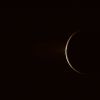
Enceladus-N00081661.jpgFountains in the Darkness (1) - natural colors, elab. Lunexit60 visiteCaption NASA:"N00081662.jpg was taken on April 24, 2007 and received on Earth April 25, 2007.
The camera was pointing toward ENCELADUS that, at the time, was approx. 189.092 Km away, and the image was taken using the CL1 and CL2 filters.
This image has not been validated or calibrated".
Nota: nei primi due frames le "plumes" di ghiaccio d'acqua (le "Fontane", come le abbiamo battezzate qui) che si dipartono dalle Regioni Sud Polari di Encelado possono essere già individuate, da un occhio attento e con l'immagine portata in full-size, anche se esse esplodono in tutta la loro bellezza ed evidenza nei frames 3 e 4.MareKromium
|
|

Europa-050107_01.jpgRising Europa60 visiteNew Horizons took this image of the icy moon Europa rising above Jupiter’s cloud tops with its Long Range Reconnaissance Imager (LORRI) at 11:48 Universal Time on February 28, 2007, six hours after the spacecraft’s closest approach to Jupiter.
The picture was one of a handful of the Jupiter System that New Horizons took primarily for artistic, rather than scientific, value. This particular scene was suggested by space enthusiast Richard Hendricks of Austin, Texas, in response to an Internet request by New Horizons scientists for evocative, artistic imaging opportunities at Jupiter.
The spacecraft was 2,3 MKM (about 1,4 MMs) from Jupiter and 3 MKM (such as about 1,8 MMs) from Europa when the picture was taken.
Europa's diameter is 3.120 kilometers (1.939 miles).
The image is centered on Europa coordinates 5° South and 6° West.
In keeping with its artistic intent - and to provide a more dramatic perspective - the image has been rotated so South is at the top.
Nota: in data 9 Maggio 2007, la NASA pubblica nel suo "Planetary Photojournal" questa medesima immagine con il medesimo titolo.
Se non altro, dato che sappiamo che la NASA legge Lunexit, ci farebbe piacere ricevere, di quando in quando, un "grazie per la collaborazione!"...MareKromium
|
|
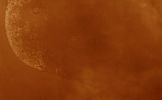
Craters-Unnamed_Crater_with_Frost-01-PCF-LXTT.jpgClouds over "Frosty" Crater (EDM - Enhanced Natural Colors; credits for the additional process. and color.: Dr Paolo C. Fienga - Lunar Explorer Italia)60 visiteDettaglio del "laghetto" (di ghiaccio d'acqua o di brina...) che ci sembra individuabile sul fondo di questo cratere senza nome.
Le Vostre opinioni al riguardo, se ci fossero, saranno gradite.MareKromium
|
|

as16-119-19057.JPGAS 16-119-19057 - Alpetragius Crater60 visiteImage Collection: 70mm Hasselblad
Mission: 16
Magazine: 119
Magazine Letter: RR
Latitude: 16,0° South
Longitude: 4,5° West
Camera Altitude: 123 Km
Film Type: SO-368
Film Width: 70 mm
Film Color: color
Feature(s): ALPETRAGIUS and ALPETRAGIUS "W"MareKromium
|
|

as16-119-19129.JPGAS 16-119-19129 - Agatharchides and Herigonius "Eta-Pi"60 visiteImage Collection: 70mm Hasselblad
Mission: 16
Magazine: 119
Magazine Letter: RR
Latitude: 17,7° South
Longitude: 32,0° West
Camera Altitude: 123 Km
Film Type: SO-368
Film Width: 70 mm
Film Color: color
Feature(s): AGATHARCHIDES; HERIGONIUS "ETA PI"MareKromium
|
|
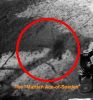
OPP-SOL1173-1N232320087EFF82__P1911L0M1-01.jpgThe "Martian Ace-of-Spades" (4) - extra-detail mgnf - Sol 117360 visitenessun commentoMareKromium
|
|

South_Polar_Regions-1.gifVenusian South Polar Vortex through Venus Express (2)60 visiteThis composite video sequence was obtained by the Ultraviolet, Visible and Near-Infrared Mapping Spectrometer (VIRTIS) on board ESA’s Venus Express.
The single images were taken from 7 to 11 April 2007 over 5 different orbits. In each orbit the images were collected during a time span of 8 hours and were separated by about half an hour. The average distance from the Planet was about 65.000 Km.
The Latitude of the observed area spans from 90 to 50° South. The Longitude spans from about 20 to 150° East.
The video shows details of the Planet’s South Pole with edge-enhanced contrast.
Using specific wavelengths (3.8 and 1.7 microns, respectively), the observations allowed the imaging of the day and night areas around the South Pole simultaneously, at different depths (at about 65 Km and below the cloud deck, respectively) simultaneously. The intersection between the polar atmospheric structures seen at different wavelengths is visible in good detail, due to the optical properties of the clouds.MareKromium
|
|

as17-148-22630.JPGAS 17-148-22630 - Kubango River60 visitenessun commentoMareKromium
|
|
| 25353 immagini su 2113 pagina(e) |
 |
|
|
|
|
1211 | |
|
|
|
|





