| Piú viste |
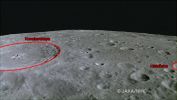
Kaguya-027-hdtv_002_3c.jpgSome Lunar Geography from Kaguya: Craters Kovalevskaya and Hatanaka (FarSide)60 visiteHatanaka Crater - Coord.: 29,7° North Lat. and 121,5° West Long.; Diam.: about 26 Km
Kovalevskaya Crater - Coord.: 30,8° North Lat. and 129,6° West. Long.; Diam.: about 115 Km
MareKromium
|
|

M-016-1.jpgM 16 - The "Eagle Nebula"60 visite"...Virtutem incolumem odimus; Sublatam ex oculis quaerimus invidi..."
(Orazio)
"...Sinchè intatta, odiamo la Virtù; (ma) ci rattristiamo quando essa scompare..."
e G. Leopardi, sullo stesso tema:"...Virtù viva sprezziam, lodiamo estinta..."MareKromium
|
|

PSP_006991_1905.jpgSeeps (MULTISPECTRUM; credits: Lunexit)60 visitenessun commentoMareKromium
|
|

016-Mars_Altitudes.jpgMars "Ups and Downs"...60 visiteTo complement the MOLA Laser Altimeter Mercator maps of Mars' elevations and topography, the MOLA Team also produced views of selected hemispheres.
These views emphasize specific interesting areas or angles. These maps show altitude data coded into colors - blue is low and red/white are high.
These two hemispheres are centered on the Tharsis Plateau (including the Valles Marineris and the large volcanos) and on the Isidis Impact Basin (with the Hellas Basin to the South).MareKromium
|
|

AS15-88-12002HR-5.jpgAS 15-88-12002 - The "Bridge" (extra-detail mgnf n. 4; credits: Dr G. Barca)60 visitenessun commentoMareKromium
|
|

as12-52-7757.jpgAS 12-52-7757 - Marius Crater (sunstruck)60 visiteImage Collection: 70mm Hasselblad
Mission: 12
Magazine: 52
Magazine Letter: S
Latitude: 12,8° North
Longitude: 50,3° West
Film Type: SO164
Film Width: 70 mm
Film Color: black & white
Feature(s): MARIUS CRATERMareKromium
|
|

PSP_007151_1445_RED_abrowse-00.jpgColorful Layers in the Walls of an Unnamed Southern Crater (context frame - MULTISPECTRUM; credits: Lunexit)60 visiteThis image shows an unnamed, bowl-shaped impact crater located in the Southern Highlands. The crater is approximately 4 Km (about 2,5 miles) in diameter and 600 meters (approx. 2000 feet) deep.MareKromium
|
|

Dione-PIA09861.jpgDione60 visiteCaption NASA:"This southerly view of Dione shows enormous canyons extending from Mid-Latitudes on the Trailing Hemisphere, at right, to the moon's South Polar Region.
This view looks toward the Saturn-facing side of Dione (about 1126 Km, or 700 miles across) and is centered on 22° South Latitude, 359° West Longitude. North on Dione is up; the moon's south pole is seen at bottom.
The image was taken in visible light with the Cassini spacecraft narrow-angle camera on Feb. 8, 2008. The view was obtained at a distance of approx. 211.000 Km (such as about 131.000 miles) from Dione and at a Sun-Dione-Spacecraft, or phase, angle of 20°.
Image scale is roughly 1 Km (0,6 mile) per pixel".MareKromium
|
|

APOLLO_14_AS_14-77-10360a.JPGAS 14-77-10360 (a) - Lunar Bootprint60 visiteAstronaut bootprint; taken at at a location midway between the LM and Station "A".MareKromium
|
|

APOLLO_14_AS_14-77-10358a.JPGAS 14-77-10358 (a) - Lunar Bootprint60 visiteAstronaut bootprint; taken at at a location midway between the LM and Station "A".MareKromium
|
|

SOL422-1.jpgSolar Panels, Rover Tracks and "Brown Dust" - Sol 422 (True Colors; credits: Dr Gianluigi Barca)60 visitenessun commentoMareKromium
|
|

Enceladus-PIA10361-1.jpgJet Spots in Tiger Stripes60 visiteCaption NASA:"Heat radiating from the entire length of 150 Km (about 95 mile)-long fractures is seen in this best-yet heat map of the active South Polar Region of Saturn's ice moon Enceladus. The warmest parts of the fractures tend to lie on locations of the plume jets identified in earlier images, shown in the annotated version with yellow stars. The measurements were obtained by the Cassini Spacecraft's Composite Infrared Spectrometer from the spacecraft's close flyby of the moon on March 12, 2008.
Remarkably high temperatures, at least 180 Kelvin (such as -135 degrees Fahrenheit) were registered along the brightest fracture, named Damascus Sulcus, in the lower left portion of the image. For comparison, surface temperatures elsewhere in the South Polar Region of Enceladus are below 72 Kelvin (such as -330 degrees Fahrenheit).
Heat is escaping from Enceladus' interior along these warm fractures, dubbed "Tiger Stripes", which are also the source of the geysers that erupt from the Polar Region.
The infrared radiation was mapped at wavelengths between 12 and 16 microns. The infrared data, shown in false color, are superimposed on a grayscale image mosaic of the South Pole obtained by Cassini's cameras on July 14, 2005, during the previous close Enceladus flyby. Numbers on the map indicate Latitude and Longitude.
This new view shows that at least 3 of the South Polar fractures are active along almost their full lengths - the 4th one, on the right, was only partially covered by this scan. The level of activity varies greatly along the fractures. The warmest parts of the fractures tend to lie on locations of the plume jets identified in earlier images. The main "Tiger Stripe" fractures are not the only sources of heat, however; additional warm spots are seen in the upper right part of the scan.
The warm regions are probably concentrated within less than a few hundred meters (a few hundred yards) of the fractures, and their apparent width in this image results from the relatively low resolution of the infrared data.
This map was made by scanning the South Pole during the period from 16' to 37' (minutes) after closest approach to Enceladus, at a distance between 14.000 and 32.000 Km (about 8.700 and 20.000 miles) as Cassini rapidly receded from its close (50-Km or about 32-miles) flyby".MareKromium
|
|
| 25353 immagini su 2113 pagina(e) |
 |
|
|
|
|
1210 | |
|
|
|
|





