| Piú viste |
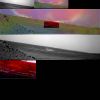
SOL2047-MOSAIC-MF.jpgUnusual Phenomenon in the Plain of Gusev - Sol 2047 (Image-Mosaic; credits: Dr M. Faccin)60 visiteQuesto spettacolare Fotomosaico ci aiuta a capire meglio quello che sta succedendo: non ci sono, infatti (e come dianzi si accennava), solo l'Anomalìa Luminosa ed il "flash" (che, ribadiamo, NON è un Raggio Cosmico nè un Image-Artifact) a "catturare" l'attenzione di Spirit, ma anche un qualcosa che risulta visibile solo una volta processate le immagini in maniera tale da esaltare i contrasti e quindi "spingere" la capacità visiva delle fotocamere (e dei nostri occhi assieme ad esse) OLTRE lo Spettro della Luce Visibile.
Spirit, come potete vedere nella porzione di frame definita da un rettangolo, sta catturando ANCHE un curioso fenomeno il quale sembra risolversi in una sorta di Vortice.
Un Vortice invisibile - o quasi - fatto di Luce (che splende oltre lo Spettro del Visibile) e, forse, di materiali sottilissimi il quale potrebbe essere, in qualche modo, la causa e/o la concausa del "flash".
Che cosa stiamo osservando, realmente?MareKromium
|
|

SOL578-NAVCAM-MF.jpgPowerful Swirling Winds - Sol 578 (special process. by Marco Faccin)60 visiteUno splendido image-mosaic rappresentativo di un maestoso Dust Devil (il livello di definizione è tale per cui potete arrivare anche a distinguere la struttura "filamentosa" delle varie colonne di sabbia e polveri che si sono formate grazie alle correnti d'aria interne al DD) distante solo qualche centinaio di metri da Spirit.MareKromium
|
|
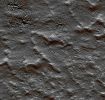
ESP_014282_0930_RED_abrowse-01.jpgSpiders (EDM - Natural Colors; credits: Lunexit)60 visiteIl bizzarro dettaglio segnalatoci dal nostro Amico e Partner, Dr Gualtiero la Fratta, non sembra risolversi in un qualcosa di agevolmente definibile: in attesa di processare la porzione di frame in oggetto dal formato JP2, quindi, possiamo solo fare due supposizioni.
La prima (razionale), in virtù della quale si può dire che stiamo osservando un image-artifact; la seconda (un pò più immaginifica) che ci suggerisce la possibilità per cui il rilievo bizzarro che si distingue davanti a noi potrebbe risolversi in due fratture lineari della supercfiie le quali - tutto sommato - potrebbero costituire due "bocche" di un medesimo geyser - di dimensioni davvero modestissime.MareKromium
|
|
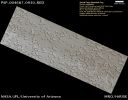
PSP_004687_0930_RED_abrowse.jpgSouth Polar Residual Cap Monitoring (Natural Colors; credits: Lunexit)60 visiteAs on Earth, the seasonal frost caps of Mars grow and recede each year. But seasonal frost on Mars is composed of Carbon Dioxide Ice (also known as Dry Ice), not water ice as on our Planet.
Near the South Pole of Mars, the seasonal CO2 frost never completely disappears, leaving a residual ice cap of CO2 ice throughout the Summer. This HiRISE image shows part of the South Polar Residual Cap, with many shallow Pits dubbed "Swiss Cheese Terrain". Because the Sun is always low in the sky at this latitude, the steep walls of the Pits receive more solar energy than the high-standing, flat areas between the Pits.
This causes the walls of the Pits to retreat several meters per year as Sunlight causes the CO2 ice to evaporate directly to gas, a process called "sublimation".
In some depressions, ridges or blocks of material a couple of meters (several feet) across are visible at the base of the depression walls, likely fallen from the walls during the sublimation and retreat process. At this rate, the layer of Carbon Dioxide ice could completely disappear in about 100 years from now, if not replenished.
Nota Lunexit: interessanti annotazioni. Peccato che la maggiore implicazione da esse derivante (quote: "...lo strato di CO2 che ricopre la Regione Sud Polare di Marte SCOMPARIRA' entro 100 anni da oggi, se non reintegrato...") non è stata minimamente toccata.
Stile NASA, of course. Nihil sub Sole novi, quindi...MareKromium
|
|

ESP_014417_1975_RED_abrowse-00.jpgChrise Planitia (Natural Colors; credits: Lunexit)60 visitenessun commentoMareKromium
|
|
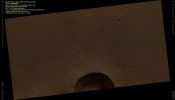
ESP_014262_1510_RED_abrowse.jpgEjecta Blanket - West Side of Zumba Crater (Natural Colors; credits: Lunexit)60 visitenessun commentoMareKromium
|
|

ESP_014261_0930_RED_abrowse.jpgSouth Polar Residual Cap Monitoring (Natural Colors; credits: Lunexit)60 visiteThis HiRISE image is of a portion of Mars' South Polar Residual Ice Cap. Like Earth, Mars has concentrations of water ice at both Poles.
Because Mars is so much colder, however, the seasonal ice that gets deposited at high latitudes in the Winter and is removed in the Spring (generally analogous to winter-time snow on Earth) is actually Carbon Dioxide Ice. Around the South Pole there are areas of this CO2 ice that do not disappear every Spring, but rather survive Winter after Winter. This persistent Carbon Dioxide Ice is called "South Polar Residual Cap", and is what we are looking at in this HiRISE image.
Relatively high-standing smooth material is broken up by semi-circular depressions and linear, branching troughs that make a pattern resembling those of your fingerprints. The high-standing areas are thicknesses of several meters of CO2 Ice.
The depressions and troughs are thought to be caused by the removal of Carbon Dioxide Ice by Sublimation (the change of a material from solid directly to gas). HiRISE is observing this CO2 Terrain to try to determine how these patterns develop and how fast the depressions and troughs grow.
While the South Polar Residual Cap as a whole is present every year, there are certainly changes taking place within it. With the high resolution of HiRISE, we intend to measure the amount of expansion of the depressions over multiple Mars years.
Knowing the amount of Carbon Dioxide removed can give us an idea of the atmospheric, weather, and climate conditions over the course of a year.
In addition, looking for where CO2 Ice might be being deposited on top of this terrain may help us understand if there is any net loss or accumulation of the CO2 Ice over time, which would be a good indicator of whether Mars' climate is in the process of changing, or not. (Written by: Patrick Russell)MareKromium
|
|

IC-1795.jpgIC 1795 - Star Forming Region60 visite"...Come away to a deserted place, all by yourselves, and rest a while..."
- Mark 6:31MareKromium
|
|

OPP-SOL002-1P128373299EFF0200P2211L2M1.jpgEagle's Crater Rim and Greenish Sky - Sol 2 (Natural Colors; credits: Lunexit)60 visitenessun commentoMareKromium
|
|

ESP_011386_2065_and_ESP_011531_2065.jpgCollapse Features in Tractus Fossae (High-Def-3D; credits: Dr M. Faccin)60 visiteAcquisition date: 30 December 2008
Mars Local Time: 15:46 (middle afternoon)
Latitude (centered): 26,1° North
Longitude: 259,4° East
Range to target site: 281,9 Km (approx 176,2 miles)
Original image scale range: 28,2 cm/pixel (with 1 x 1 binning) so objects ~85 cm across are resolved
Map projected scale: 25 cm/pixel and North is up
Map projection: EQUIRECTANGULAR
Emission angle: 6,7°
Phase angle: 54,5°
Solar Incidence Angle: 61° (with the Sun about 29° above the Local Horizon)
Solar Longitude: 182,8° (Northern Autumn)MareKromium
|
|
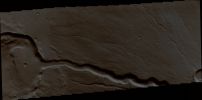
Volcanoes-CerauniusTholus-20091210a.jpgDeep Channel in the N/W Flank of Ceraunius Tholus (False Colors; credits: Lunexit)60 visiteThis VIS image shows part of the North/Western Flank of Ceraunius Tholus, one of the smaller Volcanoes in the Tharsis Region.
Several Channels dissect the Flank of the Volcano, including a larger channel that deposited material in Rahe Crater.
Coord.: 24,6° North Lat. and 262,3° East Long.MareKromium
|
|
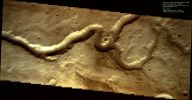
Channel-ScamanderVallis-20091216a.jpgSinuous Channel in Scamander Vallis: image taken in December, 16th, 200960 visitenessun commentoMareKromium
|
|
| 25353 immagini su 2113 pagina(e) |
 |
|
|
|
|
1209 | |
|
|
|
|





