| Piú viste |
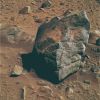
SOL078-1.jpgWhat a Boulder! - Sol 78 (True Colors + MULTISPECTRUM; credits: Dr G. Barca & Lunexit)60 visitenessun commentoMareKromium
|
|

AS15-88-12002HR-5.jpgAS 15-88-12002 - The "Bridge" (extra-detail mgnf n. 4; credits: Dr G. Barca)60 visitenessun commentoMareKromium
|
|

APOLLO_14_AS_14-77-10360a.JPGAS 14-77-10360 (a) - Lunar Bootprint60 visiteAstronaut bootprint; taken at at a location midway between the LM and Station "A".MareKromium
|
|

APOLLO_14_AS_14-77-10358a.JPGAS 14-77-10358 (a) - Lunar Bootprint60 visiteAstronaut bootprint; taken at at a location midway between the LM and Station "A".MareKromium
|
|

SOL422-1.jpgSolar Panels, Rover Tracks and "Brown Dust" - Sol 422 (True Colors; credits: Dr Gianluigi Barca)60 visitenessun commentoMareKromium
|
|

Enceladus-PIA10361-1.jpgJet Spots in Tiger Stripes60 visiteCaption NASA:"Heat radiating from the entire length of 150 Km (about 95 mile)-long fractures is seen in this best-yet heat map of the active South Polar Region of Saturn's ice moon Enceladus. The warmest parts of the fractures tend to lie on locations of the plume jets identified in earlier images, shown in the annotated version with yellow stars. The measurements were obtained by the Cassini Spacecraft's Composite Infrared Spectrometer from the spacecraft's close flyby of the moon on March 12, 2008.
Remarkably high temperatures, at least 180 Kelvin (such as -135 degrees Fahrenheit) were registered along the brightest fracture, named Damascus Sulcus, in the lower left portion of the image. For comparison, surface temperatures elsewhere in the South Polar Region of Enceladus are below 72 Kelvin (such as -330 degrees Fahrenheit).
Heat is escaping from Enceladus' interior along these warm fractures, dubbed "Tiger Stripes", which are also the source of the geysers that erupt from the Polar Region.
The infrared radiation was mapped at wavelengths between 12 and 16 microns. The infrared data, shown in false color, are superimposed on a grayscale image mosaic of the South Pole obtained by Cassini's cameras on July 14, 2005, during the previous close Enceladus flyby. Numbers on the map indicate Latitude and Longitude.
This new view shows that at least 3 of the South Polar fractures are active along almost their full lengths - the 4th one, on the right, was only partially covered by this scan. The level of activity varies greatly along the fractures. The warmest parts of the fractures tend to lie on locations of the plume jets identified in earlier images. The main "Tiger Stripe" fractures are not the only sources of heat, however; additional warm spots are seen in the upper right part of the scan.
The warm regions are probably concentrated within less than a few hundred meters (a few hundred yards) of the fractures, and their apparent width in this image results from the relatively low resolution of the infrared data.
This map was made by scanning the South Pole during the period from 16' to 37' (minutes) after closest approach to Enceladus, at a distance between 14.000 and 32.000 Km (about 8.700 and 20.000 miles) as Cassini rapidly receded from its close (50-Km or about 32-miles) flyby".MareKromium
|
|

SOU-SOL018-82016_full.jpgWeathered and UN-weathered Rocks and Soil: "Ginger"- Sol 18 (credits: NASA)60 visiteCaption NASA:"One of the more unusual rocks at the site is Ginger, located South-East of the Lander.
Parts of it have the reddest color of any material in view, whereas its rounded lobes are gray and relatively unweathered. These color differences are brought out in the inset, enhaced at the upper right. In the false color image at the lower right, the shape of the visible - wavelength spectrum (related to the abundance of weathered ferric iron minerals) is indicated by the hue of the rocks.
Blue indicates relatively unweathered rocks. Typical soils and drift, which are heavily weathered, are shown in green and flesh tones.
The very red color in the creases in the rock surface correspond to a crust of ferric minerals.
The origin of the rock is uncertain; the ferric crust may have grown underneath the rock, or it may cement pebbles together into a conglomerate. Ginger will be a target of future super- resolution studies to better constrain its origin".MareKromium
|
|

SOU-SOL027-82467_full.jpgAround "Yogi"... - Sol 27 (false colors; credits: NASA)60 visiteCaption NASA:"This false color image of the area surrounding Yogi shows clear evidence of "scalloped" features in the soil associated with wind-blown dust.
Such evidence indicates clearly the direction of prevailing winds in this area, and gives further proof of the aeolian nature of erosional processes on Mars".MareKromium
|
|

PSP_007653_2010_RED_abrowse-00.jpgBright on Dark (MULTISPECTRUM; credits: Lunexit)60 visiteThis image reveals bright Slope Streaks in Bahram Vallis, a long sinuous valley that winds across North-Eastern Lunae Planum and Xanthe Terra to the circum-Chyrse basin.
Typically, dark and light-toned Slope Streaks appear together on light-toned slopes. This scene is a rare case in which only bright streaks are visible on a dark surface. Slope Streaks generally start at a point source and widen downslope as a single streak or branch into multiple streaks. Some of the Slope Streaks show evidence that downslope movement is being diverted around obstacles, such as large boulders, and a few appear to originate at boulders or clumps of rocky material.
Many hypotheses have been proposed for the formation of slope streaks including dry avalanching, geochemical weathering, liquid stains or flows, and moisture wickering. Recent observations from HiRISE images have revealed that the interior of Slope Streaks is lower in elevation than the surroundings indicating that material must have been removed and then deposited in the formation of the streak.
Slope Streak formation is among the few known processes currently active on Mars. Where they appear together, dark Slope Streaks cross cut and lie on top of the older and lighter-toned streaks leading to the belief that lighter-toned streaks are dark streaks that have lightened with time as new dust settled on their surface. Over the course of several years, MOC images from this Region did not reveal any new dark or light-toned Slope Streaks suggesting that streak formation is not currently active here.
HiRISE will continue to monitor this Region for new slope streaks and changes in tone of old streaks.MareKromium
|
|

Craters-Unnamed_Double_Crater_in_Terra_Tyrrhena.jpgDouble Impact Crater in Terra Tyrrhena (Natural Colors + MULTISPECTRUM; credits: ESA & Lunexit)60 visiteThe High Resolution Stereo Camera (HRSC), ESA’s Mars Express obtained images of the Tyrrhena Terra Impact Region on Mars.
On 10 May 2007, the spacecraft was in orbit number 4294 when it snapped pictures of the Region located at 18° South Lat. and 99° East Long. with a ground resolution of approximately 15 metres per pixel.
The Western part of the scene is dominated by a 35 Km-wide and approx. 1000 mt-deep impact crater with an extremely cliffy and chiseled edge. Another, 18 Km-long and approx. 750 mt-deep impact crater, in all likelihood a ‘double impact crater’, is located South of the large crater.
These 'double impact craters' develop when two objects, part of a binary, hit the surface almost simultaneously.MareKromium
|
|

Hebes_Chasma.jpgHebes Chasma (Natural Colors + MULTISPECTRUM; credits: ESA and Lunexit)60 visiteThe Region is an "Enclosed Trough" situated in Valles Marineris, the Grand Canyon of Mars, where water is believed to have flowed. The High Resolution Stereo Camera (HRSC) on ESA’s Mars Express studied the area providing new pictorial clues to its history.
Hebes Chasma is located at approx. 1° South Lat. and 282° East Long. Image data was obtained on 16 September 2005 with a ground resolution of approx. 15 mt/pixel.
The Region is an enclosed, almost 8 Km-deep trough in the most northern part of Valles Marineris, the 3000-Km long “Grand Canyon of Mars”.
The steep flanks of the trough show branched incisions and small veins of rock. Below the flanks, run-off and material from larger landslides is also visible.
A flat-topped mountain is located in the centre of Hebes Chasma.
It reaches 8000 mt above the graben floor and rises to almost the same height as the plains surrounding the trough. MareKromium
|
|

PSP_007769_9010_IRB.jpgPhobos (Natural Colors; credits: NASA)60 visiteHiRISE acquired 2 dramatic views of the Martian moon, Phobos, on 23 March 2008. Observation PSP_007769_9010, acquired at a distance of 6800 Km from Phobos, provides surface detail at 6,8 mt/pixel scale and a object diameter of about 3200 pixels.
The second observation, PSP_007769_9015, providing a closer look at 5800 Km, views the surface at slightly more detail (5,8 mt/pixel with an object diameter of about 4000 pixels).
The 2 images were taken within 10' of each other and show roughly the same features, but from a different angle so that they can be combined to yield a stereo view.
The illuminated part of Phobos visible in the images is about 21 Km across. Images from previous spacecraft have been of smaller pixel scale (for example, Mars Global Surveyor got data at 4 mt/pixel, because this spacecraft came closer to Phobos), but the HiRISE images have greater signal-to-noise, making the new data some of the best ever for Phobos.MareKromium
|
|
| 25353 immagini su 2113 pagina(e) |
 |
|
|
|
|
1195 | |
|
|
|
|





