| Piú viste |

Sunset.jpgCrescent Moon and Mercury at Sunset60 visite"...Is anything too wonderful for the Lord?..."
Genesis - 18:14MareKromium
|
|
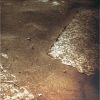
OPP-SOL1419-1P254154396EFF8884P2418R2M1.jpgRazorblades, on the edge of Victoria - Sol 1419 (MULTISPECTRUM; credits: Lunexit)60 visiteLa roccia che vedete alla Dx del frame presenta, sul suo lato lungo, una lunga serie di quelle curiose escrescenze lamellari che gli Scienziati di Pasadena hanno battezzato, sin dai tempi dell'esplorazione del Cratere Endurance, come "Razorblades" (ossìa: "lamette da/per rasoio").
La motivazione scientifica di supporto alla spiegazione relativa alla formazione delle "Razorblades" di Endurance fu in individuata nell'esistenza e nel transito di acque correnti, in epoche remote, lungo le pareti ed i Pavimenti del Cratere stesso (nota: le Razorblades, secondo a questa teoria, sarebbero la rimanenza visibile di un accumulo di sali e detriti vari i quali, trasportati da correnti "vive" (ma meglio sarebbe dire "modestissimi rivoli d'acqua"), si sono - nel tempo - ammassati e compattati sui lati dei pavimenti (i quali, di fatto, fungevano da "miniargini" per questi rivoletti di acqua sporca) sino a formare, sui loro bordi, queste "escrescenze".
La costruzione NASA a noi è sempre sembrata ragionevole (soprattutto avendo ben presente la morfologia delle Razorblades di Endurance e la loro collocazione sul suo Paving); tuttavia, se osservate le Razorblades di questo frame - e di altri relativi al Cratere Victoria - non dovrebbe risultarVi difficile notare come l'ipotesi degli Amici di Pasadena, vista la configurazione dei Pavimenti di Victoria, improvvisamente viene a perdere credibilità ed "appeal".
E si: perchè se le Razorblades si fossero formate davvero a seguito di depositi di sali e detriti trasportati da rivoli (anche deboli, ma certo duraturi) d'acqua corrente, allora dovrebbe essere anche possibile individuare, tramite le immagini, il "letto" - piccolo sinchè si vuole, ma certo esistente - del rivolo d'acqua che concorse alla loro formazione.
Minuscoli "letti" che, per Endurance, erano - in parte - visibili, ma che qui, su Victoria, non si vedono proprio.
Certo, l'ipotesi NASA resta - lo riconosciamo tranquillamente - resta la più logica e la più sensata; però un'ipotesi che sia foriera di Verità Scientifiche dovrebbe resistere e confermarsi al sussistere di condizioni di riferimento analoghe od affini.
Il che, purtroppo, in questo caso di specie sembra proprio che non avvenga.MareKromium
|
|
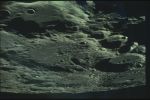
as17-162-24105.jpgAS 17-162-24105 - Orlov Crater60 visiteImage Collection: 35mm Nikon
Mission: 17
Magazine: 162
Magazine Letter: SS
Revolution: 15
Latitude: 23,1° South
Longitude: 174,4° West
Lens Focal Length: 55 mm
Camera Tilt: 60°
Camera Azimuth: 239
Camera Altitude: 114 Km
Sun Elevation (on Local Horizon): 8°
Description: ORLOV
Film Width: 35 mm
Film Color: colorMareKromium
|
|

Jupiter-02.jpgInternal Heat Drives Jupiter's Giant Storm Eruption (IR + VL)60 visiteDetailed analysis of two continent-sized storms that erupted in Jupiter's Atmosphere in March 2007 shows that Jupiter's internal heat plays a significant role in generating atmospheric disturbances. Understanding this outbreak could be the key to unlock the mysteries buried in the deep Jovian Atmosphere, say astronomers.
Understanding these phenomena is important for Earth's meteorology where storms are present everywhere and jet streams dominate the atmospheric circulation. Jupiter is a natural laboratory where atmospheric scientists study the nature and interplay of the intense jets and severe atmospheric phenomena.
An international team coordinated by Agustin Sánchez-Lavega from the Universidad del País Vasco in Spain presents its findings about this event in the January 24 issue of the journal Nature.
The team monitored the new eruption of cloud activity and its evolution with an unprecedented resolution using NASA's HST, the NASA Infrared Telescope Facility in Hawaii, and telescopes in the Canary Islands (Spain).
A network of smaller telescopes around the world also supported these observations.
According to the analysis, the bright plumes were storm systems triggered in Jupiter's deep water clouds that moved upward in the atmosphere vigorously and injected a fresh mixture of ammonia ice and water about 20 miles (30 Km) above the visible clouds. The storms moved in the peak of a jet stream in Jupiter's Atmosphere at 375 mph (600 Km/hour). Models of the disturbance indicate that the jet stream extends deep in the buried atmosphere of Jupiter, more than 60 miles (approx. 100 Km) below the cloud tops where most sunlight is absorbed.MareKromium
|
|
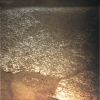
OPP-SOL1419-1P254155316EFF8884P2418R2M1.jpgPaving's Detail - Sol 1419 (MULTISPECTRUM; credits: Lunexit)60 visitenessun commentoMareKromium
|
|
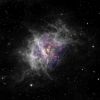
Westerlund-2.jpgRCW 49 and young Star Cluster Westerlund-260 visite"...io sono, per attitudine, un perfezionista, ma sono consapevole che la perfezione non c'è nè ci sarà mai in questo Mondo.
Dunque, una volta abbandonati i sogni di fanciullo, ho scelto di restare razionale e, piuttosto che cercare una perfezione impossibile, preferisco lavorare per raggiungere un'approssimazione sensata..."
Paolo C. FiengaMareKromium
|
|
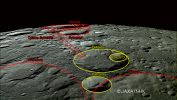
Kaguya-017-hdtv_001_1c_l.jpgSome Lunar Geography from Kaguya: Hermite, Pascal and the Pascal Group and more60 visiteNorth Polar RegionMareKromium
|
|

M-031~0.jpgM 31 - The Beautiful "Andromeda Galaxy"60 visiteNella realtà di Lunar Explorer ci sono Persone i cui nomi non vengono mai nominati ma alle quali, per vari motivi, dobbiamo un ringraziamento, sia esso per un aiuto, un sorriso od un dolce ricordo.
Una di queste Persone è la nostra Cara Amica Anna che, grazie alla sua ospitalità, ha donato allo Staff LunExIt una bellissima permanenza in quel di Albissola, durante le nostre due Conventions estive.
Qualche ora di serena compagnìa il cui ricordo ancora ci allieta.
Ieri, è mancato il Papà di Anna.
Con la forza di un sorriso mi ha ricordato che, nella Sua Famiglia, il soprannome del caro Papà fosse Giove, un nome che ben si adatta per essere ricordato nel Cielo, tra le Stelle e l’Infinito.
Lo Staff LunExIt (Direzione Generale), i Soci ed il Presidente, con i Suoi Cari, si uniscono al dolore di Anna, ricordandoLe - e ricordando a loro stessi - che, come disse il Grande Ugo Foscolo, "...Sol chi non lascia eredità di affetti, poca gioia ha dell'Urna...".
Un abbraccio ed una preghiera - Paolo C. FiengaMareKromium
|
|
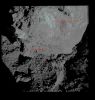
as15-86-11571~0.jpgAS 15-86-11571 - The "Lunar Pearls" of Station 2 Boulder (special processing by Lunexit)60 visiteOsservate i dettagli indicati e marcati in rosso che si trovano sulla porzione scoperta (insomma quella che una volta era la base del macigno, prima che venisse ribaltato) dello Station 2 Boulder e poi, se volete, diteci che cosa pensate che sìano; a noi è piaciuta l'idea di battezzare queste curiosissime Surface Features come "Perle Lunari", ma se Voi aveste delle idee migliori...Noi le aspettiamo!MareKromium
|
|

Io-100907_8.jpgIo: Global Map (false colors)60 visiteA: A global map of Jupiter’s moon Io derived from 8 images taken by the Long Range Reconnaissance Imager (LORRI) on the New Horizons Spacecraft, as it passed Jupiter on its way to Pluto in late February 2007. Details as small as 12 Km (7 miles) are visible. The map shows the comprehensive picture of Io’s volcanism obtained by New Horizons. Yellow ovals denote areas with new, faded or shifted plume deposits since the last images taken by the Galileo spacecraft in 2001. Green circles denote areas where probable new lava flows have occurred. Cyan diamonds indicate locations of active volcanic plumes, and orange hexagons are volcanic hot spots detected by the Linear Etalon Imaging Spectral Array (LEISA) instrument. For plumes and hot spots, symbol size indicates the approximate relative size and brightness of the features.
B-F: Comparison of New Horizons (NH) and earlier images of major surface changes discovered by New Horizons at Io’s volcanoes Masubi (45° South, 57° West) and North Lerna (55° South, 290° West). The scale bars are 200 Km long, and a is the solar phase angle. At Masubi, old lava flows seen by Voyager and Galileo (B) have been obscured at low phase angles (C) by deposits from two active plumes associated with a new 240-Km (150-mile) long dark lava flow, which is the longest lava flow known to have been erupted in the solar system since the discovery of Io volcanism in 1979. At North Lerna, a recent eruption has generated a 130-Km long lava flow (F), as well as an active plume that has produced a concentric pattern of deposits.
This image appears in the Oct. 12, 2007, issue of Science magazine, in a paper by John Spencer, et al.MareKromium
|
|
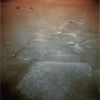
OPP-SOL1443-1N256291184EFF88AFP1977R0M1.jpgLooking "Down"... - Sol 1443 (ì1 - MULTISPECTRUM; credits: Lunexit)60 visitenessun commentoMareKromium
|
|

The-Red-Moon.jpgEclipsed Moonlight (by Jerry Lodriguss)60 visiteCaption NASA:"Moon watchers blessed with clear skies over the Americas, Europe, Africa and Western Asia enjoyed a total lunar eclipse.
Catching eclipsed moonlight, astroimager Jerry Lodriguss offers this view of the inspiring celestial event with the shadowed Moon accompanied by wandering planet Saturn at the left, and bright Regulus, alpha star of the constellation Leo, above.
The engaging composite picture was made by combining a filtered, telephoto image of the Moon and surrounding starfield with a telescopic exposure. The combination dramatizes the reddened moonlight while clearly showing the variation of brightness and color in Earth's not-so-dark shadow across the lunar surface".MareKromium
|
|
| 25353 immagini su 2113 pagina(e) |
 |
|
|
|
|
1190 | |
|
|
|
|





