| Piú viste |

OPP-SOL1559-1N266591080EFF9000P0632L0M1-1.jpgDark Days over Victoria... - Sol 1559 (1 - natural colors; credits: Lunexit)60 visitenessun commentoMareKromium
|
|
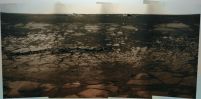
OPP-SOL1530-Panorama-1.jpgVictoria's Paving - Sol 1530 (Photomosaic + MULTISPECTRUM; credits: Dr G. Barca & Lunexit)60 visitenessun commentoMareKromium
|
|
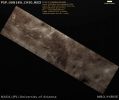
PSP_008189_2930_RED_abrowse.jpgFrost in Vastitas Borealis (MULTISPECTRUM; credits: Lunexit)60 visitenessun commentoMareKromium
|
|
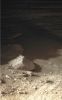
OPP-SOL1571-1P267656422ESF90B0P2266L2M1.jpgThe "Inner Rim" of Victoria (detail) - Sol 1571 (MULTISPECTRUM; credits: Lunexit)60 visitenessun commentoMareKromium
|
|
OPP-SOL1572-1N267737685EDN90B0P1550L0M1.jpgFoggy Day, Dark Sun - Sol 1572 (MULTISPECTRUM; credits: Lunexit)60 visitenessun commentoMareKromium
|
|

Janus-PIA10417-1.JPGRugged Janus (Saturated Natural Colors; credits for the additional process. and color.: Dr Paolo C. Fienga - Lunexit Team)60 visiteCaption NASA:"Craters large and small cover the rugged surface of Saturn's moon Janus.
This view looks toward the Southern Hemisphere of Janus (about 179 Km, or approx. 111 miles across at its widest point). The moon's South Pole is at center.
The image was taken with the Cassini Spacecraft narrow-angle camera on May 26, 2008 using a spectral filter sensitive to wavelengths of IR light centered at 930 nanometers. The view was acquired at a distance of approx. 186.000 Km (such as about 115.000 miles) from Janus and at a Sun-Janus-Spacecraft, or Phase, angle of 83°.
Image scale is roughly 1 Km (about 0,6 miles) per pixel".MareKromium
|
|

PHOE-SOL038-AudioSignal-3.wavMartian Winds... - Sol 38 (File Audio; credits: Dr M. Faccin)60 visiteIl sospetto che i frames NASA in arrivo da Marte potessero contenere un retro-segnale di qualche tipo era forte già da molto tempo. Con calma - ed usando una grande attenzione - siamo riusciti ad isolare non solo una porzione del retro-segnale contenuto nei frames NASA, ma anche a "ripulirlo" e, in parte, a "decodificarlo".
In questo prodotto Audio, realizzato dal sempre eccezionale Dr Marco Faccin, un probabile "Vento Marziano", catturato dal microfono di cui è dotato il Lander Phoenix e quindi trasmesso a Terra come "allegato semi-nascosto" delle immagini di Vastitas Borealis.
Fantascienza? Scherzo? Special FX? Ascoltate e giudicate Voi.
Noi possiamo solo dirVi che non è nostra intenzione prendere in giro nessuno e che il microfono di cui è dotato Phoenix non ce lo siamo inventato (vedere la relativa immagine nella Galleria dedicata a Phoenix). Ciò premesso, dato che "esso" esiste, allora dovrà pur servire a qualcosa...MareKromium
|
|
PHOE-SOL038-AudioSignal-2.wmvPossible "Audio Signals" from Vastitas Borealis - Sol 38 (RAW Data - credits: Dr M. Faccin)60 visiteCoraggio: avete qualche commento da fare? Siamo (DAVVERO!) "tutto orecchi"...MareKromium
|
|

Io-TelegonusMensa-PIA03528_modest.jpgCollapsing Cliff at Telegonus Mensa (MULTISPECTRUM; credits: Lunexit)60 visiteCaption NASA:"This mosaic, showing an area called Telegonus Mensa, on Jupiter's moon Io and obtained by using frames taken by the NASA's Galileo Spacecraft on Oct. 16, 2001, reveal a complex interplay of geologic processes.
Four small, HR frames (9,6 mt, or 32 feet, per picture element) have been set into the larger context mosaic, which has a resolution of 42 mt (140 feet) per picture element. The illumination is from the upper right and North is to the top of the mosaic. A fracture runs North-West from the lower right corner of the mosaic into the amphitheater in the center of the frame. A HR image along this fracture reveals that lava has erupted from it.
The amphitheater itself is the site of extensive erosion, as the cliff has slumped South-Eastward under the influence of Io's gravity. HR frames directly south of the amphitheater show another slumping cliff in detail. Flat tops of massive slump blocks — up to 6 Km (3,7 miles) long and 0,5 Km (0,3 miles) across — are illuminated by the the Sun and cast shadows down the face of the cliff.
Based on these shadows, Galileo scientists estimate that the cliff is 1 to 2 Km high.
Just to the left of center a series of landslides can be seen, the longest of which extends for about 4 Km (such as approx. 2,5 miles)".MareKromium
|
|
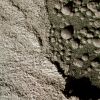
OPP-SOL714-1.jpgBerries and possible "Organic" matter - Sol 714 (Superdefinition; credits: Dr G. Barca)60 visitenessun commentoMareKromium
|
|
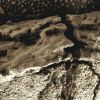
OPP-SOL727-1.jpgUnder the Crack... - Sol 727 (Superdefinition + MULTISPECTRUM; credits: Dr G. Barca & Lunexit)60 visitenessun commentoMareKromium
|
|
OPP-SOL1575-1P268011380ESF90B0P2532L2M1.jpgLooking for "Something"?!? - Sol 1575 (MULTISPECTRUM; credits: Lunexit)60 visitenessun commentoMareKromium
|
|
| 25353 immagini su 2113 pagina(e) |
 |
|
|
|
|
1186 | |
|
|
|
|





