| Piú viste |
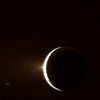
Enceladus-N00081664.jpgFountains in the Darkness (3) - natural colors, elab. Lunexit60 visiteCaption NASA:"N00081664.jpg was taken on April 24, 2007 and received on Earth April 25, 2007.
The camera was pointing toward ENCELADUS that, at the time, was approx. 189.299 Km away, and the image was taken using the CL1 and CL2 filters.
This image has not been validated or calibrated".MareKromium
|
|
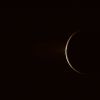
Enceladus-N00081661.jpgFountains in the Darkness (1) - natural colors, elab. Lunexit60 visiteCaption NASA:"N00081662.jpg was taken on April 24, 2007 and received on Earth April 25, 2007.
The camera was pointing toward ENCELADUS that, at the time, was approx. 189.092 Km away, and the image was taken using the CL1 and CL2 filters.
This image has not been validated or calibrated".
Nota: nei primi due frames le "plumes" di ghiaccio d'acqua (le "Fontane", come le abbiamo battezzate qui) che si dipartono dalle Regioni Sud Polari di Encelado possono essere già individuate, da un occhio attento e con l'immagine portata in full-size, anche se esse esplodono in tutta la loro bellezza ed evidenza nei frames 3 e 4.MareKromium
|
|

Europa-050107_01.jpgRising Europa60 visiteNew Horizons took this image of the icy moon Europa rising above Jupiter’s cloud tops with its Long Range Reconnaissance Imager (LORRI) at 11:48 Universal Time on February 28, 2007, six hours after the spacecraft’s closest approach to Jupiter.
The picture was one of a handful of the Jupiter System that New Horizons took primarily for artistic, rather than scientific, value. This particular scene was suggested by space enthusiast Richard Hendricks of Austin, Texas, in response to an Internet request by New Horizons scientists for evocative, artistic imaging opportunities at Jupiter.
The spacecraft was 2,3 MKM (about 1,4 MMs) from Jupiter and 3 MKM (such as about 1,8 MMs) from Europa when the picture was taken.
Europa's diameter is 3.120 kilometers (1.939 miles).
The image is centered on Europa coordinates 5° South and 6° West.
In keeping with its artistic intent - and to provide a more dramatic perspective - the image has been rotated so South is at the top.
Nota: in data 9 Maggio 2007, la NASA pubblica nel suo "Planetary Photojournal" questa medesima immagine con il medesimo titolo.
Se non altro, dato che sappiamo che la NASA legge Lunexit, ci farebbe piacere ricevere, di quando in quando, un "grazie per la collaborazione!"...MareKromium
|
|

PSP_003222_1565_RED_browse.jpgProposed MSL Site in Eberswalde Crater60 visitenessun commentoMareKromium
|
|

as16-119-19057.JPGAS 16-119-19057 - Alpetragius Crater60 visiteImage Collection: 70mm Hasselblad
Mission: 16
Magazine: 119
Magazine Letter: RR
Latitude: 16,0° South
Longitude: 4,5° West
Camera Altitude: 123 Km
Film Type: SO-368
Film Width: 70 mm
Film Color: color
Feature(s): ALPETRAGIUS and ALPETRAGIUS "W"MareKromium
|
|
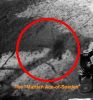
OPP-SOL1173-1N232320087EFF82__P1911L0M1-01.jpgThe "Martian Ace-of-Spades" (4) - extra-detail mgnf - Sol 117360 visitenessun commentoMareKromium
|
|

The_Southern_Cross.jpgThe Southern Cross60 visite"...Irony...may be defined as what people miss..."
Julian Barnes - "A History of the World in 10 and 1/2 Chapters" (1989)MareKromium
|
|
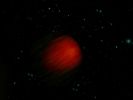
HD149026b_-PIA09378.jpgHot, Black and (relatively) Close...60 visiteThis artist's concept illustrates the hottest planet yet observed in the universe.
The scorching ball of gas, a "Hot Jupiter" called HD 149026b, is a sweltering 3700° Fahrenheit (2040° Celsius) -- about 3 times hotter than the rocky surface of Venus, the hottest planet in our Solar System. The Planet is so hot that astronomers believe it is absorbing almost all of the heat from its star and reflecting very little to no light. Objects that reflect no sunlight are black. Consequently, HD 149026b might be the blackest known planet in the universe, in addition to the hottest.
The temperature of this dark and balmy planet was taken with NASA's SST. While the planet reflects no visible light, its heat causes it to radiate a little visible and a lot of infrared light. Spitzer, an infrared observatory, was able to measure this infrared light through a technique called secondary eclipse. HD 149026b is what is known as a transiting planet, which means that it crosses in front of in front of and passes behind its star -- the secondary eclipse -- when viewed from Earth. By determining the drop in total infrared light that occurs when the planet disappears, astronomers can figure out how much infrared light is coming from the planet alone.
The Spitzer observations of HD 149026b also suggest a hot spot in the middle of the side of the planet that always faces its star. Even though the planet is black, the spot would glow like a black lump of charcoal. HD 149026b is thought to be tidally locked, just as our moon is to Earth, such that one side of the planet is perpetually baked under the heat of its sun.
Astronomers think that HD 149026b is probably blazing hot on its sunlit side, and much cooler on its dark side. A similar phenomenon was observed previously by Spitzer for the planet Upsilon Andromedae b.
In the case of both planets, heat is not being evenly distributed across their surfaces. This is the opposite of what happens on Jupiter, where temperature differences are minimal all around.
HD 149026b is located 256 light-years away in the constellation Hercules. It is the smallest known transiting planet, with a size similar to Saturn's and a suspected dense core 70 to 90 times the mass of Earth. It speeds around its star every 2.9 days.
MareKromium
|
|

SOL1200-2P232911704EFFATB4P2367R1M1.jpgMartian Shadows' Parade (3) - Sol 120060 visitenessun commentoMareKromium
|
|

Himalia-lor_0035585519_0x630_sci_1-01.jpgHimalia, from New Horizons60 visiteData & Statistics for Himalia:
Discovered by: C. Perrine
Date of discovery: AD 1904
Mass (in Kg): approx. 9,56e+18
Mass (if Earth = 1): 1,5997e-06
Equatorial radius (in Km): approx. 93
Equatorial radius (if Earth = 1): 1,4581e-02
Mean density (in grm/cm^3): approx. 2,8
Mean distance from Jupiter (in Km): 11.480.000
Rotational period (in days): 0,4
Orbital period (in days): 250,5662
Mean orbital velocity (in Km/sec): 3,34
Orbital eccentricity: 0,1580
Orbital inclination: 27,63°
Escape velocity (in Km/sec): 0,117
Visual geometric albedo: 0,03
Magnitude (Vo): 14,84MareKromium
|
|
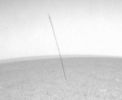
OPP-SOL1196-1F234369336EFF84GZP1212R0M1-2.jpgDark "Streak" (extra-detail mgnf) - Sol119660 visiteEd ecco l'extra-detail mgnf del curioso "dark streak" individuato dal Dr Barca in uno dei più recenti frames Opportunity.
L'identificazione di un dettaglio simile è, almeno per noi, un'opera improba (o forse del tutto impossibile). La logica ci suggerisce di optare per l'ipotesi "image-artifact", anche se se tratterebbe di un image-artifact (per noi) alquanto nuovo.
Lo streak, se esaminato con attenzione, non si risolve esattamente in un segmento di retta, ma ci appare leggermente curvo (strano, certo, ma consideriamo che questo "effetto" potrebbe essere anche una conseguenza del tipo di ripresa effettuata dal Rover); le estremità della striscia, inoltre, sembrano essere leggermente più "spesse" (diremmo "sgranate" e/o, forse, "frastagliate") rispetto alla sua sezione centrale.
Di certo non si tratta di un "graffio" dell'obbiettivo usato da Opportunity nè di un image-artifact ricondicibile ad un vizio fisico delle lenti (i frames Apollo ci hanno fatto un'ottima scuola al riguardo) e poi, a ben vedere, non pensiamo neppure che si possa trattare di un oggetto in caduta (e se lo fosse...beh, non sapremmo proprio che cosa immaginare - a parte un "giavellotto marziano"!).
Scherzi ed idee provocatorie a parte, a questo punto ogni ipotesi resta comunque valida: se Voi aveste qualcosa da dire, da aggiungere o da suggerire al riguardo, non dovete far altro che scriverci...MareKromium
|
|
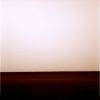
OPP-SOL1196-1P234361337EFF8400P2629L5M1.jpgEarly morning's horizon (1) - Sol 119660 visitenessun commentoMareKromium
|
|
| 25353 immagini su 2113 pagina(e) |
 |
|
|
|
|
1178 | |
|
|
|
|





